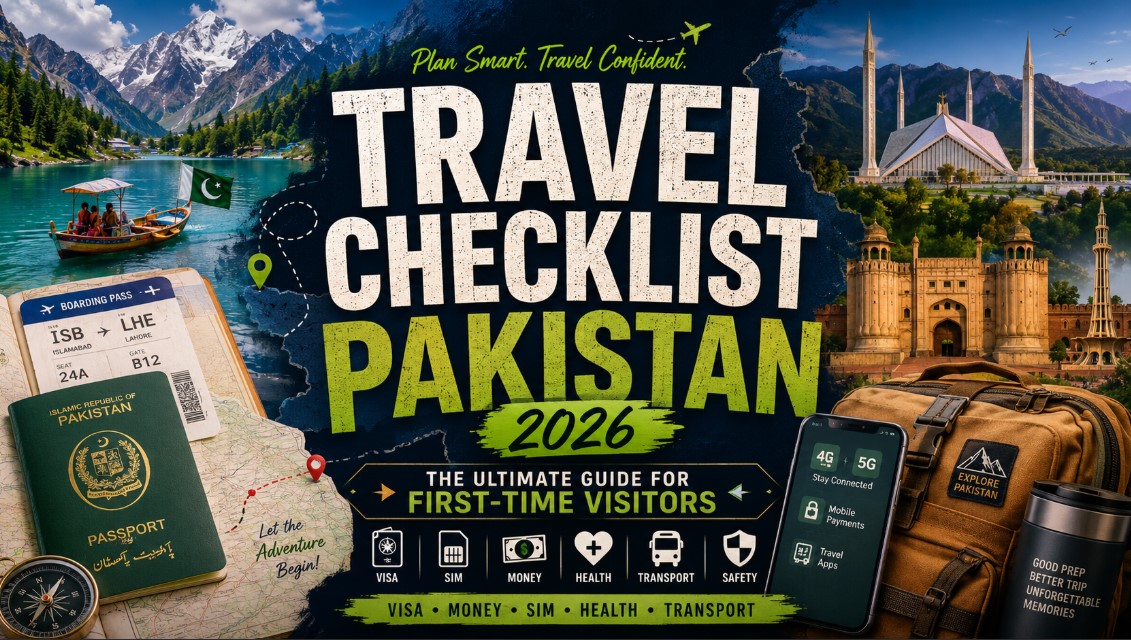
Travel checklist Pakistan is the most critical document you need before embarking on an adventure to the “Land of the Pure.” In early 2026, the country has opened its doors wider than ever. However, the administrative and cultural landscape requires careful planning. Consequently, this guide provides a step-by-step breakdown of every essential detail you must handle before you land in Karachi, Lahore, or Islamabad.
In this post, we will explore the latest E-visa requirements and digital payment systems. We will look at how to secure a local SIM card and navigate the diverse transport network. Furthermore, this guide includes detailed sections on health safety and cultural etiquette. Whether you are heading to the high peaks of the Karakoram or the historic streets of the South, this travel checklist Pakistan ensures you are fully prepared for a seamless journey.
Part 1: The Administrative Essentials
The foundation of a successful trip is your paperwork. In 2026, Pakistan has moved away from “Visa on Arrival” for most countries. Therefore, your first priority is the digital portal.
1. The Mandatory E-Visa (2026 Update)
Almost all international tourists must now secure an E-visa before they fly. Historically, some travelers relied on visa-prior-to-arrival systems. However, as of January 2026, these are largely suspended.
- The Portal: Use the official Pakistan Online Visa System. Avoid third-party websites that charge extra fees.
- Processing Time: Expect a wait of 7 to 10 working days. Consequently, you should apply at least three weeks before your departure.
- Documents Needed: You must provide a clear scan of your passport. Additionally, you need a recent digital photograph with a white background.
- The LOI (Letter of Invitation): This is the most important part of your application. You can obtain this from a registered tour operator or a local host. A confirmed hotel booking is sometimes accepted, but an LOI is much more reliable for approval.
2. Passport Validity and Entry Stamps
Your passport must be valid for at least six months from the date of your application. Furthermore, ensure you have at least two blank pages for entry and exit stamps. Interestingly, the immigration officers in Pakistan are very strict about entry stamps. Always verify that your passport is stamped before you leave the immigration counter. If it is missing, you may face significant delays when you try to leave the country later.
3. Comprehensive Travel Insurance
Pakistan is a land of extreme geography. Therefore, standard travel insurance is often insufficient.
- Adventure Coverage: If you are using our northern Pakistan travel guide for hiking, ensure your policy covers high-altitude rescue. Most standard plans stop coverage at 2,500 meters.
- Medical Evacuation: Ensure your provider has a network in Pakistan for emergency flights.
- The “Against Advice” Clause: Check if your insurance remains valid if you travel to areas where your government advises against travel. In 2026, this is especially important for border regions.
Part 2: Money and Financial Security
Managing your finances in Pakistan has changed significantly in the last year. While cash remains vital, digital wallets are now the gold standard for efficiency.
1. The Digital Wallet Revolution (Udhaar Book & JazzCash)
In 2026, the Udhaar Book app has become the best digital wallet for foreigners. It allows for seamless integration with local businesses.
- JazzCash and EasyPaisa: These are the most popular domestic options. They allow you to pay at small grocery stores and for ride-hailing services.
- HBL Konnect: This is a bank-backed wallet. It allows you to withdraw cash from any HBL ATM without using your international card. Consequently, you save on high transaction fees.
2. Carrying Physical Cash
Despite the digital push, you must always carry some physical PKR (Pakistani Rupees).
- Currency Exchange: Avoid exchanging money at the airport as the rates are usually poor. Instead, use authorized money changers in the city centers of Blue Area (Islamabad) or Gulberg (Lahore).
- USD and Euro: Carry a few hundred dollars in pristine, new bills. These are highly valued and can be exchanged easily in emergencies.
- Small Denominations: Keep a stash of 100 and 500 PKR notes for tips and small purchases in rural areas.
3. International Cards and ATMs
Not all Pakistani ATMs accept foreign cards. Specifically, look for Standard Chartered or HBL machines.
- Notify Your Bank: Before you leave, tell your bank you are traveling to Pakistan. Otherwise, they may block your card after the first transaction.
- Daily Limits: Be aware that many ATMs have a withdrawal limit of 20,000 to 50,000 PKR per day. Therefore, do not wait until you are completely out of cash to visit a machine.
Part 3: Connectivity and Communication
Staying online is not just a luxury; it is a safety requirement for your travel checklist Pakistan. You need data for navigation and for accessing your E-documents.
1. Securing a Local SIM Card
You cannot buy a SIM card from a regular shop without a local CNIC. Tourists must visit a dedicated franchise office.
- Where to Go: Major airports like Jinnah International (Karachi) have telecom counters in the arrivals hall.
- Best Networks: Zong and Jazz offer the widest 4G and 5G coverage. Zong is particularly strong in the northern mountains.
- Requirements: You must provide your passport and your valid E-visa. The staff will take your fingerprints for biometric verification. The process takes about 20 minutes.
2. The Role of eSIMs in 2026
If your phone supports it, an eSIM is the fastest way to get connected. Providers like Yesim and Airalo offer Pakistan plans starting as low as $5.
- The Catch: eSIMs usually run on 4G only. Furthermore, they do not provide a local phone number. You will need a local number to use ride-hailing apps like Careem.
- Hybrid Strategy: Use an eSIM for immediate data upon landing. Then, visit a franchise to get a physical SIM for a local number.
3. VPNs and Internet Restrictions
Pakistan occasionally restricts access to social media platforms like “X” (Twitter). Moreover, some international streaming services are geo-blocked.
- Mandatory Download: Install a reliable VPN (like ExpressVPN or NordVPN) before you arrive. It is much harder to download these once you are behind a local firewall.
- Communication: WhatsApp is the primary mode of communication in Pakistan. Ensure your account is active and linked to your home number.
Part 4: Health and Physical Well-being
Your health should be a top priority on your travel checklist Pakistan. The change in diet and climate can be challenging for first-time visitors.
1. Mandatory Vaccinations and Screenings (2026)
The health landscape has seen new updates this year.
- Mpox Screening: In May 2026, airports have enhanced screening measures. You may have to undergo a quick temperature check upon arrival.
- Polio Certificate: If you are staying in Pakistan for more than four weeks, you must obtain a Polio vaccination certificate before you leave the country.
- Yellow Fever: This is only mandatory if you are traveling from a transmission-risk country.
2. Water and Food Safety
“Delhi Belly” is a common risk for travelers. Consequently, you must be extremely cautious.
- The Water Rule: Never drink tap water. Always use sealed bottled water, even for brushing your teeth.
- Street Food Strategy: Only eat at stalls that have a high turnover of customers. If the food is cooked fresh at high heat, it is generally safe. Avoid pre-cut fruit and raw salads.
- Hydration: The heat in Sindh and Punjab can be brutal. Carry rehydration salts (ORS) in your day bag at all times.
3. The Essential Medical Kit
Carry a small first-aid kit containing:
- Antibiotics for stomach infections (as prescribed by your doctor).
- Painkillers and anti-inflammatory drugs.
- Antihistamines for allergies.
- High-SPF sunscreen and insect repellent with DEET.
- Note on Prescriptions: If you carry ADHD medications or strong painkillers, you MUST have the original prescription and a doctor’s letter. These are controlled substances in Pakistan.
Part 5: Packing and Gear Highlights
What you pack depends heavily on the season and the region. However, a few items are universal for every travel checklist Pakistan.
1. Dressing for the Culture
Pakistan is a conservative country. Consequently, your wardrobe should reflect respect for local norms.
- For Men: T-shirts and jeans are fine in cities. However, avoid wearing shorts in public places or mosques.
- For Women: Modesty is key. You do not need a headscarf everywhere, but your shoulders and knees should be covered. The local “Shalwar Kameez” is the most comfortable and respectful choice.
- The Scarf: Always carry a light scarf. You will need it to cover your head if you visit a shrine or a mosque.
2. Electronics and Power
Pakistan uses Type C and Type D plugs (two and three round pins).
- Universal Adapter: Bring a high-quality universal adapter.
- Power Bank: Load-shedding (planned power outages) still occurs in some rural areas. A 20,000mAh power bank is essential to keep your phone charged.
- Starlink Ready: In 2026, many northern base camps are Starlink-enabled. However, having your own portable satellite device can be helpful for extreme off-grid trekking.
For a more exhaustive list of specific items, refer to our travel packing Pakistan tips.
Part 6: Cultural Etiquette and Local Laws
Understanding the social fabric of Pakistan will make your trip much more rewarding. It also keeps you out of legal trouble.
1. Photography Restrictions
Pakistan is highly sensitive about security. Consequently, you must be careful with your camera.
- The “No-Go” Zones: Never photograph bridges, airports, or military buildings. This can lead to accusations of espionage and immediate detention.
- People: Always ask for permission before taking a photo of a person. Specifically, avoid photographing women in rural areas without the consent of their male relatives.
- Drones: In 2026, personal drones are heavily restricted. You need a No Objection Certificate (NOC) from the Ministry of Interior to fly one. Without this, your drone will likely be confiscated at the airport.
2. Social Norms and Blasphemy Laws
Pakistan has very strict blasphemy laws. Therefore, you must be extremely careful with your words and social media posts.
- Religious Respect: Never make jokes or critical comments about Islam or the Prophet. This is a criminal offense and can incite local anger.
- Gender Interaction: In many areas, men and women do not shake hands. Always wait for the local person to initiate a greeting.
3. The “Soles of the Feet” Rule
Interestingly, pointing the soles of your feet at another person or a religious object is considered very offensive. When sitting on the floor, ensure your feet are tucked away. Similarly, never use your left hand to give or receive items, as it is considered unclean.
Part 7: Transport and Logistics
Navigating a country as large as Pakistan requires a multi-modal approach.
1. Domestic Flights vs. Luxury Buses
- Domestic Flights: PIA, AirSial, and Serene Air cover the major cities. Flights to the North (Skardu and Gilgit) are breathtaking but weather-dependent. Consequently, they are often canceled at the last minute.
- Luxury Buses: For inter-city travel, Faisal Movers and Daewoo Express are the best options. They offer “Business Class” seats with AC, Wi-Fi, and meal service. They are safe, reliable, and much cheaper than flying.
2. Ride-Hailing and City Travel
Do not use random street taxis unless absolutely necessary.
- Careem and Indrive: These are the dominant apps. Indrive allows you to negotiate the fare before the ride starts. This is a favorite among budget travelers.
- Bykea: This is a motorbike taxi service. It is the fastest way to get through Karachi traffic. However, it is not recommended for those with heavy luggage.
3. Driving and the IDP
If you plan to rent a car or a motorbike, your home country’s license is not enough.
- The IDP: You must carry an International Driving Permit.
- Police Checks: You will encounter numerous checkpoints, especially in the North. Always have your passport, visa, and IDP ready. Driving without an IDP will instantly void your travel insurance.
Part 8: The Regional Master Checklist
To conclude your travel checklist Pakistan, you must tailor your items based on where you are going.
The Southern Circuit (Karachi, Sindh, Southern Punjab)
- The Heat: It is hot and humid. Pack breathable cotton fabrics.
- Mosquito Protection: Malaria and Dengue are more common in the South. Use mosquito nets and repellent.
- Cultural Hubs: Expect more urban chaos and vibrant street life.
The Northern Circuit (Gilgit-Baltistan, KPK)
- The Altitude: Pack Diamox for altitude sickness if you are heading to the Deosai Plains.
- Layering: The temperature can drop below freezing at night, even in summer. Bring a high-quality down jacket.
- Permits: Some areas, like the Kalash Valley, require a local police registration. Carry at least 10 photocopies of your passport and visa for these checkpoints.
Conclusion: Why a Checklist Matters
In summary, a travel checklist Pakistan is your blueprint for a life-changing adventure. In 2026, the country offers a unique blend of ancient history and digital modernism. While the bureaucracy can be intimidating, being organized allows you to focus on the legendary hospitality and majestic landscapes that await you.
Furthermore, remember that Pakistan is a country that rewards the patient traveler. Delays happen, and plans change. However, if you have your E-visa, your insurance, and your digital wallet ready, you can handle any challenge with ease. By following the detailed steps in this guide, you are not just a tourist; you are a prepared explorer. Enjoy the “Land of the Pure” and make memories that will last a lifetime!
✅ FAQ Section
What is the most important item on a travel checklist for Pakistan?
The most important item is your E-visa and the Letter of Invitation (LOI). Without these, you will be denied entry at the airport.
Can I use my credit card everywhere in Pakistan?
No, credit cards are only accepted in high-end hotels, malls, and restaurants in major cities. For everything else, you will need cash or a local digital wallet like Udhaar Book.
Is a Polio certificate required for Pakistan in 2026?
It is only required if you stay in the country for more than four weeks. You must obtain it before you depart from Pakistan.
What is the best way to travel between cities?
For long distances, domestic flights are fastest. However, luxury buses like Faisal Movers are the most reliable and comfortable for those on a budget.
Do I need a VPN in Pakistan?
Yes, a VPN is highly recommended for 2026. It ensures you can access all social media platforms and keeps your data secure on public Wi-Fi.
Which specific region of Pakistan are you planning to visit first on your journey?