
Lifestyle
Public Transport in Karachi – Complete Guide to Buses & Routes

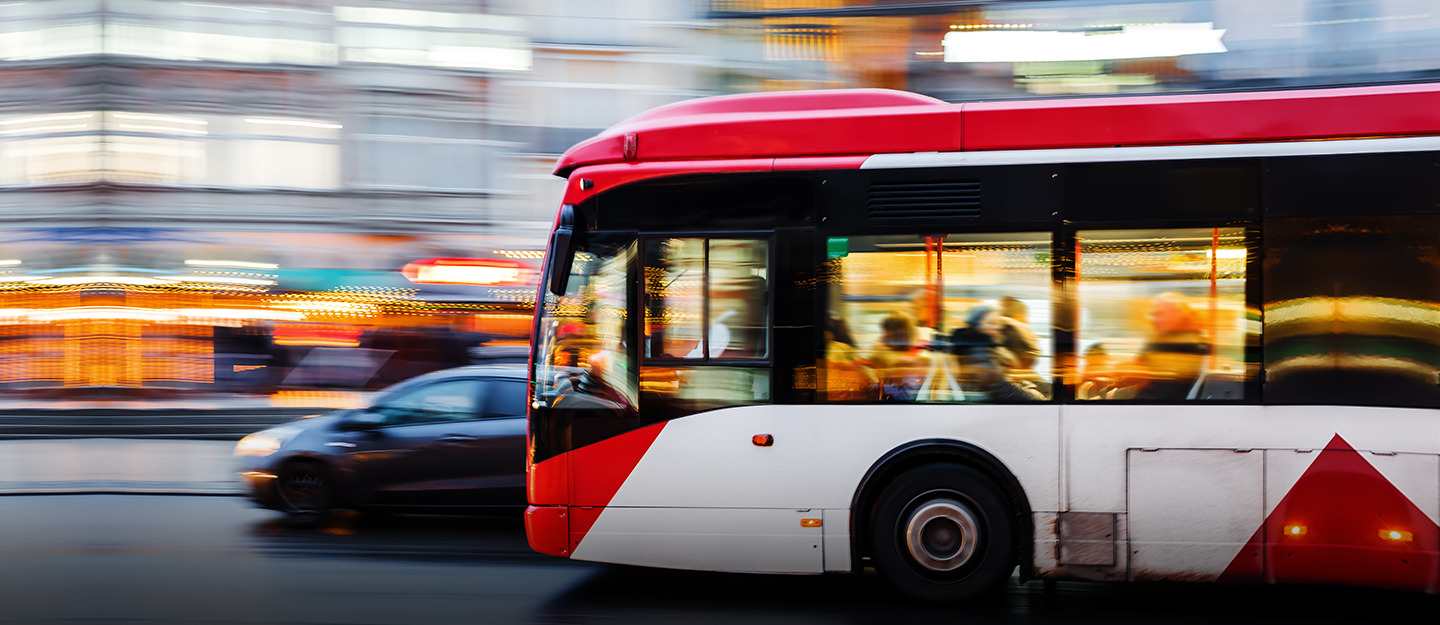
Getting around a city of more than 20 million people is never easy. Still, public transport in Karachi has improved a lot in the last few years. Today, you can ride modern BRT buses, air-conditioned Peoples Buses, women-only Pink Buses, and even electric buses. In this guide, we explain each option, the main routes, the fares, the timings, and safety tips. Therefore, by the end, you will know exactly how to travel across the city without a car.
Last checked: October 2026. Fares, routes, and timings change from time to time, so always confirm the latest details on the official apps or helplines before you travel.
Public Transport in Karachi
For decades, Karachi depended on old minibuses, coaches, and rickshaws. However, these were often crowded, slow, and unsafe. So the government has added newer systems to make daily travel easier and cheaper. As a result, Karachi public transport now has a proper backbone of bus rapid transit (BRT) lines and modern city buses.
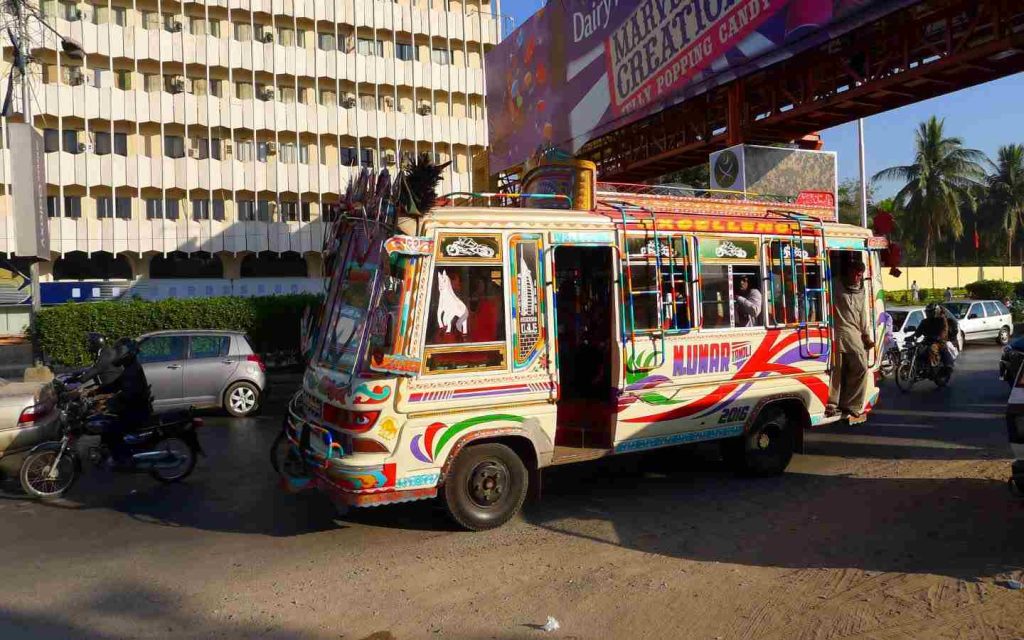
So here is a quick overview of the main options you can use today.
- Green Line BRT: a fast, dedicated-lane bus from Surjani Town to the city centre.
- Orange Line BRT: a short feeder line linking Orangi Town to the Green Line.
- Peoples Bus Service: air-conditioned red buses on many city routes.
- Pink Bus: a women-only service on selected routes.
- Electric buses: quiet, eco-friendly white buses on key corridors.
- Karachi Circular Railway: an old rail loop that is still being revived.
Clearly, the network is still growing, and it does not yet cover every area. Even so, these services already save thousands of commuters time and money every day.
Green Line Bus
First of all, the Green Line is the city’s flagship BRT. It runs on its own dedicated lane from Surjani Town to Numaish, mostly along Shahrah-e-Usman and Nagan Chowrangi. Because it does not share the road with normal traffic, it is much faster than ordinary buses. In fact, a trip that takes well over an hour by car can be done in far less time.
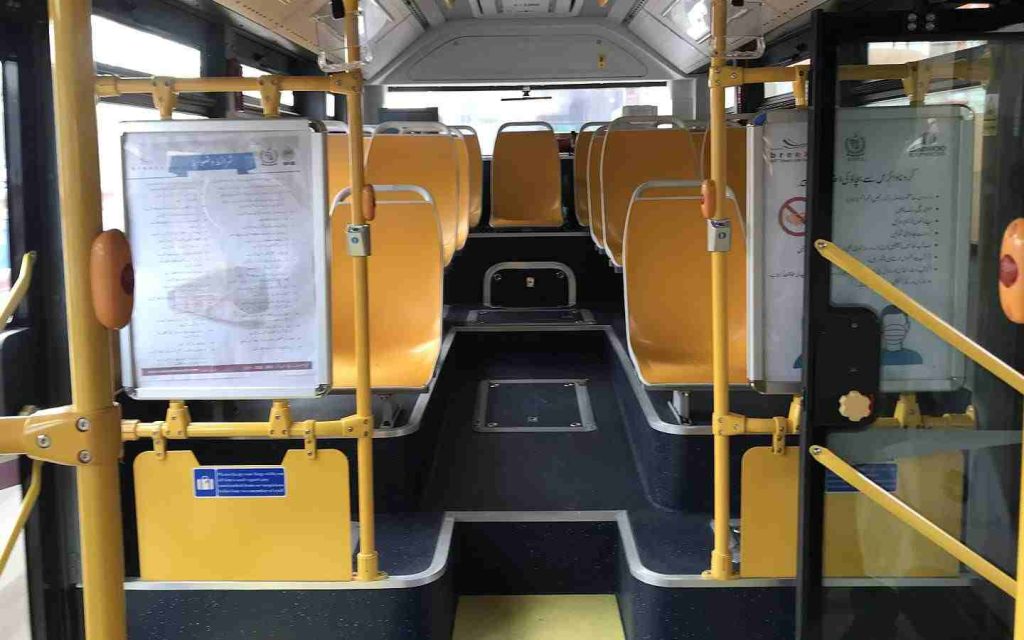
The Green Line Karachi corridor has around 22 stations, which are roughly a kilometre apart. Moreover, the buses are air-conditioned, and the stations have ramps and screens. Many students and office workers now use the Green Line Karachi service every day, because it is quick, clean, and cheap.
Also, boarding is simple. First, buy a ticket or a rechargeable card at the station counter. Next, tap in at the gate and wait on the platform for the next bus. Finally, tap out when you reach your stop. Because the platforms are level with the bus floor, getting on with a pram or a wheelchair is also much easier than on old buses. In short, the Green Line feels like a proper modern metro system on wheels.
Peoples Bus Service
Next, the Peoples Bus Service Karachi network uses red, air-conditioned buses run by the Sindh government. It started in 2022 and has expanded to more than a dozen routes since then. Furthermore, the buses offer priority seats for the elderly and people with disabilities, and many have wheelchair access.
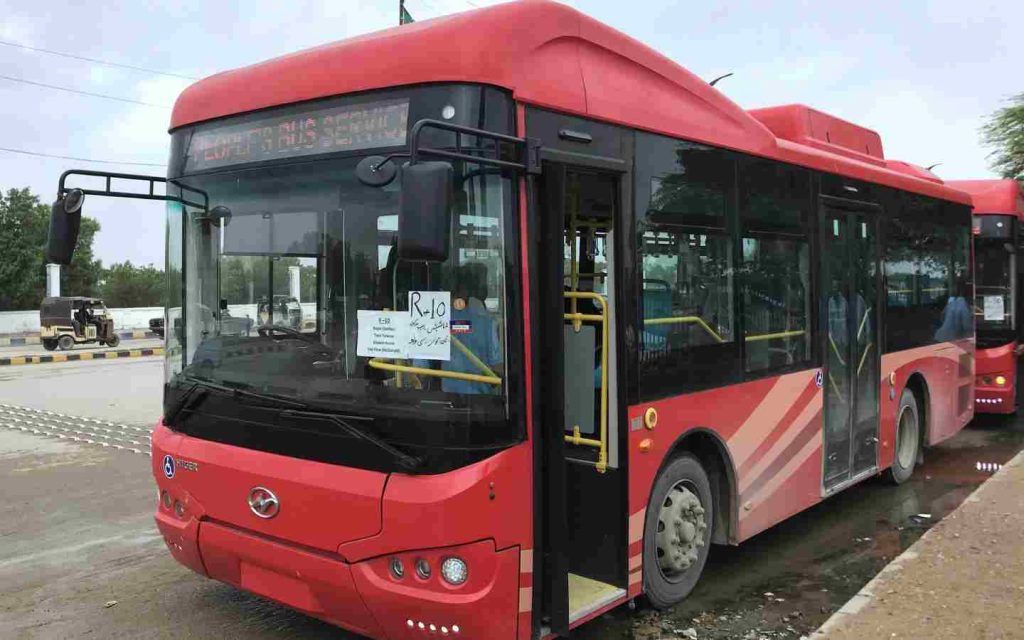
Unlike the BRT, these buses run on normal roads, so traffic can slow them down. However, they reach many areas that the BRT lines do not cover. So for most daily trips, the Peoples Bus Service Karachi routes are the easiest choice. Also, a double-decker bus now runs between Malir Halt and Tower along Shahrah-e-Faisal.
Orange Line
Similarly, the Orange Line Karachi BRT is a short line that opened in 2022. It connects Orangi Town to the Board Office area in Nazimabad, where you can switch to the Green Line. In other words, it works as a feeder that brings people from Orangi into the main BRT system.
Although the Orange Line Karachi route is only a few kilometres long, it makes a real difference for residents of Orangi. Previously, they had to rely on crowded minibuses. Now, they can reach the city centre faster with a single transfer.
Karachi Circular Railway
The Karachi Circular Railway, or KCR, once carried thousands of passengers a day from 1969 until it shut down in 1999. Since then, the government has tried several times to revive it. Notably, a partial service restarted in late 2020, and a modern, electric version was later included in the CPEC plans.
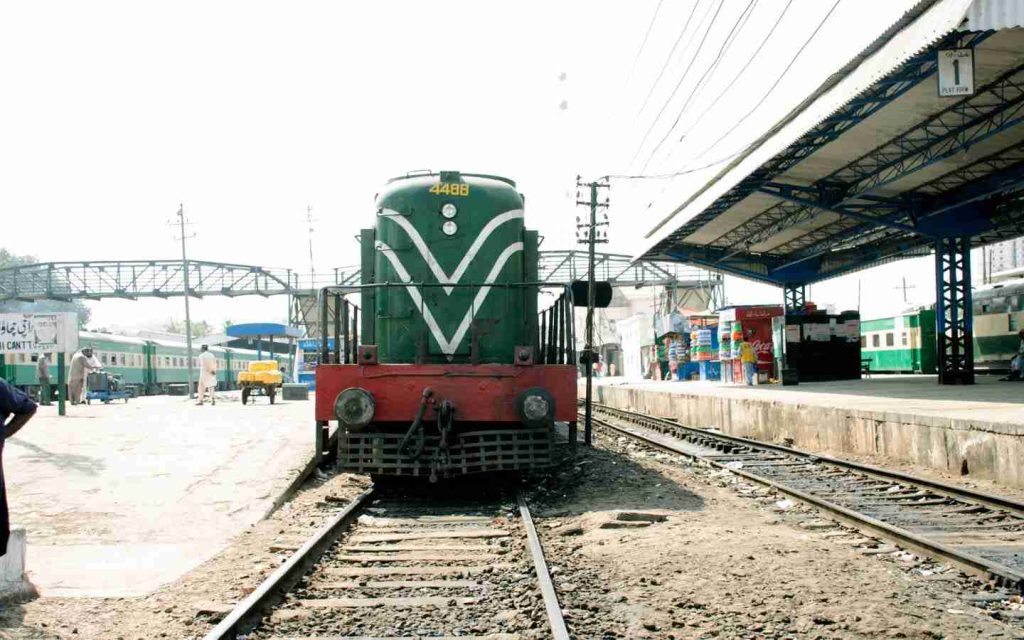
However, the full modern Karachi Circular Railway is still not running as a regular city service. Therefore, do not plan your daily commute around it yet. Instead, check Pakistan Railways for any limited services and follow the news for updates on the revival project.
Electric Buses
In addition, Karachi’s white electric buses are a newer addition to the Peoples Bus fleet. They are quiet, air-conditioned, and produce no exhaust on the road. As a result, they help cut pollution in a city that badly needs cleaner air.
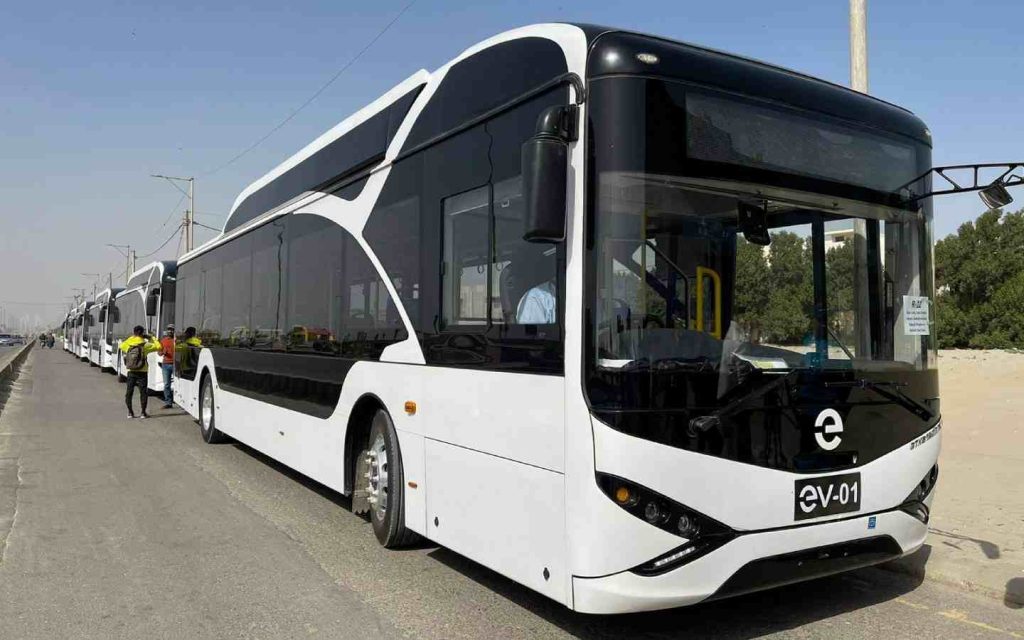
Currently, the electric routes mainly link Malir, Bahria Town, and Clifton. For example, one route runs from CMH Malir Cantt to Dolmen Mall Clifton, while others connect Bahria Town with Malir Halt and Numaish. So if you live in these areas, the EV buses are a comfortable way to reach the centre.
Karachi Bus Routes
Below are some of the main Karachi bus routes at the time of writing. Of course, routes are revised from time to time, so check the latest list before you travel.
| Service / Route | From | To |
|---|---|---|
| Green Line BRT | Surjani Town | Numaish |
| Orange Line BRT | Orangi Town | Board Office |
| Peoples Bus R-1 | Model Colony | Tower |
| Peoples Bus R-2 | Power House Chowrangi | Indus Hospital |
| Peoples Bus R-9 | Gulshan-e-Hadeed | Tower |
| Peoples Bus R-10 | Numaish | Ibrahim Hyderi |
| Peoples Bus R-13 | Hawke’s Bay | Tower |
| Electric Bus EV-1 | CMH Malir Cantt | Dolmen Mall Clifton |
| Electric Bus EV-2 | Bahria Town | Malir Halt |
| Double-decker | Malir Halt | Tower |
As the table shows, many Karachi bus routes meet at Tower, Numaish, and Malir Halt. So these points work as handy transfer hubs. In addition, more routes such as R-8 (Yousuf Goth to Tower) and R-12 (Memon Goth to Tower) serve the outer parts of the city.
Fares for Public Transport in Karachi
Above all, one big reason to use public transport in Karachi is the low cost. Generally, a bus ride costs far less than fuel, parking, or a ride-hailing trip. Here are the fares at the time of writing.
| Service | Approx. Fare |
|---|---|
| Green Line BRT | Rs 15 to Rs 55, depending on distance |
| Orange Line BRT | Low, distance-based fare similar to the Green Line |
| Peoples Bus (red) and electric buses | About Rs 80 up to 15 km, Rs 120 for longer trips |
| Pink Bus (women only) | About Rs 50 |
On the Green Line, a rechargeable travel card costs about Rs 100 and makes boarding faster. Meanwhile, with petrol prices rising, many families now save a good amount each month by switching to the bus. You can track fuel costs on our petrol price in Pakistan today page.
Timings of Public Transport in Karachi
Of course, timings depend on the service. Usually, the Green Line runs from about 7 am to 10 pm every day. Meanwhile, the Peoples Bus Service generally operates from about 7 am to 8 pm. So late-night travel still needs a rickshaw or ride-hailing app.
The Pink Bus runs mainly at peak hours, such as morning, lunch, and evening slots, when working women and students travel most. Therefore, check the exact schedule for your route before you leave home. Also, expect longer waits on Sundays and public holidays.
Women & Family Facilities
Indeed, safety for women has long been a concern on Karachi’s buses. Thankfully, the Pink Bus offers a women-only option on selected routes. In addition, BRT buses and Peoples Buses have separate sections for women, so families can travel with more comfort.
Moreover, many stations have CCTV cameras, security staff, and proper lighting. For families with elderly members or wheelchair users, the low-floor buses and station ramps make boarding easier. Overall, these steps make public transport in Karachi far more welcoming than before.
Karachi Public Transport Map
So think of the Karachi public transport map as a few strong spines with feeder routes around them. The Green Line runs north to south through the middle of the city. Then the Orange Line joins it from the west at Board Office. Meanwhile, the Peoples Bus and electric routes fan out east towards Malir and south towards Clifton and the sea.
For the latest live map, use the official transit apps and Google Maps, which now show many bus routes. In the future, the Red Line BRT along University Road and a revived KCR should fill major gaps. However, the Red Line is still under construction and has faced repeated delays.
Smart Tips for Using Buses in Karachi
- Plan the route first. Check which line or bus reaches closest to your stop.
- Carry small change or a card. It makes boarding quick and easy.
- Avoid the rush. Travel just before or after peak hours when you can.
- Keep valuables safe. Hold your phone and wallet close in crowded buses.
- Use transfer hubs. Tower, Numaish, and Malir Halt connect many buses in Karachi.
Still prefer to drive sometimes? Then keep your papers in order with our guides on the driving license fee in Sindh, car buying documents in Pakistan, and car insurance in Pakistan.
In addition, plan your trip around peak hours whenever you can. For example, buses and BRT stations get very crowded between 8 and 10 in the morning and between 5 and 8 in the evening. So if your schedule allows, travel a little earlier or later for a seat and a calmer ride. Also, keep some small change and a charged phone with you, because card machines and mobile signals do not always work well at every stop.
FAQs
What is the best public transport in Karachi?
For speed, the Green Line BRT is the best public transport in Karachi, because it uses a dedicated lane. For wider coverage, the Peoples Bus Service reaches many more areas.
How much is the Green Line fare?
At the time of writing, the Green Line fare ranges from about Rs 15 to Rs 55, depending on how far you travel.
Is public transport in Karachi safe for women?
It has become much safer. Women can use the women-only Pink Bus or the separate women’s sections on BRT and Peoples Buses, and many stations have CCTV and security staff.
Is the Karachi Circular Railway running?
Not as a full, regular city service yet. The revival project is still in progress, so check Pakistan Railways for any limited services.
What are the Peoples Bus timings?
Generally, the Peoples Bus Service runs from about 7 am to 8 pm, while the Pink Bus mainly runs at peak hours.
Final Word
To sum up, public transport in Karachi is cheaper, cleaner, and safer than it was a few years ago. So try the Green Line for speed, the Peoples Bus for coverage, and the Pink Bus for women-only comfort. Above all, check fares and timings before you travel, because they change from time to time. Safe travels around the city.







Cheapest Internet Package Pakistan: Best Cheap Data Deals

Block SIM Pakistan: How to Block a Lost or Stolen SIM


