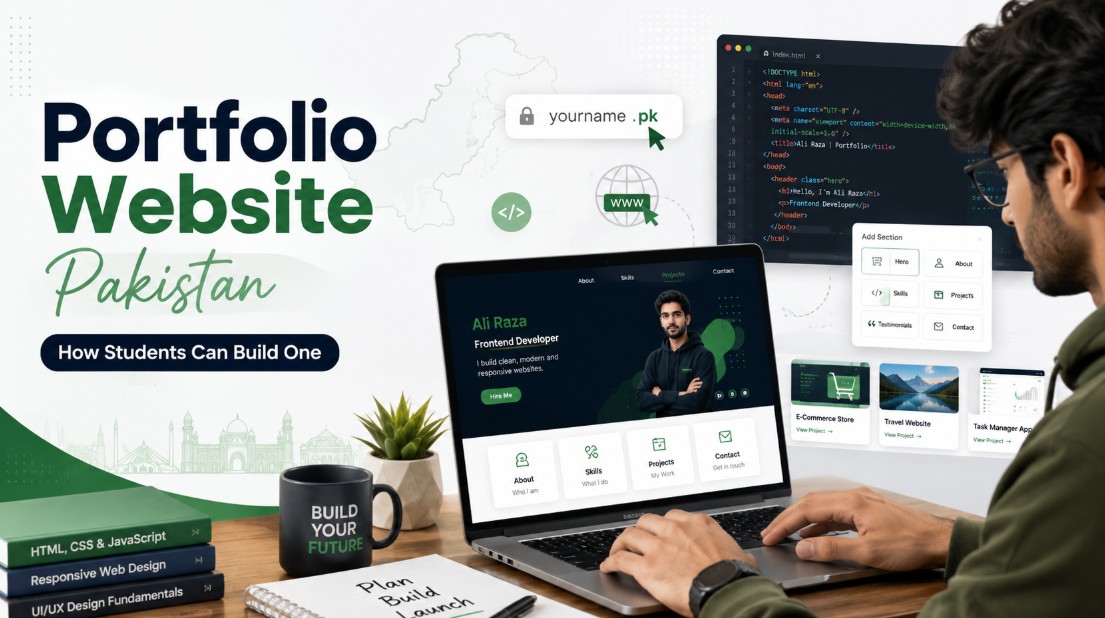
Creating a portfolio website Pakistan students can be proud of is easier than you might think. Moreover, it helps you win jobs, land clients, and stand out online. In this post, you will learn every step, from planning to publishing. Furthermore, this guide covers free tools, domains, design tips, and common mistakes.
To begin, a portfolio website is your personal home on the internet. Specifically, it shows your skills, projects, and story in one place. As a result, clients and employers can quickly judge your ability. Therefore, a strong portfolio website Pakistan style can truly boost your career.
Why You Need a Portfolio Website
A portfolio website offers many clear benefits. Firstly, it showcases your best work in one place. Secondly, it helps you land freelance clients. Thirdly, it impresses recruiters during job hunts. So, it is a powerful career tool.
The professional impression it creates is huge. Specifically, it makes you look serious and skilled. Moreover, it builds your personal brand online. Additionally, it sets you apart from other applicants. Therefore, it gives you a real edge.
In today’s world, a portfolio is almost expected. Specifically, clients want to see proof of your skills. Moreover, a simple link says more than a long message. Therefore, having one builds instant trust. Indeed, it is your strongest first impression.
What to Include
A good portfolio needs a few key sections. Basically, each part tells visitors something important. So, plan them before you build. Below are the essentials.
Several sections make a complete portfolio. Firstly, add a short intro about who you are. Secondly, include an “about me” section. Thirdly, list your main skills clearly. Moreover, show your best projects with working links.
A few more sections complete the picture. For example, add a downloadable resume or CV. Likewise, include a clear contact section. Additionally, link to your LinkedIn and social profiles. Therefore, visitors can easily learn more and reach you.
Ways to Build Your Portfolio
There are three main ways to build a portfolio. Basically, each suits a different type of person. So, pick the one that fits your skills. The table below compares them.
Method
Best For
No-code builder
Beginners and non-coders
Portfolio platform
Designers and developers
Code it yourself
Web development learners
As the table shows, you do not need to code at all. Specifically, no-code builders let anyone create a site. Meanwhile, coding it yourself shows real developer skill. Therefore, choose based on your goal. Below, each option is explained.
No-Code Website Builders (Easiest)
No-code builders are perfect for beginners. Basically, they let you build sites without any coding. So, you drag, drop, and publish easily. Moreover, many are free to start.
Several popular builders stand out. For example, Carrd creates clean one-page sites cheaply. Likewise, Wix offers hundreds of flexible templates. Moreover, Canva’s website builder is free and simple. Additionally, Google Sites is quick and easy.
WordPress is another powerful option. Specifically, it suits bigger sites and blogs. Moreover, you can learn it for free. In fact, DigiSkills offers a free WordPress course at digiskills.pk. Therefore, no-code tools make building fast and simple.
Free Options for Developers
Developers have excellent free options too. Basically, they can host sites at no cost. So, coding students can publish easily. Moreover, these tools are fast and reliable.
A few free hosting platforms are popular. For example, GitHub Pages hosts sites from a code repository. Likewise, Netlify and Vercel offer free, fast hosting. Moreover, they load quickly and stay reliable. Therefore, they suit hand-coded portfolios well.
Coding your own portfolio has a special bonus. Specifically, the website itself becomes a project to show. Moreover, it proves your real coding skills. Therefore, developers gain double value here. Indeed, the code is part of the portfolio.
Portfolio Platforms to Consider
Some platforms are made just for portfolios. Basically, they help specific types of creators. So, they can be a quick, easy choice. Below are a few examples.
Different platforms suit different fields. For example, Behance and Dribbble are great for designers. Likewise, GitHub showcases a developer’s code. Moreover, LinkedIn works as a professional profile. Additionally, these platforms have built-in audiences.
However, a personal website still gives more control. Specifically, it lets you design things your way. Moreover, it looks more professional and unique. Therefore, use platforms alongside your own site. Consequently, together they build a strong presence.
How to Build It: Step by Step
Building a portfolio follows a simple process. Below are the main steps to follow.
Plan your site. First, decide your purpose and audience. Then, list what you want to show.
Choose a platform. Next, pick a builder or code it yourself.
Set up a domain. After that, choose a name and hosting, or use a free one.
Design the layout. Then, keep it clean, simple, and mobile-friendly.
Add your content. Now, include your intro, skills, and projects.
Add contact details. Moreover, add your resume and social links.
Publish and share. Finally, launch your site and share the link.
Throughout the process, keep things simple. Therefore, do not overthink the design. Indeed, publishing something is better than waiting for perfect.
Getting a Domain and Hosting in Pakistan
A domain is your website’s address online. Basically, it makes your site look professional. So, understanding your options helps a lot. Below is what to know.
You can start with a free web address. Specifically, builders and GitHub give free subdomains. Moreover, these work perfectly for beginners. Therefore, students can start without spending money.
A custom domain looks more professional, though. Specifically, “yourname.com” builds a stronger brand. Moreover, you can register a local .pk domain in Pakistan. You can do this through the official registry, PKNIC, at pknic.net.pk. Therefore, upgrade to a custom domain when you can.
Design Tips for a Great Portfolio
Good design makes your portfolio shine. Basically, a clean look builds instant trust. So, keep these tips in mind. Below are the key ones.
A few rules improve every portfolio. Firstly, keep the design clean and simple. Secondly, make sure it works well on phones. Thirdly, ensure it loads quickly. Moreover, use a professional photo of yourself.
Your projects matter most of all. Specifically, show your best work, not everything. Moreover, add clear descriptions and working links. Therefore, quality always beats quantity here. Indeed, strong projects win clients and jobs.
Portfolio Tips for Students
Students often worry about having little experience. Basically, this is a very common concern. However, you do not need paid work to start. So, do not let this stop you.
You can show many types of work. For example, include your personal practice projects. Likewise, add university coursework and assignments. Moreover, create sample projects just for your portfolio. Additionally, add any small freelance work you have done.
A simple, honest portfolio is enough. Specifically, a free site with clear projects works well. Moreover, you can improve it as you grow. Therefore, start now with what you have. Consequently, your portfolio will strengthen over time.
Learn Skills to Fill Your Portfolio
A portfolio needs real skills and projects to show. Basically, the work inside it matters most. So, building your skills comes first. Moreover, projects flow from those skills.
Learning to code is one strong option. Specifically, you can even code your own portfolio site. Moreover, that becomes a project itself. Our learn web development Pakistan guide shows how to start.
Other skills also fill a portfolio nicely. Specifically, design, writing, and marketing all work. Moreover, many free courses teach these skills. To find them, see our best online courses Pakistan guide. Therefore, build skills first, then showcase them.
Common Mistakes to Avoid
Many students repeat the same errors. Basically, these mistakes weaken a portfolio. So, avoiding them makes yours stronger. Below are the common ones.
A few habits hurt a portfolio badly. Firstly, cramming in too much content is common. Secondly, showing no real projects is a big problem. Thirdly, ignoring mobile users loses visitors. Moreover, making contact hard drives clients away.
Two more mistakes deserve attention. Specifically, an outdated portfolio looks careless. Moreover, never publishing at all wastes everything. Therefore, keep it simple, clear, and live. Indeed, a published simple site beats a perfect unfinished one.
How to Share Your Portfolio
A portfolio only helps when people see it. Basically, sharing it widely is essential. So, spread your link everywhere useful. Below are the best places.
Several spots deserve your portfolio link. Firstly, add it to your LinkedIn profile. Secondly, include it on your resume or CV. Thirdly, put it in your freelancing profiles. Moreover, share it on your social media.
Keeping it fresh also matters a lot. Specifically, add new projects as you finish them. Moreover, update your skills and resume regularly. Therefore, an active portfolio stays impressive. Consequently, regular updates keep it working for you.
Communities and Help
Helpful communities make building much easier. For example, forums answer your website questions. Similarly, sites like Behance offer design inspiration. Moreover, YouTube channels teach portfolio building. So, you can learn from many others.
Beyond communities, free tools add value. Specifically, DigiSkills teaches website skills for free. Additionally, free builders make starting simple. Therefore, quality help is always within reach. Indeed, no one needs to build alone.
These communities also share useful advice. For instance, members review portfolios and give feedback. Likewise, they share the best free tools. Consequently, staying connected improves your results. Ultimately, shared knowledge helps you build a portfolio website Pakistan clients will notice.
Frequently Asked Questions
How do I create a portfolio website Pakistan students can use?
Choose a free builder or code it yourself first. Then, add your intro, skills, and best projects. Next, include your resume and contact details. Finally, publish it and share the link widely.
Can I make a portfolio website for free?
Yes, many free tools let you build one. Specifically, Carrd, Canva, and GitHub Pages are free. Moreover, they give free web addresses too. Therefore, you can start without spending money.
Do I need coding skills to build a portfolio?
No, coding is not required at all. Specifically, no-code builders do the work for you. Moreover, they use simple drag-and-drop tools. However, coding your own site shows extra skill.
What should a student portfolio include?
Include an intro, about section, and skills list. Additionally, show your best projects with links. Moreover, add a resume and contact details. Therefore, keep it clear and focused.
I have no experience. What do I put in my portfolio?
Show personal and practice projects instead. Specifically, add university coursework and sample work. Moreover, create projects just for your portfolio. Therefore, you can start even without paid work.
Do I need a custom domain for my portfolio?
No, a free subdomain works fine at first. However, a custom domain looks more professional. Specifically, you can register a .pk domain through PKNIC. Therefore, upgrade when you are ready.
How many projects should I show?
Show only your best few projects. Specifically, quality matters far more than quantity. Moreover, add clear descriptions and working links. Therefore, a few strong projects are enough.
Where should I share my portfolio?
Add it to your LinkedIn and resume first. Moreover, include it in your freelancing profiles. Additionally, share it on your social media. Therefore, spread the link everywhere useful.