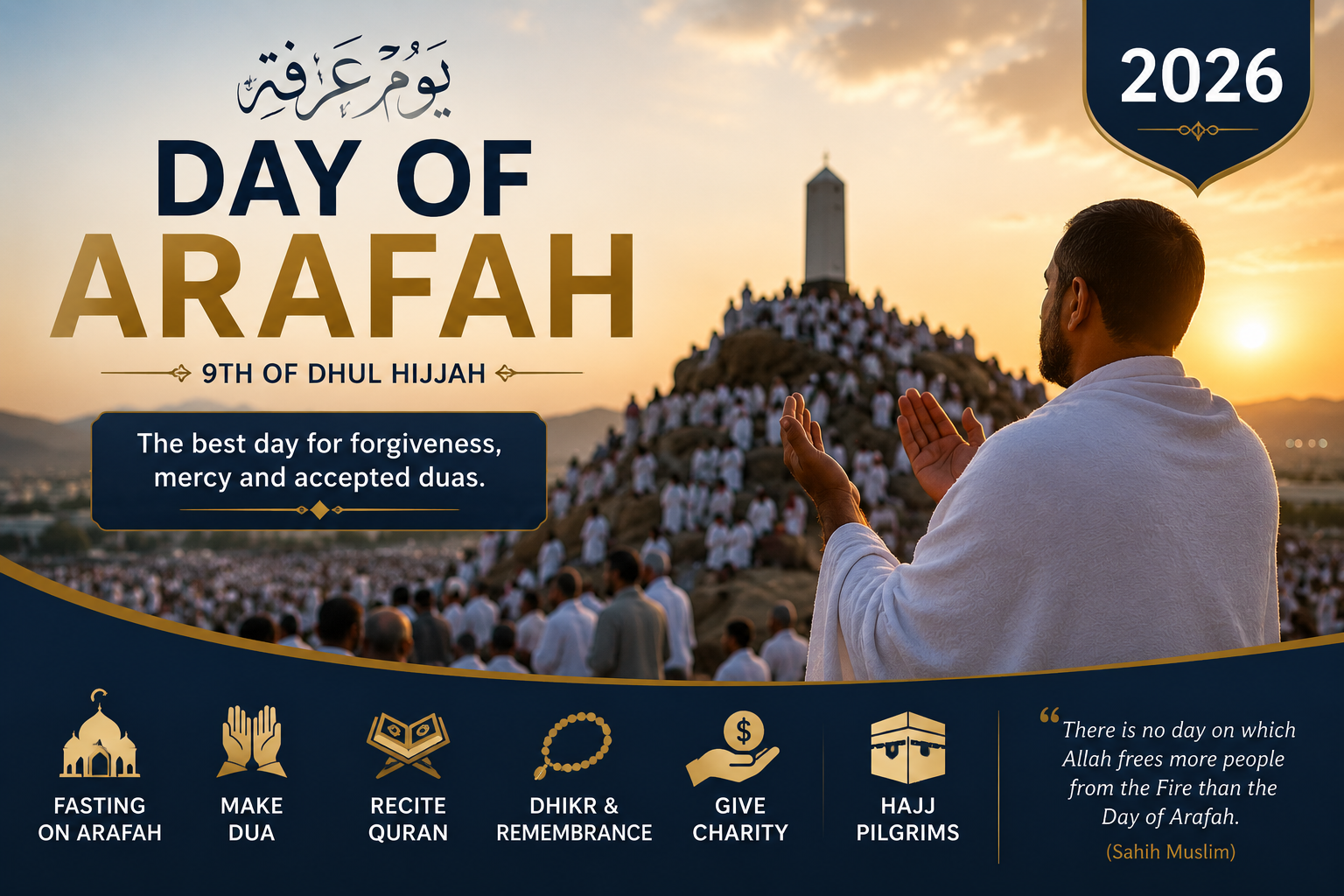
The Day of Arafah 2026 is one of the most sacred and spiritually powerful days in Islam. Observed on the 9th of Dhul Hijjah, it falls just before Eid ul Adha and holds immense significance for Muslims around the world. Pilgrims performing Hajj gather on the plains of Arafat during this day, while Muslims everywhere engage in fasting, dua, repentance, and worship.
This blessed day offers believers a chance to seek Allah’s mercy, forgiveness, and countless rewards. The Day of Arafah reminds Muslims about humility, sincerity, and the importance of strengthening their connection with Allah.
What Is the Day of Arafah?
The Day of Arafah marks the most important day of Hajj pilgrimage. It is the day when millions of pilgrims gather at Mount Arafat near Makkah and spend the day in worship, dua, and reflection.
In Islamic history, this day also carries great importance because Prophet Muhammad ﷺ delivered his famous Farewell Sermon at Arafat. The message emphasized justice, equality, kindness, and the completion of Islam.
For Muslims who are not performing Hajj, the Day of Arafah remains a highly rewarding day filled with opportunities for fasting and worship.
Those planning to perform pilgrimage can also read this detailed guide on how to Perform Hajj to understand the complete Hajj process step by step.
When Is the Day of Arafah 2026?
The Day of Arafah 2026 is expected to be observed in late May or early June 2026, depending on the sighting of the moon and the Islamic calendar.
Since Islamic dates vary by country and moon sighting committees, Muslims should confirm the official date closer to Dhul Hijjah.
Importance of the Day of Arafah
The Day of Arafah is considered among the greatest days of the Islamic year. Many scholars describe it as a day of mercy, forgiveness, and acceptance of duas.
Allah swears by important days in the Quran, and Islamic teachings highlight the unique status of Arafah. On this day:
- Sins are forgiven
- Duas are accepted
- Rewards multiply greatly
- Allah’s mercy descends abundantly
The Prophet Muhammad ﷺ said there is no day on which Allah frees more people from Hellfire than the Day of Arafah.
Fasting on the Day of Arafah
Fasting on Arafah is highly recommended for Muslims who are not performing Hajj.
According to authentic Hadith, fasting on this day expiates the sins of the previous year and the coming year. This makes it one of the most rewarding voluntary fasts in Islam.
Many Muslims prepare spiritually for this fast by increasing worship and avoiding distractions.
Benefits of Fasting on Arafah
Fasting on the Day of Arafah offers numerous spiritual benefits:
Forgiveness of Sins
The fast serves as a means of forgiveness for minor sins from two years.
Increased Taqwa
Fasting strengthens self-control and consciousness of Allah.
Spiritual Purification
It allows Muslims to disconnect from worldly distractions and focus on worship.
Greater Rewards
Acts of worship during Dhul Hijjah carry multiplied rewards.
Best Acts of Worship on the Day of Arafah
Muslims should spend the day in meaningful worship and remembrance of Allah.
Make Dua Frequently
The Day of Arafah is known as one of the best days for making dua. Muslims should ask Allah for:
- Forgiveness
- Guidance
- Health
- Rizq
- Peace and success
Sincere duas made from the heart hold immense value on this blessed day.
Recite Quran
Reading and reflecting on the Quran brings peace and spiritual reward. Even a small amount of recitation can make the day more meaningful.
Perform Dhikr
Muslims are encouraged to frequently recite:
- SubhanAllah
- Alhamdulillah
- Allahu Akbar
- La ilaha illallah
These words of remembrance increase blessings and spiritual connection.
Seek Forgiveness
The Day of Arafah is an ideal opportunity to sincerely repent for past mistakes and seek Allah’s mercy.
The Best Dua for the Day of Arafah
One of the most recommended supplications is:
“La ilaha illallahu wahdahu la sharika lahu, lahul mulku wa lahul hamdu wa huwa ala kulli shay’in qadeer.”
Translation:
“There is no god but Allah alone, without partner. To Him belongs all dominion and praise, and He has power over all things.”
Muslims can repeat this throughout the day along with personal duas.
Day of Arafah and Hajj
For pilgrims, the Day of Arafah is the central pillar of Hajj. Standing at Arafat is essential for the completion of the pilgrimage.
Pilgrims spend the day:
- Making dua
- Repenting
- Listening to sermons
- Worshipping Allah sincerely
This gathering represents unity, humility, and devotion among Muslims worldwide.
How Muslims Around the World Observe Arafah
Muslims observe the Day of Arafah in different ways based on their traditions and communities, but the spirit remains the same everywhere.
Common practices include:
- Fasting
- Attending Islamic lectures
- Giving charity
- Spending extra time in prayer
- Helping those in need
Families often prepare spiritually for Eid ul Adha while focusing on worship during Arafah.
Charity on the Day of Arafah
Giving charity during the first ten days of Dhul Hijjah carries great reward. Many Muslims donate food, clothes, or money to support underprivileged families.
Acts of kindness and generosity hold special significance during this blessed period.
Preparing for Eid ul Adha After Arafah
The Day of Arafah comes right before Eid ul Adha. Muslims usually use this time to:
- Complete spiritual preparation
- Finalize Qurbani arrangements
- Strengthen family connections
- Increase gratitude and worship
The transition from Arafah to Eid reflects both devotion and celebration in Islam.
Spiritual Lessons from the Day of Arafah
The Day of Arafah teaches Muslims important life lessons:
Humility
Every person stands equal before Allah regardless of status or wealth.
Patience
Worship and fasting build discipline and emotional strength.
Gratitude
Muslims reflect on blessings and thank Allah sincerely.
Repentance
The day encourages believers to return to Allah with sincerity.
Common Mistakes to Avoid on Arafah
Some Muslims unintentionally waste the spiritual value of this day by:
- Spending too much time on social media
- Missing prayers
- Neglecting dua
- Engaging in arguments or negativity
Instead, the focus should remain on worship, positivity, and spiritual reflection.
Why the Day of Arafah Is So Special
The Day of Arafah combines worship, mercy, forgiveness, and hope in a unique way. It is a reminder that Allah’s mercy is vast and accessible to everyone who sincerely seeks it.
Whether someone is performing Hajj or observing the day from home, Arafah offers a powerful opportunity for spiritual renewal.
Conclusion
The Day of Arafah 2026 is a deeply significant occasion for Muslims around the world. It is a day of worship, forgiveness, fasting, and sincere connection with Allah. Through dua, Quran recitation, charity, and repentance, believers can maximize the blessings of this sacred day.
As Dhul Hijjah approaches, Muslims should prepare themselves spiritually and strive to make the most of the Day of Arafah through meaningful worship and reflection.
FAQs
What is the Day of Arafah?
The Day of Arafah is the 9th day of Dhul Hijjah and one of the holiest days in Islam.
Why is fasting on Arafah important?
Fasting on Arafah forgives sins from the previous and upcoming year for non-pilgrims.
Can Muslims who are not performing Hajj fast on Arafah?
Yes, fasting is highly recommended for Muslims who are not performing Hajj.
What should Muslims do on the Day of Arafah?
Muslims should fast, make dua, recite Quran, perform dhikr, and seek forgiveness.
What is the best dua for Arafah?
One of the best duas is:
“La ilaha illallahu wahdahu la sharika lahu…”