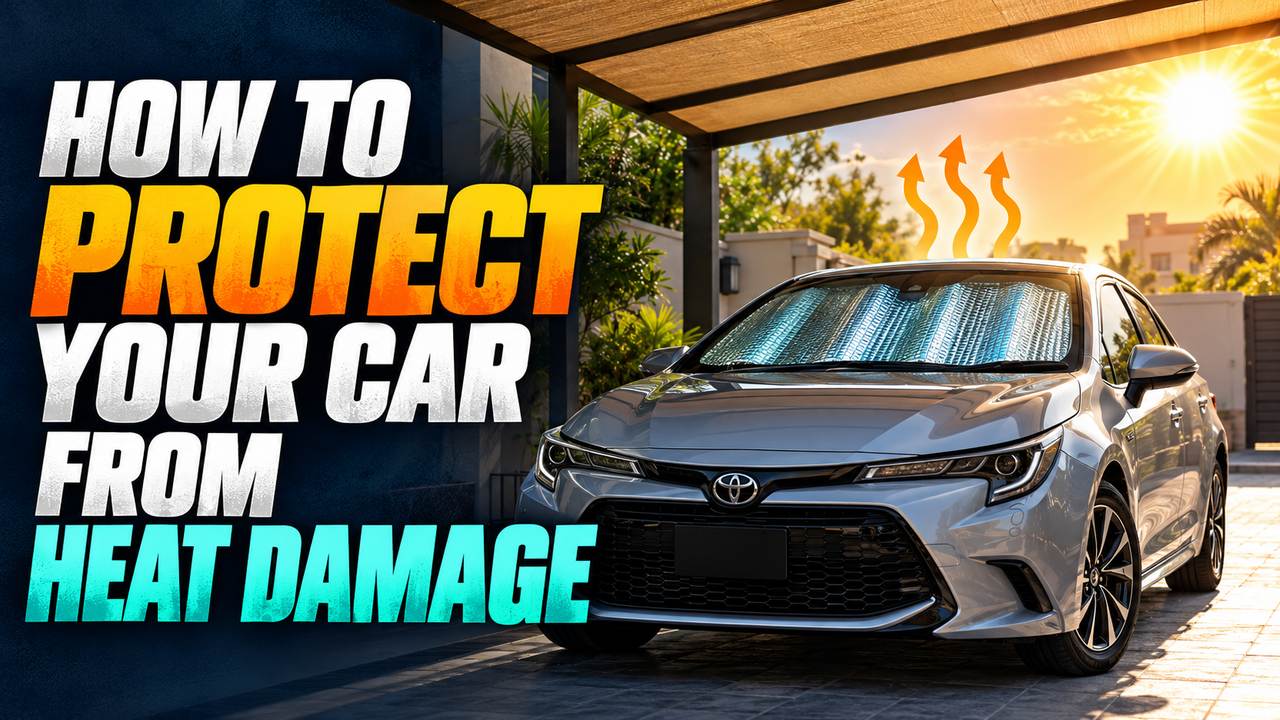
In June, a car parked in the open can feel like an oven within minutes. The steering burns your hands, while the seats feel like hot plates. However, the real harm happens where you cannot see it. Car heat damage in Pakistan hits the battery, tyres, coolant, paint and dashboard, often all in the same summer.
Safety note: Never leave a child or a pet inside a parked car, not even for a minute. After all, a hot car can kill. Also, never open a hot radiator cap, because boiling coolant can cause serious burns.
Why Car Heat Damage in Pakistan Is So Common
Our summers keep getting harsher, and cars feel it first. For example, during the June 2026 heatwave, Dadu reached about 51°C and Jacobabad about 48°C. Meanwhile, Punjab authorities forecast 42 to 45°C for Lahore and up to 47°C for Multan in late May 2026.
Most of us park in the open, because covered parking is rare. In addition, long jams keep engines hot for hours, and load shedding means dusty, hot garages. As a result, car heat damage in Pakistan builds up slowly over every summer. Then one day the battery dies, or a tyre fails on the motorway.
Parking habits matter as much as the weather. For instance, a car that faces the afternoon sun every day ages much faster than one parked in shade. In other words, car heat damage in Pakistan is a parking problem as well as a climate problem.
Car Heat Damage in Pakistan: What Gets Hurt First
Heat affects almost every part of a car. However, some parts suffer more than others. The table below shows the main ones and how to protect them.
Part
What Heat Does
Warning Signs
Simple Prevention
Battery
Speeds up fluid loss and corrosion
Slow cranking, white powder on terminals
Clean terminals, test before summer
Tyres
Raises pressure, ages rubber
Cracks, bulges, uneven wear
Check pressure in the cool morning
Coolant
Engine runs hotter, level drops
Rising temperature needle, sweet smell
Check level when the engine is cold
Paint
UV fades and dulls it
Chalky or faded roof and bonnet
Wax, shade, regular washing
Dashboard and seats
Plastic cracks, leather dries
Fine cracks, faded colour
Sunshade, interior protectant
AC
Works harder, weak parts fail
Warm air, noisy compressor
Service before May
Battery: Summer Hurts It More Than Winter
Most people blame winter for dead batteries. In fact, heat often does the real damage. According to AAA, heat speeds up chemical reactions inside a battery. Consequently, fluid evaporates, terminals corrode and the battery’s life gets shorter.
So look under the bonnet once a month. If you see white or green powder on the terminals, clean it off with a wire brush. Also, ask a battery shop to load-test it before summer. If it is weak, our guide to replacing a car battery covers brands and costs.
A car battery in summer also carries a heavy load, because the AC fan, lights and phone chargers all draw power in traffic. Moreover, make sure the battery clamp is tight, since rough roads add vibration damage. Finally, if your sealed battery has an indicator eye, check its colour against the label.
Tyres on Roads Above 45°C
Road surfaces get far hotter than the air in summer. Therefore, tyres face extreme stress on long drives like the M-2, M-5 or N-5. Heat also raises tyre pressure and makes old rubber crack faster.
Check pressure in the morning, before driving, because hot tyres give a false high reading.
However, never let air out of a hot tyre to lower the reading.
Look for cracks in the sidewall and between tread blocks.
Check the spare too, since it also ages in the hot boot.
Avoid overloading the car on long summer trips.
Also, check the age of a tyre before buying it. The four-digit DOT code on the sidewall shows the week and year of manufacture. For example, 2425 means the 24th week of 2025. Similarly, underinflated tyres flex more and build up even more heat. For the right numbers, see our tyre pressure guide.
Coolant and Engine Temperature
Your cooling system works hardest in June traffic. Because of this, a small leak or an old coolant mix can push the engine into overheating. So check the coolant reservoir every week, but only when the engine is cold.
Besides, look at the rubber hoses for cracks or soft spots, because heat ages them quickly. Likewise, make sure the radiator fan starts when the engine gets hot.
Also, watch the temperature gauge on every drive. When the needle rises above normal, switch off the AC and turn on the heater. This sounds odd in summer, but it pulls heat away from the engine. Then stop safely and let it cool. Our guides on engine coolant and car overheating explain the full process.
Paint Protection Against Car Heat Damage in Pakistan
Strong UV light slowly breaks down the clear coat. As a result, roofs and bonnets turn dull and chalky, especially on darker colours. Dust storms then add fine scratches on top.
Wash in the early morning or evening, never under the midday sun.
Apply wax or a paint sealant every few months for a UV layer.
Remove bird droppings quickly, since heat bakes them into the paint.
Use a soft, clean cloth so that dust does not scratch the surface.
For deeper care, such as polishing or ceramic coating, read our car detailing guide. In short, regular care is far cheaper than a repaint.
Black plastic trims also fade in the sun. Therefore, use a trim protectant on bumpers, mirror covers and door handles, because they slowly turn grey. Similarly, keep the headlights clean and protected, so that the lenses stay clear for night driving.
Dashboard, Seats and Steering
The dashboard sits right under the windscreen. Consequently, it takes the full force of the sun every day. Over a few summers, the plastic fades and cracks. Similarly, leather seats dry out and split, while fabric fades.
Once dashboard cracks appear, they usually spread, and a new dashboard is expensive. Therefore, prevention is the only sensible option. A windscreen sunshade is the cheapest fix. In addition, a steering cover keeps the wheel touchable. Also, wipe the dashboard with a water-based protectant instead of greasy shiners, because grease attracts dust and causes glare.
Rubber parts also suffer. For example, wiper blades harden, door seals shrink and headlight lenses turn yellow. So replace wipers before the monsoon, and treat door seals with a rubber protectant once or twice a year.
Never Leave These in a Hot Car
This section matters more than any paint or tyre tip. The New York DMV notes that a car’s interior can rise by about 20°F (about 11°C) in roughly 10 minutes. Moreover, cracking a window does very little to slow this down.
Children: never, not even for a quick shop visit.
Pets: dogs and cats suffer heatstroke very fast.
Lighters: heat can expand the gas inside and start a fire.
Power banks: lithium batteries can swell, leak or catch fire.
Aerosol sprays and perfumes: pressure builds up inside the can.
Medicines: many lose strength in high heat.
Glasses on the dashboard: some lenses can focus sunlight.
Unlike other car heat damage in Pakistan, these mistakes cannot be undone. Also, lock your car every time, so that children cannot climb in while playing. Before locking, check the back seat. Indeed, this simple habit can save a life.
AC Care in Peak Summer
The AC runs almost nonstop from May to September. Therefore, any weak part shows up in the hottest week. Get the condenser cleaned, check the gas and replace the cabin filter before summer. If the AC blows warm air, our car AC repair guide lists common faults.
To cool a baking car fast, open all windows for a minute first. Then start the AC on fresh air, and switch to recirculation once hot air leaves. Generally, this cools the cabin quicker than closed windows.
Shade, Covers and Sunshades: Costs
Shade is the best protection of all. So park under a tree or a shed when you can, but watch for sap and bird droppings. Otherwise, use a sunshade or a cover. Prices below come from PakWheels, Gari.pk and other online shops, and they change often.
Product
Approx Price
Best For
Roller windscreen shade
Around Rs 600
Basic, budget use
Foldable or umbrella windscreen shade
Around Rs 950 to 1,900
Daily parking in the sun
Custom-fit window shades
Around Rs 4,000 to 4,800
Full cabin coverage
Basic waterproof car cover
Around Rs 1,500 to 4,000
Home or long-term parking
Premium multi-layer cover
Up to about Rs 17,000
Expensive cars parked outside
Before you compare car cover price in Pakistan online, check the size chart for your model. A cover works best at home, since dust under a loose cover can scratch paint on windy days. On the other hand, a sunshade suits office and market parking.
A Simple Routine to Prevent Car Heat Damage in Pakistan
You do not need expensive products. Instead, you need a regular routine. Follow this simple plan from April to September to keep car heat damage in Pakistan under control:
Daily: use a sunshade and glance at the temperature gauge.
Weekly: check tyre pressure and coolant level in the morning.
Monthly: clean battery terminals and wash the car.
Every few months: apply wax and treat the dashboard.
Before summer: service the AC and test the battery.
If you park outside at work all day, a sunshade is your best friend. Meanwhile, keep a small towel to cover the steering and seat belt buckle, because metal parts get very hot. In addition, carry water for yourself on long drives, especially through Sindh and south Punjab.
FAQs
Which parts suffer most from car heat damage in Pakistan?
The battery, tyres, cooling system, paint and dashboard suffer most. In particular, batteries and tyres can fail suddenly. So test them before summer.
Is it safe to leave a power bank in the car?
No, not in summer. Lithium batteries can swell, leak or even catch fire in high heat. Therefore, take power banks and lighters with you.
Does a sunshade really prevent car heat damage in Pakistan?
Yes, it helps a lot, because a sunshade blocks direct sun on the dashboard and steering. As a result, it slows cracking and fading and keeps the cabin cooler.
Should I let air out of my tyres on hot days?
No, since hot tyres naturally show higher pressure. Instead, set the pressure in the morning when the tyres are cold, as the door sticker says.
Can heat drain my car battery?
Heat does not drain it overnight. However, it speeds up fluid loss and corrosion, so the battery dies sooner. Often, the failure shows up later, on the first cool morning.
Final Word
Most car heat damage in Pakistan is slow and preventable. So park in shade, use a sunshade, check tyres and coolant in the morning, and service the AC early. Above all, never leave children, pets, lighters or power banks in a parked car. For more on hot-car safety, read the NHTSA guidance on children and vehicles.