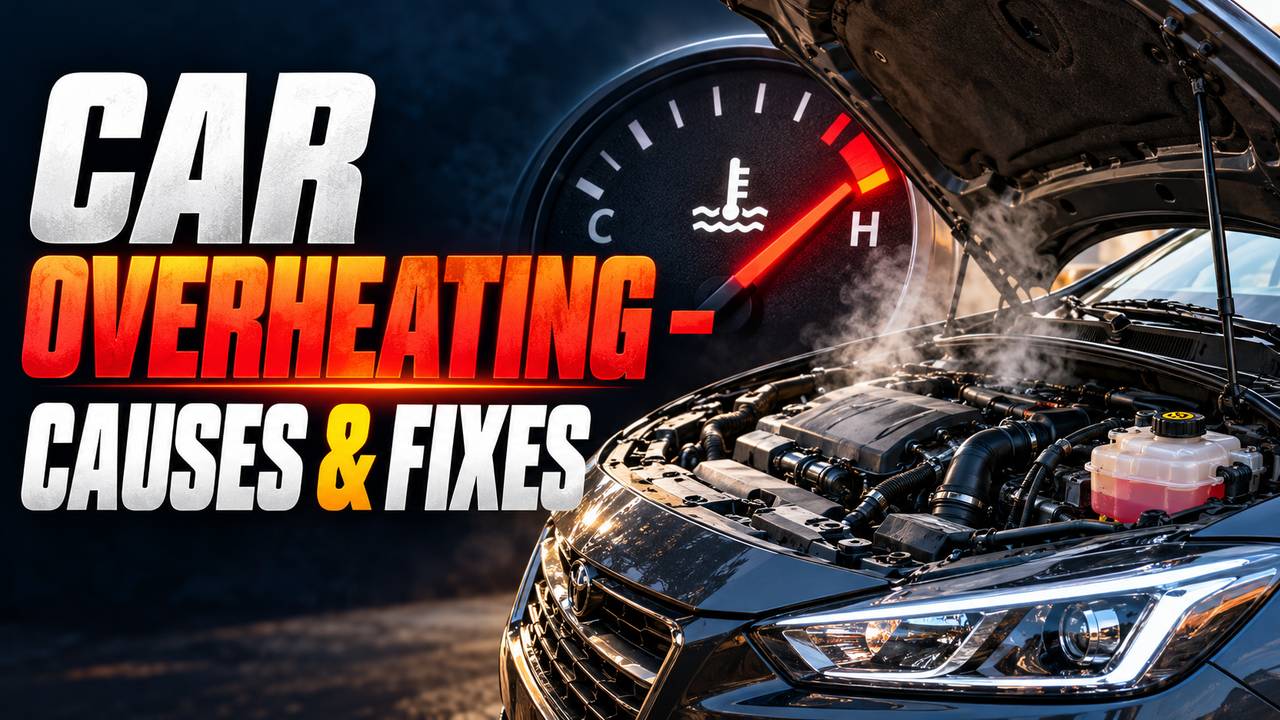
The temperature needle climbs, steam rises from the bonnet, and you are stuck in traffic in June. Sadly, car overheating in Pakistan is a common summer story, especially in Karachi, Lahore and interior Sindh. However, most causes are simple to spot. This guide explains the warning signs, safe first steps, DIY checks and when to call a mechanic.
Safety warning: Never open the radiator cap or the coolant tank cap on a hot engine. The system holds hot coolant under pressure, so it can spray out and cause serious burns. Also, keep hands away from the radiator fan, because many electric fans can start even with the engine off.
Car Overheating in Pakistan: Warning Signs
An engine rarely overheats without warning. In fact, it usually gives you several clues first, so learn to read them. Catching car overheating in Pakistan early can save you a costly engine rebuild.
The needle on the car temperature gauge sits near or inside the red zone.
A red temperature warning light on the dashboard.
Steam or white vapour from under the bonnet.
A sweet smell, since coolant has a syrupy odour when it leaks onto hot parts.
The AC suddenly blowing warm air, because some cars cut the AC when the engine runs hot.
Loss of power, or a knocking or pinging sound.
Most gauges sit near the middle once the engine warms up. Therefore, any steady rise above your normal position deserves attention, even if it has not reached the red yet.
What to Do When Your Car Is Overheating in Pakistan
Quick action can save your engine from costly damage. So follow these steps as soon as you notice the needle rising.
Switch off the AC at once, since it adds load to the engine.
Turn the heater to full hot with the fan on high. It feels awful in summer; however, it pulls heat away from the engine.
Pull over at the first safe spot, and switch on your hazard lights.
Switch off the engine, unless a mechanic has told you otherwise.
Open the bonnet only if no steam is pouring out, and stand back while it vents.
Wait at least 30 minutes, or until the top radiator hose feels cool to a light touch.
On a motorway, stop well inside the hard shoulder and stand behind the barrier. Also, call the Motorway Police helpline 130 if you need help. Above all, do not keep driving with the needle in the red, because that can warp the cylinder head.
Never Open a Hot Radiator Cap
This rule deserves its own section. Hot coolant sits under pressure, so the cap keeps it from boiling. Consequently, opening it suddenly lets the coolant boil and spray straight at your face and arms.
Instead, wait until the engine cools fully. Then cover the cap with a thick cloth and turn it slowly to the first stop, so that any leftover pressure escapes. Finally, remove it only after the hissing stops. In most modern cars, you can simply check and fill the plastic overflow tank instead.
Low Coolant and Leaks
Low coolant is one of the most common reasons for car overheating in Pakistan. Generally, the level drops because of a leak somewhere in the system. Therefore, once the engine is cold, check the overflow tank, which has MIN and MAX marks on its side.
Next, look for a coolant leak. For example, check for green, pink or red puddles under the front of the car after parking. Also, inspect the hoses for cracks, bulges or wet, crusty patches near the clamps. Similarly, white or green crust on the radiator usually marks an old leak.
Top up with the correct coolant, mixed about 50:50 with distilled water unless the bottle says it is ready to use. Many owners still use plain tap water, especially in villages. However, tap water leaves scale and rust inside the radiator. Our engine coolant guide explains which type suits your car.
Radiator Problems: Dust, Scale and Blockages
The radiator cools the hot coolant with air that flows through thin metal fins. However, dust plays a big part in car overheating in Pakistan, because those fins clog with dirt, leaves and insects. As a result, less air passes through, and the engine runs hotter in traffic.
With the engine cold, shine a torch at the radiator and the AC condenser in front of it. If the fins look packed with dirt, rinse them gently with low-pressure water from the engine side outwards. Avoid a pressure washer, because it bends the soft fins.
Inside, scale and old coolant can block the small tubes, especially after years of plain water. In that case, a workshop flush helps. Otherwise, a corroded or badly blocked radiator needs replacement.
Radiator Fan Not Working
If your car heats up in traffic but cools down on the open road, suspect the fan. At speed, air flows through the radiator on its own. In slow traffic, however, the electric fan must do that job.
Park, open the bonnet and start the engine.
Switch on the AC, since on most cars this starts at least one fan.
Watch the fan from a safe distance, and keep hands, hair and loose clothes away.
If it does not spin, switch off the engine and check the fan fuse and relay in the fuse box.
A radiator fan not working often has a simple cause, such as a blown fuse, a bad relay or a loose plug. However, a burnt-out motor or a faulty temperature switch needs an auto electrician.
Thermostat and Water Pump Faults
The thermostat is a small valve that opens when the engine warms up. If it gets stuck closed, the coolant cannot reach the radiator. A thermostat stuck closed usually makes the needle climb within 10 to 15 minutes, while the top radiator hose stays cooler than expected.
Meanwhile, the water pump pushes coolant around the engine. Signs of a failing pump include a leak or crust near the pump, a whining noise and overheating at all speeds. Because the pump is often driven by a belt, also check the belt for cracks and slack.
Some local workshops simply remove the thermostat to “cure” overheating. Avoid this shortcut, since the engine then runs too cool, wears faster and may trigger the engine warning light.
Common Causes and Costs of Car Overheating in Pakistan
The table below sums up the usual causes of car overheating in Pakistan. Where we could confirm 2026 market prices, we show them in Rs. Otherwise, ask for a written quote, because labour and part quality vary widely.
Cause
Quick check
Approx cost
Fix
Low coolant
Tank below MIN when cold
Coolant about Rs 500 to 1,100 per litre
Top up and find the leak.
Leaking hose or clamp
Wet or crusty patches
Low
Replace the hose or clamp.
Clogged radiator
Dirty fins, heats in traffic
Medium
Clean, flush or replace it.
Fan not working
Fan still with AC on
Low for a fuse or relay, more for a motor
Fix the fuse, relay or motor.
Stuck thermostat
Top hose stays cool
Genuine Toyota part about Rs 5,000
Replace it with the gasket.
Failing water pump
Leak or whine near the pump
Medium to high
Replace the pump and belt if worn.
Weak radiator cap
Coolant keeps vanishing
Low
Replace the cap.
Head gasket failure
White smoke, milky oil
High
See a workshop at once.
Low means a small part or a quick job, whereas high means major engine work. Always ask the mechanic to show you the faulty part before you pay.
Why Summer Makes Car Overheating in Pakistan Worse
Our summers push every cooling system to its limit. For instance, temperatures in Jacobabad, Sibi and Multan often climb well above 45°C. As a result, a weak fan or a tired radiator that coped in March may fail in June.
In addition, long waits at signals and in city jams give the engine very little cooling air. Likewise, heavy loads, full AC and steep climbs add strain, so prepare your car before a trip to the northern areas. Dust storms also clog radiators faster than drivers expect. Therefore, check your cooling system every spring, before the real heat arrives.
When to See a Mechanic About Car Overheating in Pakistan
Most car overheating in Pakistan has a simple fix. However, some signs point to deeper damage. In particular, see a trusted workshop quickly if:
White smoke pours from the exhaust, especially with a sweet smell.
The oil on the dipstick looks milky or frothy.
Bubbles keep rising in the coolant tank while the engine runs.
Coolant disappears, yet you cannot find any leak.
The car overheats again soon after a top-up.
These signs can mean a blown head gasket, which needs proper workshop repair. Similarly, if the engine overheated badly, ask the mechanic to check the cylinder head for warping before you drive far.
Simple Habits to Prevent Overheating
Check the coolant level every week in summer, with the engine cold.
Replace coolant at the interval in your owner’s manual.
Clean the radiator fins before summer.
Keep the engine oil topped up, since oil also carries heat away.
Watch the gauge regularly, especially in jams and on long climbs.
Replace cracked or swollen hoses before summer, especially on older cars.
Carry a spare litre of coolant and some clean water on long trips.
Also, a weak AC often goes hand in hand with a dirty condenser. So if your cooling feels poor, read our car AC repair guide as well. Finally, follow a regular car maintenance schedule to catch worn hoses and belts early.
FAQs
Is it safe to keep driving a car overheating in Pakistan?
No. Driving with the needle in the red can warp the cylinder head or damage the head gasket. Instead, pull over safely and let the engine cool.
Can I use plain water instead of coolant?
In an emergency, clean water can get you home. However, drain and refill with proper coolant soon, because water causes rust and scale and boils sooner. Also, never pour cold water into a very hot engine, since the sudden change can crack metal parts.
Why does my car heat up only in traffic?
This car heating problem usually points to the radiator fan or a clogged radiator. At speed, moving air hides the fault, whereas in traffic the fan must work alone.
How often should I change the coolant?
Follow your owner’s manual, since intervals differ between coolant types. Also, replace it sooner if it looks rusty, oily or dirty.
What are the main engine overheating causes?
The main engine overheating causes are low coolant, leaks, a clogged radiator, a dead fan, a stuck thermostat and a failing water pump. A blown head gasket is less common but more serious.
Final Word
In short, most car overheating in Pakistan comes from low coolant, dirty radiators, dead fans or stuck thermostats. Therefore, act fast when the needle rises, let the engine cool and never open a hot cap. To understand how the cooling system works, see the engine cooling radiator page on Wikipedia. Above all, fix the real cause before the next heatwave arrives.