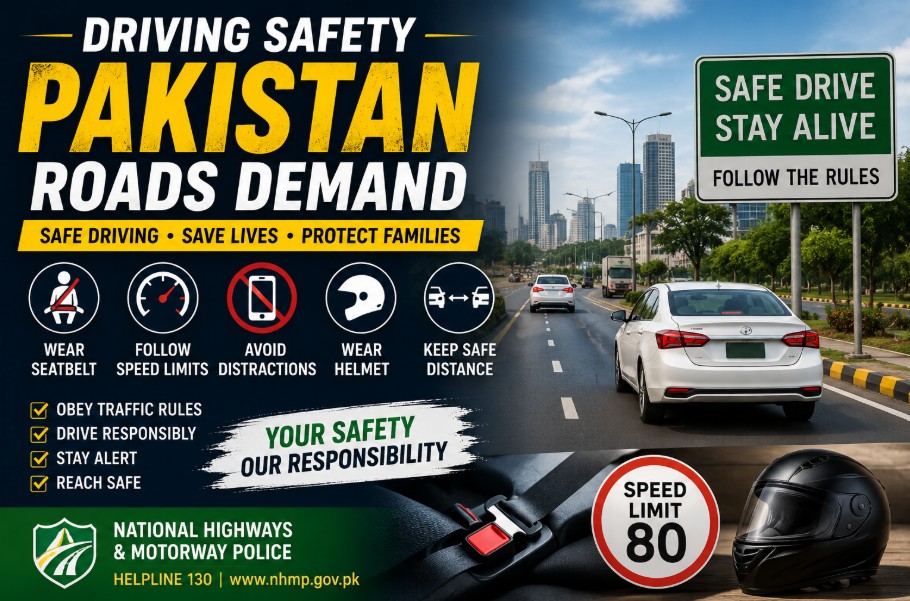
Practising good driving safety Pakistan roads demand can genuinely save your life. Moreover, our busy streets and highways see thousands of avoidable accidents every year. In this post, you will learn the key habits that keep you safe. Furthermore, this guide covers speed, seatbelts, fog, night driving, and emergency steps in clear detail.
To set the scene, road accidents remain a serious problem in Pakistan. In fact, the country records over 30,000 road deaths a year by some estimates. Sadly, most of these crashes are preventable. Therefore, strong driving safety Pakistan habits protect you, your family, and everyone around you.
Why Road Safety Matters in Pakistan
Road safety is a matter of life and death here. Firstly, our accident rate is among the highest in the region. Secondly, pedestrians and motorcyclists suffer the most. Thirdly, poor roads and weak enforcement add to the risk. So, personal responsibility becomes even more important.
Behavioural habits cause most of these crashes. Specifically, speeding, phone use, and skipping seatbelts are common. Moreover, lane violations and tailgating cause frequent collisions. Therefore, changing these habits prevents most accidents. In fact, the National Highways and Motorway Police run safety campaigns and share tips at nhmp.gov.pk.
The good news is that safety is largely in your hands. For example, simple habits sharply lower your crash risk. Moreover, they protect vulnerable people sharing the road. Therefore, every safe choice you make truly matters. Indeed, safe driving is the best gift to your family.
Common Causes of Accidents
Understanding the main causes helps you avoid them. Basically, most crashes share a few repeated mistakes. So, knowing them keeps you alert. The table below lists the biggest culprits.
Common Cause
Why It Is Dangerous
Overspeeding
Less reaction time, worse crashes
Mobile phone use
A major driving distraction
No seatbelt or helmet
Severe injury in a crash
Lane violations
Sudden, unexpected collisions
Tailgating in fog
Deadly rear-end pile-ups
Wrong-way driving
Head-on collisions
As the table shows, human error causes most accidents. However, that also means most are preventable. Therefore, fixing these habits saves countless lives. Below, each safety tip tackles one of these risks.
Check Your Car Before Driving
A safe drive begins before you even start the engine. Basically, a faulty car raises your accident risk sharply. So, quick checks are always worth the time. Below is what to inspect.
A few key checks take only minutes. Firstly, confirm your tyres have good tread and pressure. Secondly, test that all lights and indicators work. Thirdly, check your brakes feel firm and responsive. Moreover, ensure your mirrors are clean and adjusted. Therefore, these checks catch problems before they become dangerous.
Regular upkeep supports these daily checks. Specifically, a well-serviced car is a safer car. Moreover, worn brakes or bald tyres cause many crashes. A safe drive starts with a well-maintained vehicle. Our car maintenance Pakistan guide covers every key task. Therefore, good maintenance is the foundation of road safety.
Always Wear Your Seatbelt
The seatbelt is your simplest, strongest protection. Basically, it holds you safely in place during a crash. So, it dramatically reduces serious injury and death. Therefore, always buckle up before moving.
The rules now cover everyone in the car. Specifically, seatbelts are mandatory for the driver and front passenger. Moreover, 2026 rules extend this to all passengers. Additionally, motorway police strictly enforce this rule. Therefore, insist that every passenger belts up.
Children need extra protection too. Specifically, young children should use a proper child seat. Moreover, never let a child sit unrestrained in your lap. Therefore, secure every child correctly on every trip. Consequently, you protect your most precious passengers.
Helmet Safety for Motorcyclists
Motorcyclists face the highest risk on our roads. Basically, they have no metal shell to protect them. So, a helmet is truly life-saving. Therefore, every rider must wear one.
A helmet only works when worn correctly. Specifically, choose a good-quality, properly fitting helmet. Moreover, always fasten the strap securely. Additionally, the pillion rider needs a helmet too. Therefore, never treat a helmet as optional. Indeed, it is the single best protection for riders.
Follow the Speed Limits
Speeding is a leading cause of fatal crashes. Basically, higher speed means less time to react. So, staying within limits keeps you safe. The table below shows the general framework.
Road Type
General Speed Limit
Urban roads
50 km/h
Single highways
80–100 km/h
Motorways (cars)
Up to 120 km/h
Motorways (heavy vehicles)
100 km/h
However, the limits were revised in 2026 for safety and fuel saving. Therefore, always follow the posted signs and current NHMP updates. Moreover, driving too slowly on a motorway is also dangerous. Consequently, match the safe flow of traffic within the limit.
Avoid Distracted Driving
Distraction is now a top cause of accidents. Basically, taking your eyes off the road is deadly. So, the mobile phone is your biggest enemy here. Therefore, never text or call while driving.
Many habits count as dangerous distractions. For example, eating or fiddling with the screen splits your focus. Likewise, looking down for even two seconds is risky. Moreover, at speed, that covers a long distance blind. Therefore, keep your full attention on the road. If you must use the phone, pull over safely first.
Keep a Safe Following Distance
Tailgating causes many rear-end collisions. Basically, driving too close leaves no room to stop. So, keeping distance gives you time to react. Therefore, never crowd the vehicle ahead.
A simple rule makes this easy. Specifically, stay at least three seconds behind the car in front. Moreover, increase this gap in rain or fog. Additionally, heavy vehicles need even more space. Therefore, a safe gap prevents most rear-end crashes. Consequently, patience here truly protects you.
Lane Discipline and Overtaking
Poor lane habits cause sudden, avoidable crashes. Basically, weaving between lanes surprises other drivers. So, staying disciplined keeps traffic predictable. Therefore, use lanes correctly at all times.
The rules are simple to follow. Specifically, keep to the left lane for normal driving. Meanwhile, use the right lane only for overtaking. Moreover, always signal before changing lanes. Additionally, check your mirrors and blind spot first. Therefore, clear signalling prevents dangerous surprises.
Driving Safely at Night
Night driving brings extra hidden dangers. Basically, reduced visibility makes hazards harder to see. So, extra caution is essential after dark. Therefore, slow down and stay alert at night.
Good light habits protect everyone. Specifically, use your headlights from dusk onwards. However, avoid dazzling others with high beams. Moreover, dim your lights for oncoming traffic. Additionally, watch for unlit vehicles, carts, and pedestrians. Therefore, careful lighting keeps night drives safe.
Driving in Fog and Bad Weather
Fog and bad weather cause deadly pile-ups here. Basically, thick winter fog blankets many highways. So, extra care becomes critical in these conditions. Therefore, adjust your driving whenever visibility drops.
Several steps keep you safe in poor weather. Firstly, slow down well below the normal speed. Secondly, use low-beam or fog lights, never high beams. Thirdly, leave a much larger following distance. Moreover, never tailgate in fog, as pile-ups are common. You can check fog and weather forecasts on the PMD site at pmd.gov.pk.
Authorities also act early in dangerous weather. Specifically, motorways may close during heavy fog or snow. Therefore, respect any closures and delays. Moreover, smog and heavy rain call for the same caution. Consequently, patience in bad weather saves lives.
Avoid Fatigue and Never Drink & Drive
A tired driver is as dangerous as a distracted one. Basically, fatigue slows your reactions badly. So, never drive when you feel very sleepy. Therefore, rest before and during long journeys.
Simple habits fight driver fatigue. Specifically, take a short break every two hours. Moreover, a 15-minute nap restores alertness well. Additionally, avoid driving during your usual sleep hours. Therefore, plan long trips with proper rest stops.
Never drive under the influence of anything. Specifically, alcohol and drugs destroy your judgment and control. Moreover, certain medicines can also cause drowsiness. Therefore, always drive with a clear, alert mind. Consequently, a sober driver keeps everyone safe.
Watch Out for Vulnerable Road Users
Our roads are shared by many types of users. Basically, pedestrians and motorcyclists are the most at risk. So, watching for them prevents tragic accidents. Therefore, stay alert to everyone around you.
Certain situations demand extra care. For example, slow down near schools, markets, and crossings. Likewise, expect motorcyclists to appear in your blind spots. Moreover, watch for children and animals on rural roads. Therefore, anticipate their sudden movements. Indeed, protecting the vulnerable is every driver’s duty.
Drive Defensively and Stay Calm
Defensive driving is the smartest habit of all. Basically, it means expecting others to make mistakes. So, you stay ready to react safely. Therefore, always drive with a calm, alert mind.
A calm attitude prevents many crashes. Specifically, avoid road rage and aggressive overtaking. Moreover, do not respond to others’ provocations. Additionally, give way when it prevents a conflict. Therefore, patience keeps small situations from turning dangerous. Consequently, a calm driver is a safe driver.
Emergency Numbers to Save
Knowing the right numbers helps in a crisis. Basically, quick help can save lives after a crash. So, save these numbers in your phone today. The table below lists the key ones.
Service
Number
Motorway Police
130
Rescue (ambulance)
1122
Police
15
After any accident, act calmly and safely. Firstly, move to a safe spot if possible. Secondly, switch on your hazard lights. Thirdly, call for help using the numbers above. Moreover, note the details and take photos for records. Therefore, a calm response protects everyone involved.
Use Safety Accessories
The right accessories add another layer of safety. Basically, modern gadgets help you avoid and record incidents. So, they are worth considering for every car. Below are a few useful ones.
A dash cam is a valuable safety tool. Specifically, it records clear evidence if an accident happens. Our best dash cams Pakistan guide compares the top models. Moreover, a reverse camera removes your dangerous rear blind spot. Our install reverse camera Pakistan guide shows how to fit one.
Several other add-ons improve safety too. For instance, good lights, mirrors, and a first-aid kit all help. Our top car accessories for Pakistani roads guide lists the best options. Therefore, smart accessories support your safe-driving habits. Consequently, they give real peace of mind on every trip.
Keep Your Documents Ready
Proper documents are part of safe, legal driving. Basically, driving without them invites trouble. So, always carry the essentials with you. Therefore, keep them updated and handy.
A few documents are truly essential. Specifically, always carry a valid driving license. Moreover, keep your registration and insurance papers ready. Additionally, never let a learner drive unsupervised. Therefore, proper documents keep you road-legal. Consequently, they also speed up any official process after an incident.
Communities and Help
Helpful communities make safe driving easier to learn. For example, forums like PakWheels host detailed safety discussions. Similarly, official pages share rule updates and tips. Moreover, Facebook groups warn about hazards and closures. So, you can learn from thousands of fellow drivers.
Beyond online help, official bodies add real value. Specifically, the Motorway Police guide drivers on highways. Additionally, Rescue 1122 responds quickly to emergencies. Therefore, help is always within reach on the road. Indeed, knowing these resources brings real confidence.
These communities also spread useful awareness. For instance, members share fog alerts each winter. Likewise, they discuss new traffic rules and fines. Consequently, staying informed strengthens your driving safety Pakistan habits. Ultimately, shared knowledge makes our roads safer for everyone.
Frequently Asked Questions
What are the most important driving safety Pakistan tips?
Always wear your seatbelt and follow the speed limits. Moreover, never use your phone while driving. Additionally, keep a safe distance and stay alert. Therefore, these simple habits prevent most accidents.
Are seatbelts mandatory for all passengers in Pakistan?
Yes, 2026 rules require seatbelts for all passengers. Specifically, the driver and front passenger were always required. Moreover, motorway police strictly enforce this rule. Therefore, everyone in the car should buckle up.
How should I drive safely in fog?
Slow down well below the normal speed first. Moreover, use low-beam or fog lights, not high beams. Additionally, leave a much larger following distance. Therefore, never tailgate, since fog causes deadly pile-ups.
What is the speed limit on Pakistani motorways?
Cars can generally drive up to 120 km/h where allowed. Meanwhile, heavy vehicles have lower limits. However, the limits were revised in 2026. Therefore, always follow the posted signs and NHMP updates.
What emergency numbers should I save?
Save 130 for the Motorway Police first. Additionally, save 1122 for rescue and ambulance services. Moreover, 15 connects you to the police. Therefore, keep all three in your phone.
Is wearing a helmet compulsory for motorcyclists?
Yes, helmets are legally required for motorcyclists. Moreover, the pillion rider should wear one too. Additionally, the strap must be fastened securely. Therefore, never ride without a proper helmet.
What should I do right after an accident?
First, move to a safe spot if you can. Then, switch on your hazard lights. Next, call 130 or 1122 for help. Moreover, take photos and note the details for records.