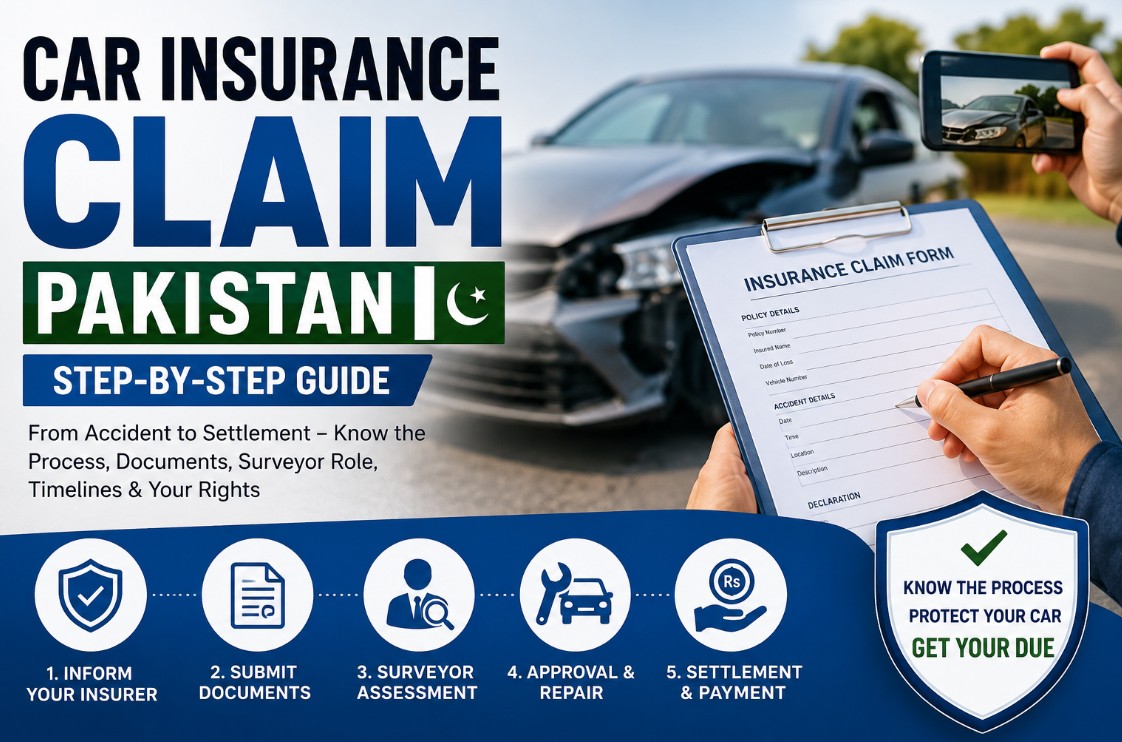
Knowing how to file a car insurance claim Pakistan drivers can rely on saves stress after any accident. Moreover, a correct claim means a faster, fuller payout with fewer rejections. In this post, you will learn the entire process from start to finish. Furthermore, this guide covers documents, the surveyor, settlement, and what to do if your claim is refused.
To begin, a claim is simply your request for the payout you are owed. Specifically, it turns your policy into real financial help. However, small mistakes can delay or even cancel it. Therefore, understanding the car insurance claim Pakistan process protects both your car and your money.
Why Knowing the Claim Process Matters
Understanding the process makes a stressful moment easier. Firstly, it helps you act quickly and correctly after a crash. Secondly, it prevents the common errors that cause rejections. Thirdly, it speeds up your settlement. So, a little knowledge saves a lot of trouble.
Many claims fail for avoidable reasons. Specifically, late reporting or missing documents often cause problems. Moreover, misunderstanding your cover leads to false expectations. Therefore, learning the steps beforehand puts you in control. Consequently, you get the payout you rightfully deserve.
The stakes are high after any incident. For example, a rejected claim can leave you paying for repairs yourself. Meanwhile, a smooth claim restores your car quickly. Therefore, preparation truly pays off here. Indeed, the right steps make all the difference.
Types of Claims You Can File
Different situations call for different claim types. Basically, your policy decides which claims you can make. So, knowing them sets the right expectations. The table below explains the main types.
Claim Type
When You File It
Own damage
Your car is damaged in an accident
Third-party
You damaged another’s car or property
Theft or total loss
Your car is stolen or written off
Natural disaster
Flood, storm, or riot damage
Windscreen or glass
Cracked or broken glass
As the table shows, comprehensive policies allow the most claims. Meanwhile, a third-party policy covers only others’ losses. Therefore, your claim options depend on your cover. Our vehicle insurance Pakistan guide explains every insurance type in detail.
Step-by-Step: How to File a Claim
The process follows a clear, logical order. Below is the full method to file a car insurance claim Pakistan drivers can follow.
Ensure safety first. After an accident, move to a safe spot. Then, switch on your hazard lights and check for injuries.
Inform your insurer. Next, report the incident as soon as possible. Moreover, note the claim or intimation number they give you.
File an FIR if needed. For theft or a serious accident, register a police report.
Document everything. Then, take clear photos of the damage and scene. Additionally, collect witness details if available.
Submit your documents. After that, provide the claim form and supporting papers.
Surveyor assessment. Now, the insurer’s surveyor inspects and values the damage.
Approval and repair. Finally, the insurer approves the claim, and repairs proceed.
Throughout this process, keep copies of everything. Therefore, good records protect your case. Indeed, clear evidence speeds up the whole claim.
Documents You Will Need
Having the right papers ready avoids delays. Basically, insurers ask for a standard set of documents. So, prepare these before you start. Below are the usual requirements.
The completed claim form.
A copy of your insurance policy.
Your CNIC and valid driving license.
The vehicle registration book.
An FIR, for theft or major accidents.
Clear photos of the damage.
A repair estimate from a workshop.
Additionally, theft claims need a few extra items. Specifically, insurers often ask for the original keys. Moreover, they may require a non-recovery report. Therefore, keep every document clear and complete. Consequently, a full file prevents avoidable delays.
The Role of the Surveyor
The surveyor plays a central role in your claim. Basically, this is a licensed professional appointed by the insurer. So, their job is to assess your loss fairly. Therefore, understanding their role helps you a lot.
The surveyor checks several things during inspection. Specifically, they confirm the cause and extent of the damage. Moreover, they judge whether the policy covers it. Additionally, they recommend the repair cost. Therefore, their report strongly influences your payout.
However, the surveyor’s figure is not final for you. Specifically, you can question a low assessment. Moreover, getting your own estimates from two reputable workshops helps. Therefore, always compare their offer against real repair costs. Consequently, you protect yourself from an unfairly low settlement.
Cashless vs Reimbursement Claims
Claims are usually settled in one of two ways. Basically, you either pay nothing upfront or pay and claim back. So, knowing the difference helps you plan. The table below compares them.
Feature
Cashless
Reimbursement
Where repaired
Panel or authorized workshop
Any workshop
Who pays the workshop
The insurer directly
You pay first
Your out-of-pocket
The deductible only
Full cost, then claim back
Best for
Convenience
Workshop choice
As the table shows, cashless claims are the most convenient. Specifically, the insurer settles directly with the workshop. Meanwhile, reimbursement gives you free choice of workshop. However, it ties up your money until the payout. Therefore, choose the method that suits your situation.
What to Do After an Accident
Your actions right after a crash matter greatly. Basically, they shape how smoothly your claim goes. So, stay calm and follow a clear order. Below are the key steps.
First, ensure everyone’s safety before anything else. Then, move the car aside if it is drivable. Next, photograph the damage, the scene, and the other vehicle. Moreover, note the other driver’s details and number plate. Therefore, thorough evidence strengthens your claim.
Modern tools make this even easier. Specifically, a dash cam records the whole incident clearly. Moreover, its footage can settle disputes about fault. Our best dash cams Pakistan guide compares the top models. Therefore, video evidence is a powerful backup for any claim.
Filing a Theft Claim
A theft claim follows a slightly different path. Basically, it needs stronger proof than a damage claim. So, act quickly and gather extra documents. Below is what to do.
First, report the theft to the police immediately. Then, obtain an FIR as soon as possible. Next, inform your insurer without delay. Moreover, provide the original keys and registration papers. Additionally, the insurer may request a non-recovery report later.
Theft claims also take longer to settle. Specifically, insurers wait for the police investigation. Moreover, they confirm the vehicle is truly unrecovered. Therefore, patience is needed during this process. Consequently, complete documents help speed things along.
Common Reasons Claims Get Rejected
Many claims fail for avoidable reasons. Basically, insurers reject claims that break the policy terms. So, knowing these reasons helps you avoid them. Below are the most common ones.
Several situations lead straight to rejection. For example, driving without a valid license voids the claim. Likewise, driving under the influence is never covered. Moreover, an expired or lapsed policy cannot pay out. Additionally, late reporting often causes rejection.
Other reasons relate to misuse or exclusions. Specifically, using a private car commercially can void cover. Moreover, wear and tear and mechanical faults are excluded. Furthermore, any fraud or false information cancels the claim. Therefore, honesty and correct use keep your claim valid.
How to Avoid Claim Rejection
A few habits keep your claim on solid ground. Firstly, report every incident to your insurer promptly. Secondly, keep your license and policy valid at all times. Thirdly, use your vehicle only as the policy allows. So, these habits prevent most rejections.
Careful records also protect you. For example, keep photos, receipts, and correspondence safe. Likewise, read your policy so you know the exclusions. Moreover, never exaggerate or falsify any detail. Therefore, an honest, well-documented claim rarely fails. Indeed, preparation is your best defence.
What If Your Claim Is Rejected?
A rejection is not always the final word. Basically, an unfair refusal can be challenged. So, you have clear rights as a policyholder. Below is how to fight back.
First, complain to the insurer in writing. Specifically, ask them to reconsider and explain their reasons. Then, wait for their response, usually within a month. However, if the reply is unsatisfactory, escalate the matter.
A powerful, free forum exists for this exact purpose. Specifically, the Federal Insurance Ombudsman resolves disputes between policyholders and insurers. Moreover, it is free, needs no lawyer, and decides most cases in about 60 days. You can file within three months at fio.gov.pk or via helpline 1082. Additionally, the SECP regulates insurers, and you can learn more at secp.gov.pk. Therefore, these official routes hold insurers accountable.
Tips for a Smooth Claim
A smooth claim comes down to good preparation. Firstly, report the incident as early as you can. Secondly, document the damage thoroughly with photos. Thirdly, keep all your paperwork organized. So, these steps make settlement faster.
A few more habits help greatly. For example, use panel workshops for convenient cashless claims. Likewise, get your own repair estimates to compare. Moreover, keep copies of every message with your insurer. Therefore, an organized approach avoids most disputes. Consequently, your claim moves quickly and fairly.
Understanding Your Policy First
A claim goes smoothly only when you know your cover. Basically, your policy defines exactly what you can claim. So, reading it carefully is essential. Therefore, understand it before you ever need it.
Focus on a few key details in the wording. Specifically, check your coverage, exclusions, and deductible. Moreover, note the reporting window for claims. Before you ever file a claim, understand what your policy covers. Our car insurance Pakistan guide explains how to choose and read a policy. Therefore, knowing your cover prevents false expectations.
Insurance, Repairs, and Car Care
Not every repair falls under your insurance. Basically, routine faults and servicing are usually excluded. So, some costs will always be your own. Therefore, budget for regular upkeep separately.
Good habits reduce both breakdowns and disputes. For instance, a well-maintained car faces fewer sudden faults. Our car maintenance Pakistan guide covers every key task. Moreover, common issues like AC faults are not covered by insurance. Our car AC repair Pakistan guide helps you fix them affordably. Therefore, pairing good care with the right cover protects you fully.
Communities and Help
Helpful communities make claims much easier to handle. For example, forums like PakWheels host real claim experiences. Similarly, they share which insurers pay quickly and fairly. Moreover, Facebook groups discuss common claim problems. So, you can learn from thousands of fellow drivers.
Beyond online help, official bodies add real value. Specifically, the Federal Insurance Ombudsman resolves unfair disputes for free. Additionally, your insurer’s helpline guides you through each step. Therefore, support is always within reach. Indeed, knowing these resources brings real peace of mind.
These communities also share useful warnings. For instance, members flag slow-paying or difficult insurers. Likewise, they explain how to strengthen a claim. Consequently, staying informed protects your car insurance claim Pakistan rights. Ultimately, shared knowledge leads to fairer settlements.
Frequently Asked Questions
How do I file a car insurance claim Pakistan drivers can trust?
First, inform your insurer as soon as the incident happens. Next, document the damage with clear photos. Then, submit the claim form and required documents. Finally, the surveyor assesses the loss before settlement.
What documents do I need for a claim?
You need the claim form, policy copy, and CNIC. Additionally, provide your driving license and registration book. Moreover, an FIR is required for theft or major accidents. Therefore, keep all documents clear and ready.
How long does a car insurance claim take?
Simple damage claims often settle within a few weeks. However, theft claims usually take longer. Specifically, they wait for the police investigation. Therefore, complete documents help speed things up.
Why do insurers reject car insurance claims?
Common reasons include an invalid license or expired policy. Moreover, driving under the influence voids the claim. Additionally, late reporting and fraud cause rejection. Therefore, follow your policy terms carefully.
What can I do if my claim is rejected?
First, complain to your insurer in writing. Then, if unsatisfied, escalate the matter further. Specifically, the Federal Insurance Ombudsman resolves disputes for free. Moreover, you can file within three months at fio.gov.pk.
What is the surveyor’s role in a claim?
The surveyor assesses the cause and extent of the damage. Moreover, they judge if the policy covers it. Additionally, they recommend the repair cost. However, you can question a low assessment with your own estimates.
Does insurance cover car AC or routine repairs?
No, routine repairs and servicing are usually excluded. Specifically, wear, tear, and mechanical faults are not covered. Moreover, AC repairs fall outside a standard policy. Therefore, budget for regular maintenance yourself.
Can dash cam footage help my claim?
Yes, dash cam footage is strong supporting evidence. Specifically, it shows exactly what happened during the incident. Moreover, it can settle disputes about who was at fault. Therefore, it strengthens your overall claim.