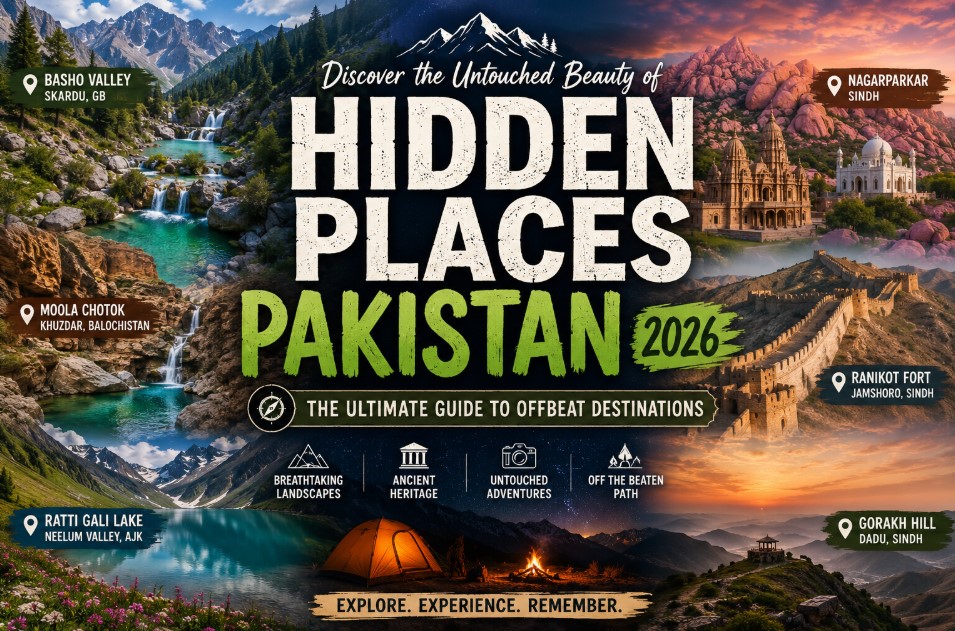
Hidden places Pakistan are the true treasures of the South Asian landscape that remain untouched by mainstream tourism. In May 2026, the global interest in offbeat travel has led many to seek these quiet, majestic corners of the country. Consequently, this guide provides a deep dive into the most underrated valleys, historic ruins, and crystal-clear springs across the provinces.
In this post, we will explore the rugged ravines of Balochistan and the high alpine meadows of Gilgit-Baltistan. Furthermore, we will look at the mystical Jain temples of the Tharparkar desert and the “Great Wall” of Sindh. This comprehensive guide ensures you have all the logistical details for your 2026 adventure. Whether you are a solo traveler or a group of explorers, these hidden places Pakistan will redefine your perception of the region.
Basho Valley: The Enchanted Forest of Skardu
Basho Valley is a stunning alpine retreat located in the Rondu District of Skardu. In early 2026, it has become a favorite for those wanting to escape the crowded centers of Hunza. The valley sits at an elevation of approximately 10,000 feet. Consequently, the air is crisp and the scenery is perpetually green during the summer months.
The Thrill of the Journey
Reaching the valley is an adventure in itself. First, you must cross the wobbly, hanging Basho Bridge. This bridge is a historical structure that connects the Jaglot-Skardu Road to the valley track. After crossing, you must board a 4×4 jeep. The track is around 10 kilometers long and very bumpy. Specifically, it takes about 2 hours to reach the main meadows. However, the views of the gushing Basho Nala (stream) along the way make the discomfort worthwhile.
Key Attractions in Basho
Once you arrive, the “Camel Rock” is a must-see landmark. This rock formation naturally resembles the back of a camel. Locals often tell stories about its origin. Moreover, the Basho Forest is a rare find in this high-altitude desert. It consists of ancient Juniper and Pine trees. Furthermore, for the adventurous, a two-day trek from the meadows leads to three small glacier-fed lakes. These lakes are perfect for wild camping under the 2026 starry skies.
Nagarparkar: Pink Granite and Ancient Spirits
Nagarparkar is a culturally rich town located in the southeastern corner of Sindh. It lies at the base of the Karoonjhar Mountains near the Indian border. These mountains are made of unique pink granite. Therefore, the entire landscape glows during sunset. In May 2026, the region is seeing a revival of interest in its Jain heritage.
The Mystical Karoonjhar Mountains
The Karoonjhar range is not just a geological marvel. It is a symbol of local resilience. The mountains offer incredible hiking trails that turn lush green after the monsoon. Specifically, the Bhodisar Dam Lake provides a serene spot for reflection. In 2026, environmental NGOs are working to designate this area as a national park. Consequently, the wildlife, including rare peacocks and deer, is well-protected.
Jain Temples and Islamic Architecture
The architectural diversity here is staggering. You can visit several ancient Jain temples that feature intricate stone carvings. Furthermore, the Bhodesar Mosque is a stunning example of white marble architecture from the 16th century. It sits quietly at the foot of the hills. Interestingly, the local Marwari and Sindhi cultures blend seamlessly here. This creates a peaceful atmosphere that is rare to find in busy urban centers.
Moola Chotok: The Ravine of Falling Water
Moola Chotok is a hidden ravine located deep in the Khuzdar District of Balochistan. Historically known as “the pearl of Balochistan,” it features a series of cascading waterfalls. The name “Chotok” literally translates to “falling water.” In 2026, it remains one of the most secluded hidden places Pakistan has to offer.
The Oasis in the Desert
The journey to Moola Chotok starts from Khuzdar city. You must hire a 4×4 jeep for a 3 to 4-hour ride through rugged terrain. However, once you enter the ravine, the temperature drops significantly. The water in the azure pools is perennial and stays cool even in the hot summer. Furthermore, the sheer cliffs surrounding the pools create a natural fortress. This provides a sense of total isolation from the outside world.
Camping and Adventure
Camping is the only way to truly experience Moola Chotok. In 2026, several tour operators from Karachi provide weekend packages. These usually include bonfire nights and traditional Balochi food. Specifically, the “Sajji” cooked over open flames is a local delicacy you must try. Moreover, the night sky here is free of any light pollution. As a result, you can see the Milky Way with your naked eye. This makes it a paradise for travel photography Pakistan enthusiasts.
Soon Valley: The Salt Range’s Secret Garden
Soon Valley is a picturesque valley in the Khushab District of Punjab. It is part of the Salt Range and offers a unique mix of lakes and forests. In early 2026, a new road detour from Talagang has made the journey slightly longer but much more scenic. Consequently, the valley feels even more like a hidden world.
Lakes of the Soon Valley
The valley is famous for its three main lakes: Uchhali, Khabikki, and Jhalar. Uchhali Lake is a saltwater lake that attracts thousands of migratory birds during the winter. Khabikki Lake is smaller and surrounded by gentle hills. In 2026, the government has developed new walking tracks around these lakes. Furthermore, the Kenhatti Garden offers a refreshing stop with its natural springs and fruit orchards.
Historical Sites and Ancient Rocks
The valley is also rich in history. You can visit the ancient Sakesar Top, which is the highest point in the Salt Range. Interestingly, the area features “mysterious hanging rocks” and lava-like formations. These geological wonders date back millions of years. Moreover, the local Naushera culture is very welcoming. You can enjoy traditional “Dhoda” (local sweet bread) while interacting with the residents.
Ranikot Fort: The Great Wall of Sindh
Ranikot Fort is often called the largest fort in the world. It is located near Sann in the Jamshoro District. The circumference of the fort is a staggering 32 kilometers. Historically, it was built by the Talpur dynasty to defend the region. However, its massive scale suggests it might be much older. In 2026, it remains a majestic site for those exploring hidden places Pakistan.
A Massive Perimeter
Walking along the ramparts of Ranikot feels like walking on the Great Wall of China. The fort walls follow the natural contours of the hills. Consequently, the views from the guard towers are expansive. Furthermore, there are two smaller forts within the larger walls: Miri Fort and Shergarh Fort. Miri Fort served as the royal residence. Meanwhile, Shergarh Fort sits on a high peak for surveillance.
Logistics and Best Time to Visit
The fort is about a 4-hour drive from Karachi. However, it is best to visit during the winter months from November to February. The summer heat in Sindh can be extreme and dangerous for hikers. Specifically, you should carry plenty of water and a reliable spare tire for your vehicle. In 2026, the road from Sann to the fort entrance has been improved, making it accessible for standard cars.
Ratti Gali Lake: The Dream Lake of Neelum Valley
Ratti Gali Lake is a high-altitude glacial lake in the Neelum Valley of Azad Kashmir. It is situated at over 12,000 feet. The lake is fed by the melting glaciers of the surrounding peaks. In May 2026, the trek to this lake is a top recommendation for nature lovers. For a broader overview of the region, see our Northern Pakistan travel guide.
The Alpine Trek
The journey begins at Dowarian, where you must hire a jeep. The track to the base camp is steep and thrilling. From the base camp, you must trek for about one hour. Alternatively, you can hire a horse if the altitude makes you breathless. Once you reach the top, the sight of the deep blue water surrounded by red flowers is magical. Furthermore, the “Ratti Gali” (Red Street) name comes from the colorful flora that blooms in the summer.
Camping at 12,000 Feet
Most visitors choose to stay overnight at the base camp in luxury tents. In 2026, eco-friendly campsites have been established to minimize the impact on the environment. Consequently, you can enjoy a hot meal while watching the clouds roll over the peaks. Interestingly, the weather can change in minutes. Therefore, you must always pack waterproof gear and warm layers.
Broghil Valley: The High Frontier of Chitral
Broghil Valley is one of the most remote and hidden places Pakistan has left. It is located at the northernmost tip of Chitral, bordering Afghanistan’s Wakhan Corridor. In 2026, it remains an “expedition-only” destination for the most serious adventurers.
The Land of Yaks and Lakes
The valley is home to the Wakhi people, who live a traditional nomadic lifestyle. Specifically, yaks are the primary mode of transport here. You can witness the famous “Yak Polo” festivals held in the summer. Furthermore, the Karomber Lake is a jewel of the valley. It is one of the highest lakes in the world. The reflection of the snow-capped peaks in the still water is a sight you will never forget.
A Challenging Journey
Reaching Broghil requires a multi-day journey from Chitral city. First, you take a jeep to the end of the road. Second, you must trek for several days over high mountain passes. However, the hospitality of the Wakhi people makes up for the hardship. Moreover, the valley offers a rare glimpse into a culture that has remained unchanged for centuries.
Gorakh Hill Station: The Murree of Sindh
Gorakh Hill is a high-altitude plateau in the Dadu District of Sindh. It sits at an elevation of 5,688 feet. Historically, it was a summer retreat for the locals. In 2026, it has become a popular weekend getaway for residents of Karachi and Hyderabad.
Cool Temperatures in the South
While the plains of Sindh are burning, Gorakh Hill stays cool. Consequently, it is often called the “Murree of Sindh.” The drive from Dadu is steep and requires a 4×4 vehicle. Furthermore, the sunrise and sunset from the “Benazir View Point” are breathtaking. You can see the Kirthar mountain range stretching into the horizon.
Starry Nights and Bonfires
In 2026, the Sindh Tourism Development Corporation (STDC) has upgraded the guest houses. However, many travelers still prefer camping. The night sky is exceptionally clear. As a result, it is a favorite spot for astronomers. Interestingly, the temperature can drop below freezing during the winter nights. Therefore, don’t forget to pack your heaviest jackets.
Comparison: Best Hidden Places by Region 2026
Destination
Region
Elevation
Best Feature
Basho Valley
Skardu, GB
10,000 ft
Enchanted Forests
Moola Chotok
Khuzdar, Balochistan
4,058 ft
Azure Waterfalls
Soon Valley
Khushab, Punjab
2,500 ft
Salt Range Lakes
Nagarparkar
Tharparkar, Sindh
1,000 ft
Pink Granite Hills
Ratti Gali
Neelum, AJK
12,130 ft
Glacial Alpine Lake
Ranikot Fort
Jamshoro, Sindh
1,000 ft
32km Fort Wall
2026 Logistics and Travel Updates
Travel in Pakistan has seen major changes in the last year. In 2026, several infrastructure projects have made these hidden places Pakistan more accessible.
Improved Road Networks
The completion of the Jaglot-Skardu Road (JSR) has reduced travel time to the North significantly. Consequently, you can now reach Skardu in about 8 hours from Gilgit. Furthermore, the new highway from Karachi to Khuzdar has made Moola Chotok a much easier weekend trip. However, always check for local road construction updates on social media before you leave.
The Digital Era of Tourism
In 2026, most remote guest houses are available for booking through mobile apps. Moreover, Starlink satellite internet is now available at several high-altitude base camps. This allows you to stay connected even in the most isolated valleys.
Safety and Responsible Travel
Exploring offbeat locations requires a higher level of responsibility.
Hire Local Guides: This supports the local economy and ensures your safety.
Respect Local Customs: Dress modestly and ask for permission before taking photos of people.
Leave No Trace: Always carry your trash back with you. In 2026, several districts have introduced heavy fines for littering.
Check Weather Reports: Mountain weather is unpredictable. Specifically, avoid trekking during heavy rain due to landslide risks.
FAQs: Hidden Places Pakistan
Which is the hardest hidden place to reach?
Broghil Valley is the most challenging. It requires a 4×4 jeep and several days of high-altitude trekking. Consequently, it is only for experienced adventurers.
Is Moola Chotok safe for families?
Yes, it is safe. However, the jeep ride is very bumpy and can be tiring for elderly members or very young children.
Can I visit Ranikot Fort in a standard car?
Yes, the main road to the gate is paved. However, to explore the internal forts like Shergarh, you will need a 4×4 vehicle.
What is the best time for Nagarparkar?
The best time is right after the monsoon season (August to October). The pink mountains turn lush green, creating a stunning contrast.
Are these places safe for solo travelers?
Most hidden places Pakistan are safe. However, for Balochistan, it is always better to join a group or hire a local guide for extra security.
Conclusion: Start Your 2026 Exploration
In summary, hidden places Pakistan offer an experience that no commercial tour can match. From the high-altitude forests of Basho to the turquoise ravines of Moola Chotok, the variety is endless. In 2026, the country has become more traveler-friendly while still retaining its raw, authentic charm. Furthermore, these offbeat spots provide the perfect opportunity to connect with local cultures and nature.
By following the tips and logistics in this post, you can plan a successful and safe journey. Remember to travel responsibly and respect the environments you visit. Whether you are looking for ancient history or modern adventure, these secret corners of Pakistan are waiting to be explored. Pack your bags, clear your memory cards, and embark on the journey of a lifetime!