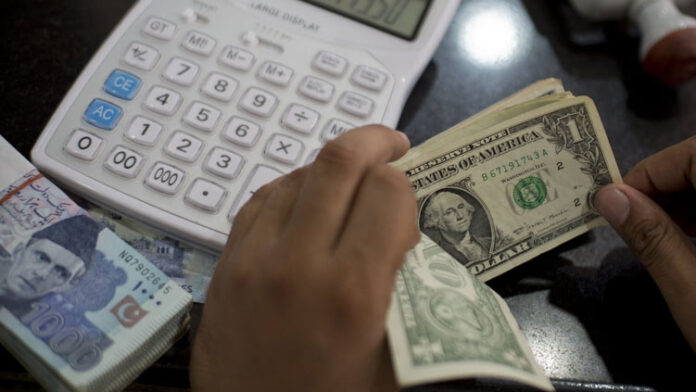
At its core, “what is open market” refers to a marketplace—physical or digital—where goods, services, or financial instruments are traded freely, guided by the forces of supply and demand, with minimal external intervention.
1. Defining “What Is Open Market”
An open market is a system in which buyers and sellers interact freely, without restrictions such as tariffs, quotas, or licensing requirements. Prices are determined by supply and demand rather than being set by governments or monopolies.
In finance, the term takes on a more specialized meaning: markets where stocks, bonds, and currencies are traded freely—examples include major stock exchanges and the international foreign exchange market.
Competition & Innovation: Encourages new entrants and efficient operations.
Economic Growth: Facilitates resource allocation and investment.
Risks: Exposure to volatility, manipulation, or fraud.
2. Types of Open Markets
Financial Markets
Stock exchanges (e.g., NYSE, NASDAQ): Where company shares are bought and sold.
Bond markets: Governments and companies issue debt instruments freely.
Foreign exchange (Forex): Global currency trading without centralized control.
Goods & Services Markets
Physical open markets: Farmers’ markets, bazaars—any unregulated trading venue.
Online platforms: eBay, Amazon, freelancer marketplaces—all operate under open-market principles.
3. Open vs. Closed Markets
Open Market
Free entry/exit of participants.
Price discovery via supply and demand.
Generally, more volatile but efficient.
Closed Market
Governed by regulations, tariffs, or quotas.
Prices may be fixed or non-competitive.
Less volatility but may create inefficiencies and stifle innovation.
4. Central Banks & “Open Market” — Not Just a Market
In economics, the phrase “what is open market operations” (or OMO) refers to a key tool of monetary policy, not just market activity.
What Are Open Market Operations?
Central banks buy or sell government bonds/securities in open markets to manage the money supply and influence interest rates.
When buying, they inject liquidity and generally lower short-term interest rates.
When selling, they absorb liquidity and typically raise rates.
Expanded forms, like quantitative easing (QE), involve large-scale asset purchases.
How OMOs Work
Banks have reserve accounts with the central bank.
Buying securities increases reserves and funds in the banking system.
Selling securities reduces these reserves.
These operations allow central banks to steer short-term interest rates.
Global Examples
U.S. Fed: Adjusted OMO usage post-2008 crisis, shifting to reserve rate controls.
ECB: Conducts refinancing operations and collateralized repo transactions.
RBI (India): Uses outright purchases and repos as part of its Liquidity Adjustment Facility.
5. Exchange Rate Markets & Open Market Rate in Pakistan
When discussing “what is open market rate in Pakistan,” this pertains to the foreign exchange rate determined by currency dealers and money-changers, distinct from the interbank rate used by banks.
Key Differences
Interbank Rate: Rate at which banks transact, often more favourable.
Open Market Rate: Public-facing, includes dealer margins and fluctuates more.
Examples:
As of June 16, 2025, the 50 USD to PKR open market rate was PKR 14,257.50.
As of June 17, 2025, the 500 USD to PKR open market rate was PKR 142,575.00.
The Pakistani rupee has seen dramatic devaluation: from PKR 3.31 per USD in 1947 to over PKR 280 in 2024.
6. Why the Open Market Rate Matters to Pakistanis
Remittances: Affect the value of money sent from abroad.
Travel & Imports: Direct impact on foreign spending and import costs.
SMEs and Tradesmen: Essential for setting prices on imported goods.
Decentralized, 24/7 open market (e.g., GBP/USD, EUR/PKR).
Rates—open market for individuals vs. interbank for banks.
Central Bank OMOs
U.S. Fed uses purchases/sales to influence the federal funds rate.
ECB, SNB, and RBI each conduct OMOs tailored to their financial systems.
12. The Future of Open Markets
Trends
Digitalization: Rise of e-commerce, decentralized trading platforms.
Globalization vs. Protectionism: Tension between open trade and regional economic policies.
Central bank innovation: CBDCs, new monetary tools, and refined OMOs.
Public sentiment: Calls for regulation and equitable outcomes from open markets.
Policy Challenges
Balancing free markets with safeguards.
Ensuring inclusion for all participants.
Adapting regulations to tech-driven markets (e.g., AI trading, blockchain).
Conclusion: Understanding “What Is Open Market?”
To fully grasp what is open market, we must recognize its dual nature:
Open market as a marketplace: Places where goods, services, and securities are traded freely, shaping economies through supply and demand.
Open market operations: Strategic tools used by central banks to regulate economies via buying or selling financial assets.
Additionally, in Pakistan, open market rate—often higher than interbank—plays a crucial role in daily economic activity, remittances, and inflation control.
Open markets foster competition and innovation but require ongoing oversight to prevent manipulation, inequity, and instability. Striking the right balance remains an enduring challenge for economists, policymakers, and citizens alike. For more insights into economic trends and financial topics, explore our business and finance articles.