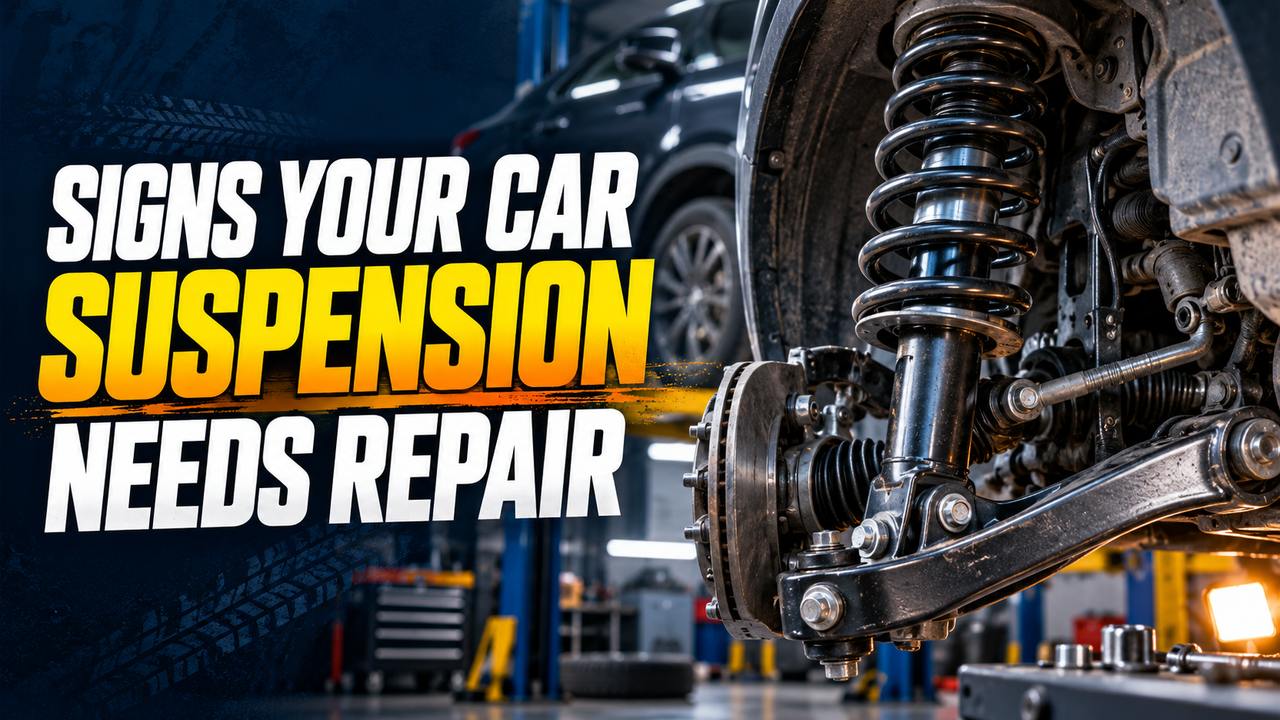
Potholes, surprise speed breakers and broken roads test every car suspension in Pakistan, often every single day. Over time, shocks, bushings and joints wear out quietly. As a result, the car feels bouncy, noisy or less safe. This guide explains the warning signs, simple checks you can do at home and when to visit a mechanic.
Safety warning: Never get under a car held up only by a jack. Instead, use proper jack stands on firm, level ground and chock the wheels. Also, never try to remove a coil spring without the right tools, because a compressed spring stores enough force to cause serious injury.
How Car Suspension Works on Roads in Pakistan
The suspension connects the wheels to the body. Basically, it keeps the tyres pressed on the road, absorbs bumps and keeps the car stable when you brake or turn. Therefore, when it wears out, comfort drops first, and safety follows.
Springs: carry the weight of the car and soak up big bumps.
Shock absorbers or struts: stop the springs from bouncing again and again.
Control arms and ball joints: hold the wheel in place while it moves up and down.
Suspension bushings: rubber pieces that reduce noise and vibration at each joint.
Stabiliser links and tie rod ends: help with cornering and steering.
Most small cars here, such as the Alto, Cultus and Wagon R, use struts at the front. Meanwhile, larger sedans and SUVs often have more complex layouts. Either way, the same warning signs apply, because every design uses similar parts.
Signs Your Car Suspension Needs Repair in Pakistan
A worn car suspension in Pakistan rarely fails overnight. Instead, it sends small signals for weeks or months. Watch for these, especially after the monsoon season:
The car keeps bouncing after a speed breaker.
The nose dives sharply when you brake.
The body leans or sways a lot in turns.
You notice the car pulling to one side on a straight road.
You hear clunks, knocks or squeaks over bumps.
One corner sits lower than the others.
The tyres show patchy or uneven wear.
Car suspension noise is often the first clue, especially at low speed over broken patches. Therefore, drive slowly over a speed breaker with the windows down and the radio off, and listen for knocks from each corner. In addition, a car that feels floaty on the motorway, or wanders in strong crosswinds, often has tired shocks.
The Bounce Test and Other Simple Checks
You can do a few checks at home without any tools. However, they only point you in the right direction; a mechanic must confirm the fault.
Bounce test: push down hard on one corner of the car and let go. Ideally, it rises once and settles. If it bounces two or three times, that shock is probably weak.
Look for leaks: check each shock body for oily, dusty patches, since a leaking shock loses its damping.
Check the height: park on level ground and measure from the wheel centre to the arch on each corner.
Inspect rubber parts: with a torch, look for cracked bushings and torn rubber boots.
Read the tyres: run your hand over the tread and feel for dips or uneven edges.
Also, a mechanic can check for play in the joints by lifting each wheel and rocking it. However, do this only with the car safely on jack stands.
Worn Shock Absorbers and Struts
Worn shock absorbers are among the most common complaints about car suspension in Pakistan. Because our roads hit them so hard, they often wear faster than drivers expect. Moreover, a weak shock does more than spoil comfort.
For example, it lets the tyre skip over bumps, so the car grips less during hard braking and sharp turns. Similarly, it can cause the nose to dive, which unsettles the car in an emergency stop. In addition, worn shocks speed up tyre wear and stress other parts.
Shocks replacement should happen in pairs on the same axle, so that both sides behave the same. Also, ask the mechanic to check the strut mounts and bump stops at the same time, since they often wear together.
Bushings, Ball Joints and Links
Not every knock comes from the shocks. In fact, small rubber and metal parts cause many of the noises drivers hear.
Suspension bushings: when the rubber cracks, you hear clunks over bumps and feel more vibration.
Ball joints: worn joints knock and make the steering feel loose. Above all, a badly worn joint can separate, so replace it promptly.
Stabiliser links: these often rattle over small bumps at low speed.
Tie rod ends: worn ends cause wandering steering and uneven tyre wear.
Fortunately, these parts usually cost far less than a full set of shocks. Therefore, a good mechanic finds the exact worn part instead of replacing everything.
Uneven Tyre Wear and Wheel Alignment
Clearly, your tyres tell the story of your suspension. For instance, patchy, cup-shaped dips around the tread often point to worn shocks. Meanwhile, wear on only the inner or outer edge usually means the wheels need alignment, or a joint has worn.
Uneven tyre wear wastes money, because tyres are expensive. Therefore, get a wheel alignment after any suspension repair, after a hard pothole hit and whenever the steering wheel sits off-centre. Also, keep the pressure correct; our guide on tyre pressure in Pakistan explains how.
Not Every Noise Is the Suspension
Some sounds feel like suspension trouble but come from nearby parts. Therefore, describe the noise carefully to your mechanic, because it saves time and money.
Humming that rises with speed: often a worn wheel bearing, not a shock.
Clicking on full-lock turns: usually a worn CV joint on front-wheel-drive cars.
Vibration at motorway speed: often unbalanced wheels, so try wheel balancing first.
Rattle from under the middle: frequently a loose exhaust heat shield.
Also, a squeal while braking points to the brakes rather than the suspension. In that case, read our guide on what to do when brakes start squeaking.
Common Problems and Costs for Car Suspension in Pakistan
Prices for car suspension in Pakistan vary hugely by model, brand and city. For that reason, the table shows cost levels rather than fixed rupee figures. Always get a written quote and compare two workshops.
Symptom
Likely cause
Fix
Cost level
Bouncing after bumps
Worn shocks or struts
Replace in pairs
Medium to high.
Clunk over speed breakers
Worn bushings or links
Replace the worn parts
Low to medium.
Loose, wandering steering
Ball joints or tie rod ends
Replace and align
Low to medium.
Car pulls to one side
Alignment, tyre or joint fault
Check tyres, then align
Low.
One corner sits low
Broken or sagging spring
Replace springs in pairs
Medium.
Edge wear on tyres
Poor alignment
Wheel alignment
Low.
Low means a small part or a quick job, while high usually means a full set of shocks or struts. Labour also differs a lot between a roadside workshop and an authorised dealer.
What Happens During Car Suspension Repair in Pakistan
Knowing the usual steps helps you avoid unnecessary work. Typically, a good workshop handling car suspension in Pakistan follows a clear routine.
The mechanic takes a short test drive to hear the noise.
Next, the car goes up on a lift for a close inspection.
The mechanic checks each joint for play and each shock for leaks.
You receive a quote that lists every part, as well as the labour charge.
After the repair, the workshop aligns the wheels and test drives again.
Finally, ask to see the old parts. As a result, you know the work really happened, and you can see how worn they were.
Genuine, Kabli or Aftermarket Parts?
Generally, most workshops offer three choices. Genuine parts from authorised dealers fit well and usually last longest, but they cost the most. On the other hand, used imported “kabli” parts cost less, although their condition is hard to judge.
Meanwhile, aftermarket parts range from good branded options to poor copies. Therefore, ask for the brand name, check the packaging and keep the receipt. If you choose kabli shocks, push the rod in by hand; a healthy shock resists smoothly and evenly, whereas a dead one moves too easily. Above all, avoid unknown cheap shocks, because they may fail within months on our roads.
When to See a Mechanic About Car Suspension in Pakistan
Some suspension faults affect safety directly. For this reason, visit a trusted workshop soon if:
The steering feels loose, heavy or suddenly different.
You hear a loud clunk, especially after a big pothole.
The car pulls hard under braking.
A wheel looks tilted, or a tyre rubs the arch.
The car drove through deep floodwater.
Strut and spring work needs special tools, so leave it to professionals. In addition, after a flood, ask for a full underbody check; our flood safety guide for car owners explains the risks.
How to Make Car Suspension Last Longer in Pakistan
Good habits can add years to any car suspension in Pakistan. For example:
Slow right down for speed breakers, and cross them straight on.
Avoid potholes when it is safe, instead of hitting them at speed.
Do not overload the car, especially on long family trips.
Keep tyre pressure correct, since soft tyres pass more shock to the suspension.
Get the suspension checked at every major service.
It depends on the roads, the load and the part quality. Therefore, follow your owner’s manual and get the suspension checked at each service, rather than relying on a fixed number.
Should I replace shocks in pairs?
Yes. In general, replace both shocks on the same axle together, so that the car stays balanced when it brakes and turns.
Can I drive with a bad suspension?
You can usually drive gently to a workshop. However, worn suspension increases stopping distances and reduces grip, so fix it soon. Meanwhile, avoid high speeds, heavy loads and sharp turns until the repair is done.
Why does my car clunk over speed breakers?
Clunks usually come from worn bushings, stabiliser links or ball joints. In some cases, a loose exhaust or heat shield makes a similar sound. Therefore, ask the mechanic to check the whole underbody, not just the shocks.
Do I need wheel alignment after suspension repair?
Yes, in most cases. New joints, arms or struts change the wheel angles, so an alignment protects your tyres.
Final Word
In short, a healthy car suspension in Pakistan keeps you comfortable and, more importantly, safe. Watch for bouncing, pulling, noises and uneven tyre wear, and fix small faults early. To learn how the different suspension types work, see the vehicle suspension page on Wikipedia. Above all, slow down for speed breakers, because your suspension pays for every one.