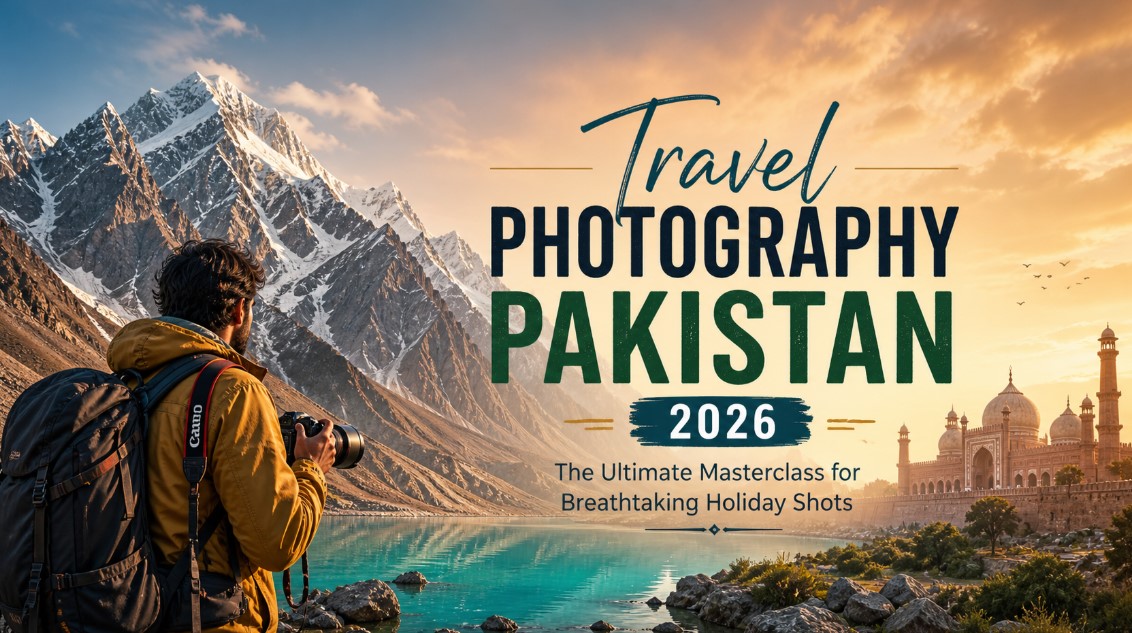
Travel photography Pakistan is the absolute best way to preserve the memory of the diverse landscapes and rich cultures found in this nation. In early 2026, the global fascination with Pakistan’s hidden gems has reached an all-time high. Consequently, thousands of creators are now flocking to the Karakoram peaks and ancient Mughal cities to document their journeys.
In this post, we will explore the expert techniques needed to turn your casual vacation snaps into professional-grade art. We will discuss high-end gear choices, timeless composition rules, and the specific visual trends of 2026. Furthermore, this guide provides a deep dive into the ethics of street photography and the best hidden locations. Whether you use a pro mirrorless body or a flagship smartphone, this travel photography Pakistan guide will help you capture the soul of the country.
Selecting the Best Camera Gear for Pakistan in 2026
Choosing the right equipment is the foundation of any successful visual story. In 2026, the industry has shifted toward compact and highly capable setups. Heavily burdened travelers often struggle with fatigue on long hikes. Therefore, prioritizing lightweight yet powerful gear is essential for success.
Mirrorless Excellence: The 2026 Leaders
For those who demand the highest image quality, mirrorless systems are the gold standard. Specifically, the Sony a7CR has become the top choice for travelers visiting the north. It packs a 61MP sensor into a tiny body. Additionally, the Fujifilm X-T50 is a great budget-friendly alternative. It features built-in film simulations that provide an “analog look.” This vintage aesthetic is incredibly popular in 2026 travel magazines and social media feeds.
Lenses: The Versatility Factor
When navigating the varied terrain of Pakistan, you need glass that can handle anything. A 24-70mm f/2.8 zoom lens is often the only tool you truly need. It allows you to shoot wide-angle vistas in the Hunza Valley. Moreover, it can zoom in for intimate portraits in the narrow streets of Peshawar. However, if you prefer street photography, a 35mm or 50mm prime lens is lighter and more discreet. For a complete list of what to carry, check our travel packing Pakistan tips to ensure your kit is balanced.
Essential Accessories for the Field
Power management is a major hurdle in remote regions like Deosai. Consequently, you must carry at least three to four spare batteries. Furthermore, a rugged external SSD is necessary for backing up high-resolution files. Dust and sand are also common in the desert regions of Sindh and Balochistan. Therefore, always keep a high-quality sensor cleaning kit and several microfiber cloths in your bag.
Top Photography Locations in Pakistan: Peaks, Palaces, and Plains
Pakistan offers a visual variety that few countries can match. To truly master travel photography Pakistan, you must understand the geography of light across the provinces.
The Majestic North: Gilgit-Baltistan and Azad Kashmir
The northern mountains are a dream for landscape enthusiasts. Specifically, the Passu Cones in Hunza offer a sharp, dramatic silhouette against the sky. For the best effect, shoot them during the “Blue Hour” right after the sun sets. The soft light highlights the jagged textures of the rocks. Additionally, the Fairy Meadows provide the most iconic view of Nanga Parbat. If you are planning a trip, refer to our Northern Pakistan travel guide for the best timing.
The Cultural Heart: Lahore, Multan, and Peshawar
In the cities, the focus shifts to architecture and humanity. The Badshahi Mosque in Lahore is a masterpiece of symmetry and red sandstone. To show its massive scale, use a wide-angle lens. Wait for a person to walk through the frame to provide a sense of perspective. Furthermore, the Walled City of Lahore is perfect for “Cinematic Photography.” The dusty shafts of light in the narrow alleys create a moody atmosphere that is very trendy in 2026.
The Coastal and Desert Contrast: Balochistan and Sindh
For a different vibe, visit Hingol National Park in Balochistan. The rock formations look like a scene from a science fiction movie. Moreover, the turquoise water of Kund Malir creates a stunning contrast with the golden desert dunes. This area is particularly great for drone photography due to the open space. However, make sure you follow the latest 2026 drone laws before flying.
The Art of Composition: Rule of Thirds and Depth
A great photograph is designed in the mind before the shutter is pressed. Composition is the language you use to guide the viewer’s eye.
Applying the Rule of Thirds
This is the most basic yet effective rule in the world. Imagine your frame is divided into a 3×3 grid. By placing your subject on the intersections of these lines, you create a balanced image. For example, when shooting a portrait of a shepherd in Skardu, place his eyes on the upper grid intersection. This naturally draws attention to his expression.
Leading Lines and Visual Depth
Use natural lines to lead the viewer into the frame. In Pakistan, the Karakoram Highway acts as a perfect leading line for mountain shots. Furthermore, always try to include a foreground element. A simple rock or a local wildflower can create a sense of depth. This prevents your photos from looking flat and uninteresting. Specifically, in 2026, photographers are using archways to “frame” distant monuments for a layered look.
The “Messy Aesthetic” Trend of 2026
In 2026, the “perfectly polished” look is fading away. Instead, travelers are embracing the “messy aesthetic.” This involves capturing raw and unscripted moments. Do not worry about a little bit of motion blur or a tilted horizon. These small imperfections make the photo feel authentic and relatable. Consequently, a candid shot of a busy tea stall often tells a better story than a staged portrait.
Lighting Secrets: Harnessing the Golden and Blue Hours
Light is the most important element of any photo. Understanding how it changes throughout the day is the hallmark of a professional.
The Magic of the Golden Hour
The hour after sunrise and before sunset offers the warmest and softest light. In Islamabad, the Faisal Mosque glows brilliantly during this time. The white marble reflects the orange hues of the sky beautifully. Therefore, always plan your primary shoots during these windows. If you are trying to save money on your trip, remember that natural light is free. You can find more tips on how to travel on a budget in Pakistan to help fund your gear.
The Serenity of the Blue Hour
Once the sun goes down, the “Blue Hour” begins. This is the ideal time for nightscapes and architectural shots. The deep blue sky balances the warm street lights perfectly. In Karachi, the Mazar-e-Quaid looks majestic when illuminated at night. Use a tripod for these shots to keep your images sharp. Additionally, long exposure shots of traffic in the city can create beautiful light trails.
Managing the Harsh Midday Sun
The Pakistani sun can be very intense between 11 AM and 3 PM. This often creates deep, unflattering shadows. However, you can use this for high-contrast black and white photography. Specifically, the textures of the old wooden doors in Peshawar look amazing in harsh light. The lack of color focuses the viewer’s attention on the shapes and patterns.
Drone Photography: 2026 Regulations and Techniques
Drones have revolutionized travel photography Pakistan. They allow us to see the landscape from a bird’s eye view. However, there are strict rules you must follow in 2026.
Understanding 2026 Drone Laws
The Civil Aviation Authority (CAA) now requires a digital permit for all drones over 250g. You can apply for this permit through a mobile app. Furthermore, flying near airports or military zones is strictly forbidden. Always check the “No-Fly Zones” map before you launch. Consequently, you will avoid heavy fines and legal trouble.
Top Drone Shots in Pakistan
The Attabad Lake in Hunza is a prime location for drone work. The vibrant blue water against the gray mountains creates a striking color palette. Moreover, the winding roads of the Babusar Top look like ribbons from above. To get the best shots, fly during the early morning when the air is calm. This ensures your footage is smooth and cinematic.
Cultural Etiquette: Respectful Street Photography
Pakistan is world-famous for its hospitality. However, as a photographer, you must be culturally sensitive.
The Importance of Consent
Never take a close-up photo of a person without asking. In many conservative areas, women may prefer not to be on camera. Therefore, a simple smile and a nod toward your camera is the best way to ask. If they decline, respect their choice immediately. Consequently, you will build a positive reputation for travelers and photographers alike.
The “At-Home” Perspective
Always ask yourself if you would like a stranger taking the same photo of you in your hometown. Avoid photographing people in vulnerable or embarrassing situations. Moreover, try to interact with your subjects first. Buying a cup of tea for a local shopkeeper can lead to a much more relaxed and natural portrait. Sharing the photo with them on your camera screen is also a great way to bond.
Cinematic Trends and Mobile Photography Hacks
You do not always need a professional camera to excel at travel photography Pakistan. In 2026, smartphones are more powerful than ever.
Vertical Framing for the Win
Most people view content on their phones. Consequently, shooting in vertical (9:16) format is the standard for 2026. When shooting a tall mountain or a minaret, vertical framing emphasizes the height. Furthermore, use the “Pro” mode on your phone to manually adjust the focus and exposure. This gives you much more creative control than the “Auto” mode.
The Analog and Vintage Comeback
Retro looks are a massive trend right now. Many photographers use apps like Adobe Lightroom to add “grain” and “light leaks” to their shots. This creates a nostalgic feeling that suits the historic locations of Pakistan perfectly. Additionally, using “Film Simulation” apps can make your digital photos look like they were taken on an old 35mm film camera.
Comparison: Smartphone vs. Mirrorless for Travel
Feature
Flagship Smartphone (2026)
Full-Frame Mirrorless
Portability
Fits in your pocket
Needs a dedicated bag
Image Detail
Great for Instagram
Professional print quality
Low Light
Uses AI to fix noise
Naturally clean images
Speed
Instant sharing online
Needs SD card transfer
Price
High, but multi-purpose
Very high investment
Depth of Field
Digital/Fake blur
Natural, beautiful “bokeh”
Post-Processing: Telling a Better Story
The journey does not end when you click the shutter. Editing is where you refine your vision.
Color Grading for Specific Moods
Use color grading to set the tone of your trip. For the cold mountains of Skardu, you might want a “moody” look with desaturated blues. Conversely, for the warm bazaars of Lahore, boost the oranges and reds to show the energy. Moreover, always shoot in RAW format. This allows you to recover details from the shadows that would otherwise be lost in a JPEG file.
Developing a Culling Habit
Modern cameras allow us to take thousands of photos. However, most of them will be duplicates or blurry. Therefore, spend 10 minutes every night deleting the bad shots. This saves storage space and makes the final edit much faster. Consequently, you will return home with only your best work, ready for your portfolio or social media.
Astrophotography: Capturing the Stars in Pakistan
Pakistan has some of the darkest skies in the world. This makes it a prime location for astrophotography.
Best Dark Sky Locations
The Deosai National Park is one of the highest plateaus in the world. It has almost zero light pollution. Consequently, the Milky Way is visible to the naked eye. Other great spots include the Kalash Valley and the remote deserts of Thar. For these shots, you will need a sturdy tripod and a fast wide-angle lens (f/1.8 or f/2.8).
Techniques for Sharp Star Shots
To capture the stars as sharp points, use the “500 Rule.” Divide 500 by your focal length to find the maximum shutter speed. For example, with a 20mm lens, your shutter speed should be 25 seconds or less. Furthermore, use a remote shutter or a timer to avoid shaking the camera. This ensures your night sky photos are crisp and clear.
FAQs: Travel Photography Pakistan
Is it safe to carry high-end gear in Pakistan?
Generally, Pakistan is very safe for tourists. However, you should still practice common sense. In crowded cities, use a cross-body camera strap. Do not leave your gear unattended in public transport. Most hotels in tourist areas are very secure.
What is the best month for photography in the North?
Autumn (October and November) is the best for vibrant orange and yellow foliage. Spring (April and May) is ideal for blooming flowers and snow-capped peaks. Both seasons offer clear skies and excellent visibility.
Do I need a special permit for photography?
For personal photography, you do not need a permit in most public places. However, professional commercial shoots at heritage sites may require permission from the Department of Archaeology. Always ask if you are unsure.
How do I protect my gear from the extreme cold?
Batteries die quickly in the cold. Therefore, keep your spare batteries in an inner pocket close to your body heat. Additionally, use a weather-sealed camera if you plan on shooting during snowstorms.
Can I sell my photos of Pakistan?
Yes, there is a high demand for high-quality images of Pakistan on stock websites. Furthermore, many international travel blogs are looking for authentic visual stories from this region in 2026.
Summary and Final Tips
In summary, mastering travel photography Pakistan is a rewarding challenge. In 2026, the focus is on authenticity and cinematic storytelling. Start by choosing a versatile kit and learning to work with the golden hour light. Furthermore, always respect the local culture and ask for consent before taking portraits.
Remember that the best photos are the ones that tell a story. Whether you are shooting the peaks of the Karakoram or the faces of the people, aim for emotion over perfection. By using the techniques in this post, you will be able to document your Pakistan trip like a professional. Now, go out there, explore the beauty of this land, and keep your shutter clicking!