Every year, the beautiful crescent moon appears in the night sky. At this specific time, millions of Muslims globally prepare for a sacred month. This special period is Ramadan. It represents a time of deep spiritual renewal and intense self-discipline. However, to truly benefit from this month, you must fully understand the specific Ramadan rules.
Are you looking to understand the core guidelines of Islamic fasting? Perhaps you are simply exploring how Muslims practice their faith. If so, you will quickly discover that the Ramadan rules go far beyond simply avoiding food. In fact, these specific rules govern a Muslim’s physical actions, spoken words, and internal thoughts.
Therefore, following the Ramadan rules correctly is incredibly important. It ensures that your daily fast remains valid and spiritually rewarding. In this detailed guide, we will explore exactly what you need to know. Specifically, we will dive deep into what breaks a fast, who receives an exemption, and how to maximize your spiritual rewards.
The Core Foundation: What Are the Basic Ramadan Rules?
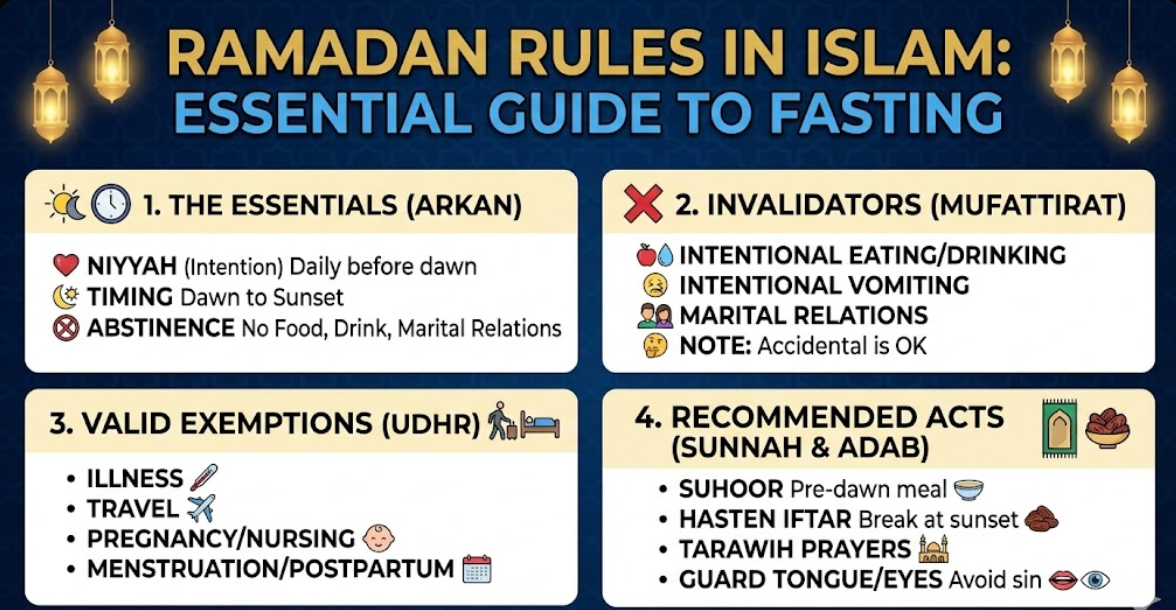
In Islamic terminology, fasting is called Sawm. As the fourth pillar of Islam, fasting during Ramadan is a strict requirement. Therefore, every healthy, adult Muslim must actively participate. To successfully complete a fast, you must closely follow two fundamental Ramadan rules.
1. The Power of Intention (Niyyah)
First, you must make a clear intention to fast. Specifically, you must do this before the actual break of dawn. In Islam, actions are judged entirely by their intentions. Therefore, without a firm intention, your fast is essentially just starvation. You do not necessarily have to speak this intention aloud. Instead, a firm decision in your heart is completely sufficient. However, many believers find it highly beneficial to recite the specific roza rakhne ki dua. This short prayer formally and beautifully dedicates your fast to Allah.
2. Complete Physical Abstention
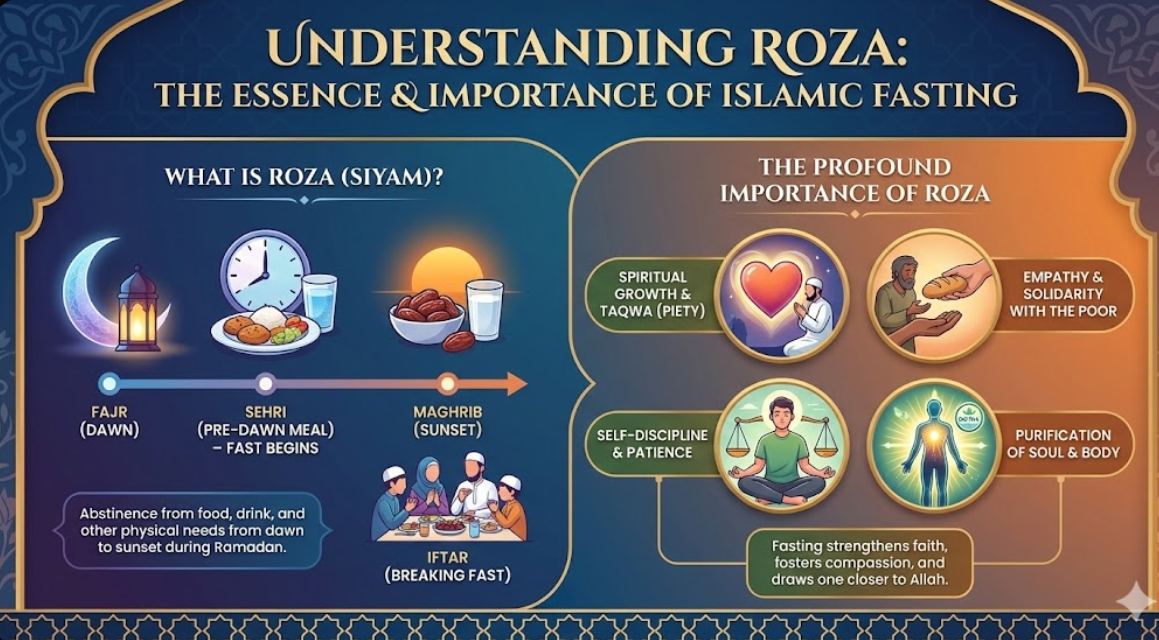
Secondly, you must completely avoid specific physical acts. Specifically, you must stop eating, drinking, and engaging in marital intimacy. This strict abstention begins at the exact break of dawn (Fajr). Furthermore, it lasts continuously until the sun completely sets (Maghrib). Importantly, this rule applies to all foods and liquids. Yes, it definitely includes drinking water. Consequently, even a tiny, intentional sip of water will immediately invalidate your fast.
Who Must Follow the Ramadan Rules?
Islam operates as a highly balanced and practical religion. Therefore, the Ramadan rules only apply to those who can safely follow them. Fasting is only obligatory for Muslims who have reached puberty. Furthermore, they must be completely sane and physically healthy. The Quran provides very clear, merciful exemptions for specific groups of people.
1. The Sick and the Elderly
Naturally, anyone suffering from a severe illness receives an immediate exemption. If fasting will drastically worsen a sickness or delay recovery, that person should definitely not fast. Similarly, very elderly people who feel physically too weak receive a permanent exemption.
2. Travelers on a Journey
Additionally, individuals traveling on a significant journey do not have to fast. Travel often brings physical hardship and intense fatigue. Therefore, Islam mercifully allows travelers to eat and drink normally. Consequently, they simply make up their missed fasting days later in the year.
3. Women in Specific Conditions
Furthermore, women facing specific biological conditions receive clear exemptions from the Ramadan rules. Specifically, pregnant women and nursing mothers should skip the fast if they fear for their baby’s health. Moreover, women experiencing their monthly menstrual period or post-partum bleeding must absolutely not fast. Essentially, they must eat normally and simply make up these specific days after Ramadan ends.
What Breaks the Fast? (Invalidators)
To keep your fast perfectly valid, you must strictly avoid certain actions. Specifically, the following actions will instantly break your fast according to the Ramadan rules:
- Eating or Drinking Intentionally: If you purposefully put any food or liquid into your stomach, your fast immediately ends.
- Intentional Vomiting: If you physically force yourself to vomit, your fast becomes invalid. However, if you vomit naturally and accidentally, your fast remains perfectly fine.
- Marital Relations: Engaging in sexual intimacy during the fasting hours strictly breaks the fast.
- Menstruation: If a woman’s period begins at any time before sunset, her fast for that specific day immediately ends.
- Nutritional Injections: Receiving vitamin drips or nutritional injections purposely to gain energy breaks the fast.
What Does NOT Break the Fast? (Common Misconceptions)
Many people constantly worry about accidentally breaking their fast. Fortunately, Islam is very practical. Therefore, the following common actions do NOT break your fast under the standard Ramadan rules:
- Eating Out of True Forgetfulness: Did you accidentally eat a snack because you completely forgot you were fasting? If so, simply stop eating immediately. Your fast remains perfectly valid. Prophet Muhammad (peace be upon him) beautifully stated that Allah simply fed you.
- Brushing Your Teeth: You can safely brush your teeth or use a Miswak (cleaning twig). However, you must carefully ensure you do not swallow any toothpaste or water.
- Taking a Shower: Swimming or taking a cold shower to cool down is perfectly acceptable. It does not negatively affect your fast.
- Swallowing Your Own Saliva: Naturally, swallowing your own natural saliva is completely unavoidable. Therefore, it does not break your fast.
- Using Medical Inhalers or Eye Drops: Generally, non-nutritional items like asthma inhalers, eye drops, or ear drops do not invalidate the fast.
The Rules of Suhoor and Iftar
The daily routine of a fasting person revolves entirely around two highly important meals. Following the Ramadan rules regarding these meals brings immense physical and spiritual benefits.
1. The Pre-Dawn Meal (Suhoor)
The fasting day always begins with a special meal called Suhoor. You eat this meal in the quiet, dark hours before the Fajr prayer. Waking up for Suhoor is a highly recommended prophetic tradition. Specifically, it provides the vital physical energy you need for the long day ahead. Furthermore, it brings special spiritual blessings to your household.
2. The Evening Meal (Iftar)
Eventually, the sun completely sets. At this exact moment, Muslims eagerly break their fast. This joyful meal is called Iftar. Importantly, one of the key Ramadan rules is to break your fast immediately after sunset. You should never delay it unnecessarily. Traditionally, believers break their fast with a sweet date and a sip of water. Just before taking this first bite, they recite the roza kholne ki dua. Through this beautiful prayer, they actively thank God for the food and their daily strength.
The Behavioral Ramadan Rules: Guarding Your Actions
Physical fasting only forms the outermost layer of this holy month. Truly, the core Ramadan rules demand strict behavioral changes. Ultimately, you must stay away from all sinful actions.
For instance, a fasting person must constantly guard their tongue. You must strictly avoid lying, gossiping, and arguing with others. Also, you must actively protect your eyes from looking at unlawful things. Likewise, you must keep your heart entirely free from jealousy, anger, or greed.
Prophet Muhammad (peace be upon him) famously warned his followers about bad behavior. He stated clearly that God does not need a person to leave their food and drink if they do not avoid false speech and toxic actions. Therefore, practicing extreme patience and kindness is a massive part of the Ramadan rules. Essentially, fasting operates as a complete, full-body exercise in self-control.
Rules for Missed Fasts: Qaza, Fidyah, and Kaffarah
Sometimes, Muslims simply cannot fast. Consequently, the Ramadan rules provide clear solutions for making up missed days.
1. Making Up Fasts (Qaza)
If you missed a fast for a valid reason, you must perform Qaza. This reason might include temporary sickness, travel, or menstruation. Essentially, you simply fast for an equal number of days after Ramadan finishes. You have until the next Ramadan arrives to complete these specific makeup days.
2. Paying Charity (Fidyah)
Some people suffer from permanent, chronic illnesses. Alternatively, they might be extremely elderly and fragile. Because they can never fast safely, they must pay Fidyah. Specifically, this means they must provide two full meals to a needy person for every single fasting day they miss.
3. The Penalty for Breaking a Fast (Kaffarah)
What happens if you intentionally break a fast without any valid excuse? If you purposefully eat, drink, or engage in intimacy, you must perform Kaffarah. This is a heavy penalty. Specifically, you must consecutively fast for 60 uninterrupted days. If you are physically unable to do this, you must feed 60 poor people. Therefore, the Ramadan rules strongly discourage breaking a fast intentionally.
Maximizing the Spiritual Rules of Ramadan
Ramadan is definitely not a passive month of just sitting around. Instead, it serves as a highly active time of massive spiritual growth. To truly gain the vast benefits of this month, believers pair their daily fasting with intense evening worship.
1. Engaging with the Holy Quran
Many scholars proudly call Ramadan the “Month of the Quran.” This special title exists because the very first verses of the Holy Book were revealed during this exact month. Therefore, reading the Quran is a major part of the Ramadan rules. Muslims eagerly dedicate extra hours every day to reading and reciting the divine text. They constantly seek to align their personal moral compass with its clear, timeless teachings.
2. Night Prayers (Taraweeh)
Every night during Ramadan, Muslims gather closely in their local mosques. They stand shoulder to shoulder to perform special extended prayers. These beautiful prayers are called Taraweeh. While not strictly mandatory, they are a highly emphasized prophetic tradition. Performing them brings immense spiritual rewards and heavily builds community brotherhood.
3. Seeking the Night of Power (Laylat al-Qadr)
The final ten days of Ramadan hold the absolute most sacred value. Hidden carefully within the odd-numbered nights of this final stretch is Laylat al-Qadr. This is also widely known as the Night of Decree. The Quran clearly states that sincere worship on this single night is better than a thousand months of regular worship.
Consequently, believers spend these specific nights in deep prayer, supplication, and quiet reflection. To ensure they do not accidentally waste these precious nighttime hours, many people rely on a highly structured worship plan for the last 10 nights of Ramadan. This strategic guide clearly helps them maximize their spiritual focus and connection with Allah during the most critical days of the year.
Conclusion
Understanding the Ramadan rules is absolutely essential for every practicing Muslim. Clearly, Ramadan is much more than a simple physical ritual of skipping a few meals. Actually, it operates as a complete, full-body spiritual training program. God designed it specifically to purify the soul, thoroughly discipline the ego, and noticeably soften the heart.
Through the strict practice of these Ramadan rules, a believer actively learns the difficult art of patience. They discover the true, hidden value of daily gratitude. Furthermore, they experience the real power of human empathy by feeling the hunger of the poor. By voluntarily giving up the basic necessities of life for just a few hours, Muslims learn a highly vital lesson. They are constantly reminded that absolutely everything they own is just a temporary gift from the Almighty.
Ultimately, the true importance of following the Ramadan rules lies directly in their unique ability to transform a person from the inside out. They leave you spiritually refreshed, morally upright, and deeply connected to your Creator. Wonderfully, this peaceful feeling lasts long after the new crescent moon of Eid happily signals the end of the holy month.
Frequently Asked Questions (FAQs)
1. What are the basic Ramadan rules for eating and drinking?
You must completely stop eating and drinking from the exact break of dawn until the sun completely sets. This rule strictly includes drinking water.
2. Does brushing your teeth break the Ramadan rules?
No, brushing your teeth does not break your fast. However, you must be extremely careful. You must not swallow any water or toothpaste. If you swallow them intentionally, your fast immediately becomes invalid.
3. Who is completely exempt from the Ramadan rules?
People who face severe hardship receive clear exemptions. Specifically, this includes the sick, the elderly, travelers, and women who are pregnant, nursing, or menstruating.
4. What happens if I accidentally eat while fasting?
Islam is a very merciful religion. If you eat or drink out of genuine forgetfulness, your fast remains perfectly valid. You should simply stop eating immediately once you remember you are fasting.
5. How do I make up for a missed fast?
If you miss a fast for a valid reason, you simply fast another day later in the year (Qaza). However, if you have a permanent illness, you must feed a poor person for every missed day (Fidyah).