Business
CNG Prices in Pakistan 2026 — Region-Wise Rates, Gas Crisis & Iran War Impact

Published
2 years agoon
By
Yasir Ali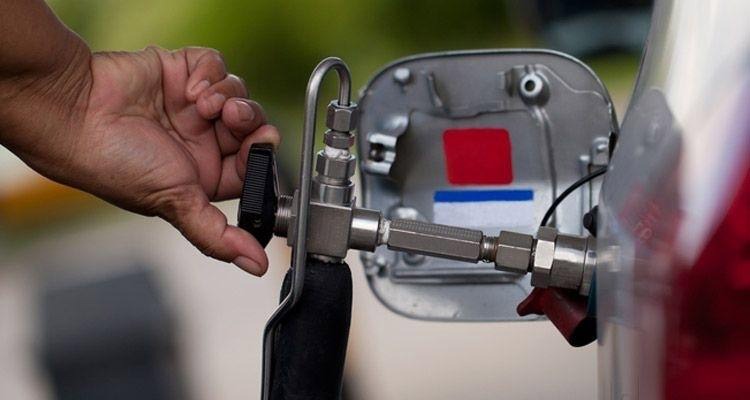
CNG prices in Pakistan currently stand at Rs 139 per kg in Region I and Rs 195 per kg in Region II — but these numbers only tell half the story. Behind the pump price is a deepening national gas crisis, a deregulated market that has left millions of consumers at the mercy of station owners, and a global energy shock triggered by the US–Israel war on Iran that has disrupted Pakistan’s LNG supply chain at its root.
This guide covers everything: today’s CNG rates by region and city, the history of OGRA’s deregulation, the role of SNGPL and SSGC, Pakistan’s four-day workweek emergency response, and what the energy crisis means for CNG availability going forward.
CNG prices in Pakistan today 2026 — current rates by region
Pakistan divides its CNG market into two pricing regions. Since deregulation, the rates below are the last officially referenced maximum retail prices. Individual station owners may charge more in practice.
| Region | Price (Retail) | Areas Covered |
|---|---|---|
| Region I | Rs 139 per kg | Islamabad & Rawalpindi, Potohar Region, Gujar Khan, Khyber Pakhtunkhwa (KPK), Balochistan |
| Region II | Rs 195 per kg | Karachi, Hyderabad, Sukkur, Punjab (excluding Potohar Region), Lahore, Faisalabad, Multan, Gujranwala, Sindh |
Important: Following the Ministry of Petroleum’s decision to deregulate CNG pricing, these are last-referenced maximum retail figures. Actual prices at individual stations may vary. Always confirm at the pump before refuelling. OGRA no longer sets or enforces a mandatory CNG ceiling price.
CNG prices in Pakistan — city-wise rates 2026
| City | Region | CNG Price (PKR/kg) | Gas Company | Availability |
|---|---|---|---|---|
| Islamabad | Region I | Rs 139/kg | SNGPL | Limited — war-related cuts |
| Rawalpindi | Region I | Rs 139/kg | SNGPL | Limited |
| Peshawar | Region I | Rs 139/kg | SNGPL | Partial closures reported |
| Quetta | Region I | Rs 139/kg | SNGPL | Partial |
| Lahore | Region II | Rs 195/kg | SNGPL | Restricted — load management |
| Faisalabad | Region II | Rs 195/kg | SNGPL | Restricted |
| Multan | Region II | Rs 195/kg | SNGPL | Restricted |
| Karachi | Region II | Rs 195/kg | SSGC | Limited — war-related LNG cuts |
| Hyderabad | Region II | Rs 195/kg | SSGC | Partial closures |
CNG vs petrol vs diesel — how CNG compares today
Even at current elevated CNG prices, compressed natural gas remains cheaper per kilometre than petrol or diesel. Here is how the three fuels compare today.
| Fuel Type | Price | Unit |
|---|---|---|
| Petrol (Super) | 321.17 | PKR / litre |
| Diesel (HSD) | 335.86 | PKR / litre |
| CNG Region I | 139 | PKR / kg |
| CNG Region II | 195 | PKR / kg |
| LPG | 213.88 | PKR / kg |
On average, a CNG-powered vehicle travels approximately 21 km per kg of gas. A petrol-powered vehicle travels around 14–15 km per litre. Even at Rs 195/kg, CNG delivers a meaningful cost-per-kilometre advantage — which is why demand surges every time petrol prices spike.
Fuel cost per 100 km — CNG vs petrol vs diesel (March 2026 rates)
| Fuel Type | Average Efficiency | Price | Cost per 100 km |
|---|---|---|---|
| CNG (Region I) | 21 km/kg | Rs 139/kg | Rs 662 |
| Petrol | 14 km/litre | Rs 321.17/litre | Rs 2,294 |
| Diesel | 16 km/litre | Rs 335.86/litre | Rs 2,099 |
CNG price history in Pakistan — how we got here
Pakistan was once the world’s largest CNG market by number of vehicles. At its peak in the early 2010s, over 3.5 million vehicles ran on CNG and the country had more than 3,400 CNG stations. Prices were tightly regulated and significantly cheaper than petrol — sometimes by 40–50%.
The turning point came in December 2016, when the government deregulated CNG pricing entirely. At that moment, CNG was available at Rs 67.50 per kg while petrol cost Rs 66.27 per litre — CNG was already barely cheaper. Deregulation removed OGRA’s ceiling, leaving station owners free to set their own prices. Consumers and the CNG Dealers Association both criticised the decision sharply, warning it would expose millions of low-income commuters to unchecked price increases.
OGRA deregulation — what it means for consumers
When OGRA regulated CNG prices, every consumer knew exactly what they would pay. The Ministry of Petroleum’s decision to deregulate ended that certainty.
Today, CNG station owners set their own retail prices within loose market guidelines. In practice, prices cluster around the last-referenced regional rates because of market competition — but during supply shortages, some stations charge significantly more. There is no enforcement mechanism to prevent this.
SNGPL (Sui Northern Gas Pipelines Limited) supplies gas to all CNG stations in Punjab, KPK, and Islamabad. SSGC (Sui Southern Gas Company) covers Sindh including Karachi. Both companies issue load management schedules that determine which days and hours CNG stations can operate — separate from the pricing question entirely.
During winter and supply crisis periods, SNGPL and SSGC regularly suspend CNG supply entirely for days at a time. This is a supply-side decision completely separate from price. Stations may be priced and ready to operate but physically have no gas to dispense.
How the Iran–US–Israel war is deepening Pakistan’s gas crisis
The supply chain Pakistan depends on
Pakistan imports Liquefied Natural Gas (LNG) primarily from Qatar under long-term contracts signed in 2016, as well as from Italy’s ENI on flexible terms. This imported LNG, after regasification at the Karachi port terminals, enters the national pipeline grid through SNGPL and SSGC — and feeds directly into CNG stations, power plants, fertiliser factories, and domestic consumers.
What the war broke
When Iran closed the Strait of Hormuz on March 4, 2026, LNG tankers bound for Pakistan could not transit. The Strait of Hormuz carries approximately 20% of the world’s LNG supply. The IEA described the resulting disruption as the greatest global energy security challenge in history.
Business Recorder reported on March 26 that Pakistan has been rationing energy through a four-day work week as the Iran conflict disrupts Qatar LNG supply. The war upended the global LNG outlook as soaring prices, damage to Qatar’s export infrastructure, and potential delays to new supply raised serious doubts about previously expected LNG deliveries to price-sensitive Asian buyers including Pakistan.
| Date | Event |
|---|---|
| Feb 28, 2026 | US–Israel joint strikes on Iran launched. Iran retaliates with missile attacks across the Gulf. |
| Mar 4, 2026 | Iran’s IRGC declares the Strait of Hormuz closed. LNG tanker traffic to Pakistan disrupted immediately. |
| Mar 4, 2026 | Bloomberg reports Pakistan’s largest gas distributor (SNGPL) begins cutting supplies to industrial customers as the war disrupts supply. |
| Mar 7, 2026 | Pakistan announces a historic Rs 55/L petrol price hike. RLNG prices raised by 22% for March. CNG station closures increase. |
| Mar 10, 2026 | PM Shehbaz Sharif announces a four-day government workweek, 50% work-from-home rotation, and school spring holidays to conserve fuel (reported by Al Jazeera). |
| Mar 12, 2026 | OGRA raises RLNG prices by up to 22% for March 2026. SNGPL transmission price rises to $12.49/MMBtu from $10.47/MMBtu in February. |
| Mar 19, 2026 | Geo.tv reports Senate panel warned LNG supplies may run out after April 14 if the crisis continues. |
| Mar 23, 2026 | Trump signals a five-day halt on strikes against Iranian energy infrastructure. US–Iran talks described as “productive.” Brent crude drops 11%. |
| Mar 26, 2026 | Business Recorder reports Pakistan continues energy rationing via a four-day workweek. LNG supply situation remains uncertain. |
Pakistan’s complex LNG position — surplus before the crisis, shortage now
The IEEFA (Institute for Energy Economics and Financial Analysis) published a detailed analysis in March 2026 revealing a paradox: Pakistan actually had an LNG surplus as recently as January 2026. Average LNG plant utilisation was below minimum dispatch levels. The government had been diverting excess cargoes to other markets and had cancelled 21 LNG cargoes from its 2026–2027 deal with ENI because domestic demand — reduced by Pakistan’s booming solar energy sector — was too low to absorb the contracted volumes.
Then the war hit. The same long-term contractual rigidity that caused the surplus now blocked Pakistan from quickly sourcing replacement spot cargoes at reasonable cost. LNG spot prices surged from roughly $12–13 per MMBtu to above $20/MMBtu within days. Pakistan, locked into fixed-volume contracts with limited spot flexibility, found itself simultaneously over-contracted in normal times and under-supplied in a crisis.
Pakistan’s installed distributed solar capacity reached 34 GW in 2025 — a figure that had significantly cut gas-based power demand and contributed to the pre-war LNG surplus. Ironically, this solar buffer is now helping cushion the blow as gas supply tightens.
April 14 deadline: The Senate was informed that if LNG shipments do not resume through viable routes before April 14, 2026, Pakistan’s LNG supplies will be exhausted. This would force widespread CNG station closures across the country and trigger rationing of domestic gas supplies. Source: Geo.tv, March 19, 2026.
Pakistan’s gas crisis — deeper structural problems
The war exposed vulnerabilities that predate 2026. Pakistan’s gas sector has faced a structural crisis for over a decade, as detailed by PIDE (Pakistan Institute of Development Economics).
Circular debt Rs 1.5 trillion
The gas sector circular debt crossed Rs 1.5 trillion, owed by both SNGPL and SSGCL. This limits investment in maintenance and new supply infrastructure.
Ageing pipeline infrastructure
SSGC has been unable to replace old buried GI pipes causing massive leakages. Unaccounted-for gas (UFG) runs far above the OGRA-allowed 4.5%, reaching 7–8.5%.
Declining domestic reserves
Pakistan’s domestic gas fields are depleting. Without new significant discoveries, existing reserves could be fully depleted within the next decade.
Rigid LNG contracts
Long-term fixed-volume LNG contracts with Qatar created a 177-cargo surplus from 2026–2031 before the war. The same rigidity now prevents flexible emergency sourcing.
Over-reliance on one route
Virtually all of Pakistan’s LNG imports pass through the Strait of Hormuz. No alternative supply route exists. The war demonstrated this single point of failure instantly.
Solar disruption to gas demand
Pakistan added 34 GW of distributed solar by 2025 — cutting gas demand and forcing LNG cargo diversion, while simultaneously reducing the buffer for crisis-period consumption.
CNG availability schedules — how load management works
Even when CNG prices in Pakistan are competitive, availability is not guaranteed. SNGPL and SSGC issue weekly load management schedules that determine which CNG stations operate on which days.
During normal periods, most major city stations operate six days a week with one mandatory closure. During supply shortfalls — as seen throughout the current crisis — SNGPL can suspend all CNG supply to entire sectors: cement, CNG stations, and non-export industry are typically the first to be cut when system pressure drops.
As the Iran crisis developed, SNGPL began cutting industrial supplies from March 4. Widespread CNG station suspensions followed across Punjab and KPK. SSGC issued similar orders for Karachi and Sindh. At the time of publication, CNG availability across Pakistan remains severely restricted and subject to daily changes in SNGPL and SSGC system pressure levels.
For the most current schedules, check sngpl.com.pk or ssgc.com.pk directly — both publish daily gas supply updates during crisis periods.
How rising petrol prices affect CNG demand
There is a well-documented inverse relationship between petrol prices and CNG demand in Pakistan. When petrol costs rise sharply — as they did after the Rs 55 hike on March 7, 2026 — motorists rush to switch to CNG. This demand surge coincides precisely with the supply disruption caused by the same war that drove petrol prices up.
The result: CNG stations that do have supply face enormous queues. Stations without supply remain shuttered. Consumers are caught between unaffordable petrol and unavailable CNG — exactly the dynamic that prompted PM Sharif’s emergency austerity address on March 10.
Energy analyst Amer Zafar Durrani, a former World Bank official and CEO of advisory firm Reenergia, told Al Jazeera that government austerity measures can work in the short term but leave the main driver of fuel demand unaddressed. “Transport dominates petroleum consumption,” Durrani said. “Roughly 80% of petroleum products are used in transport, meaning the country’s oil dependence is fundamentally a mobility problem.”
For a full breakdown of petrol prices in Pakistan and how the Iran war is impacting pump rates across all fuel types, read our comprehensive guide on petrol prices in Pakistan — covering OGRA official rates, PSO and Shell pricing, city-wise comparisons, and the complete crude oil price surge timeline.
CNG prices in Pakistan — FAQs
What are CNG prices in Pakistan today 2026?
CNG prices in Pakistan today are Rs 139 per kg in Region I (Islamabad, Rawalpindi, KPK, Balochistan) and Rs 195 per kg in Region II (Punjab excluding Potohar, Sindh including Karachi). Since deregulation, individual stations may charge different rates.
What is the CNG price in Lahore today?
Lahore falls in Region II. The reference CNG price in Lahore is Rs 195 per kg. However, due to SNGPL load management restrictions and the ongoing gas crisis, CNG availability in Lahore is severely limited in March 2026. Many stations remain closed.
What is the CNG price in Karachi today?
Karachi is in Region II under SSGC. The reference CNG price in Karachi is Rs 195 per kg. As with Lahore, supply restrictions due to the Iran war have caused widespread station closures in Karachi. SSGC’s load management schedule determines which stations can operate.
Why are CNG prices in Pakistan different for Region I and Region II?
Region I is supplied from domestic system gas via SNGPL and has historically had lower gas costs. Region II (Punjab and Sindh) depends more heavily on imported RLNG, which is significantly more expensive — hence the higher CNG price in Region II.
Does OGRA still regulate CNG prices in Pakistan?
No. The Ministry of Petroleum deregulated CNG pricing, freeing station owners to set their own rates. OGRA no longer publishes or enforces a mandatory maximum CNG sale price. The last OGRA CNG notification was issued in September 2015.
How has the Iran–US–Israel war affected CNG availability in Pakistan?
The war caused Iran to close the Strait of Hormuz on March 4, 2026, disrupting Pakistan’s LNG imports from Qatar. Bloomberg reported that SNGPL began cutting industrial and CNG supplies immediately. The Senate was told Pakistan’s LNG stocks could run out after April 14 if the crisis continues.
Is CNG still cheaper than petrol in Pakistan?
Yes. Even at Rs 195/kg in Region II, CNG delivers approximately 21 km per kg compared to petrol’s 14–15 km per litre at Rs 321.17. The cost per kilometre on CNG is still significantly lower — which is why demand surges whenever petrol prices rise sharply.

- Diesel Price in Pakistan Today 2026
- Petrol Prices in Pakistan Today 2026 — OGRA Live Rates, PSO, Shell & Iran War Impact
- How to Plan a Road Trip in Pakistan | Ultimate 2026 Guide

- Top Hill Stations Pakistan: Best Places to Visit for Cool Escapes
- Mental Health Pakistan: Awareness, Support Systems & Practical Tips