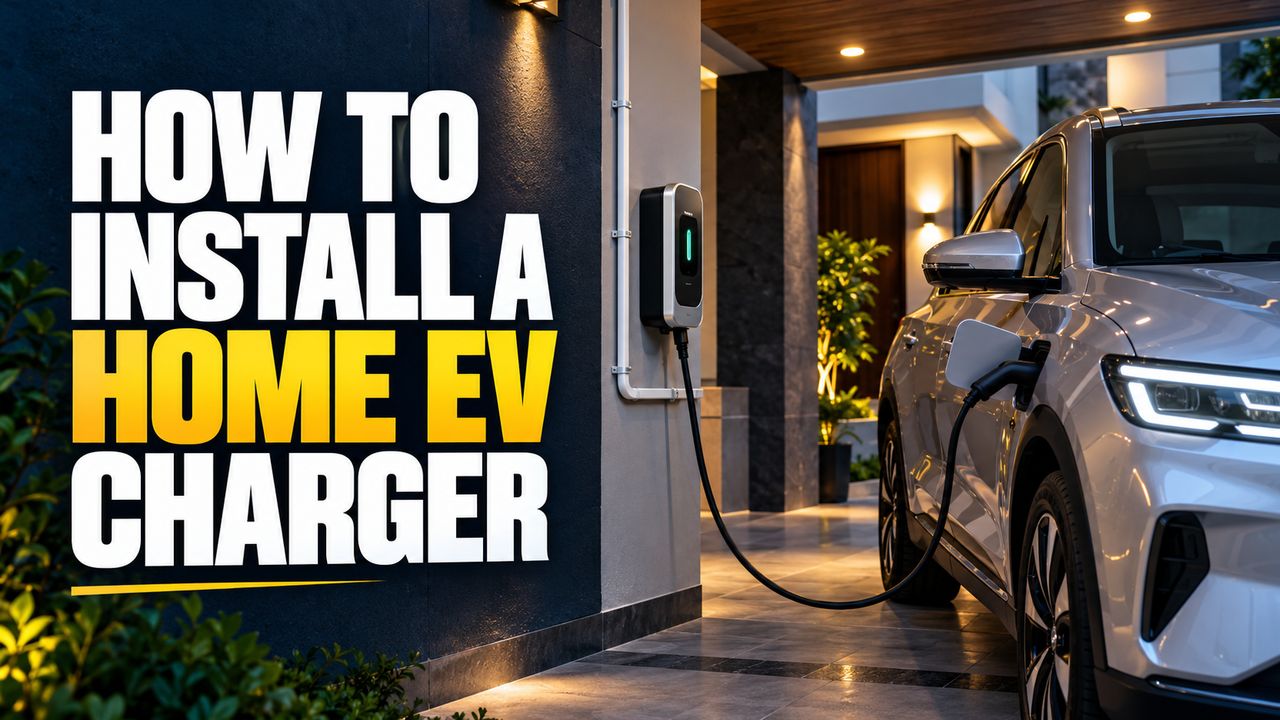
A home EV charger in Pakistan is the cheapest and easiest way to keep an electric car ready. In fact, most owners do almost all their charging at home overnight. However, a careless installation can damage your wiring or even start a fire. This guide explains charger types, costs, wiring basics, tariffs and safety in simple words.
Safety note: This article gives general information only. Therefore, it is not a substitute for a licensed electrician. Always get your home’s wiring checked and the charger installed by a qualified professional.
Do You Need a Home EV Charger in Pakistan?
Not always. In fact, many EVs come with a portable charger that plugs into a normal socket. For short daily trips, that may be enough.
However, a portable charger is slow. If you drive 60 km or more a day, or own a car with a big battery, a wall charger makes life much easier. Also, a proper home EV charger in Pakistan gives better protection against voltage swings and overheating.
Flats and shared parking make things harder. For example, a home EV charger in Pakistan inside an apartment building may need approval from the management and a separate cable run from your own meter. So talk to them before you buy a car.
Plug-in hybrid owners also benefit from home charging, because their small batteries fill up quickly overnight. You can read more about those cars in our guide to hybrid cars in Pakistan.
Level 1 vs Level 2 Charging Explained
Home charging comes in two main levels. Here is a simple comparison.
Option
Power
Time for a 50 kWh Battery
Best For
Level 1: normal socket
About 2 to 2.5 kW
Around 20 hours or more
Short daily trips, small batteries
Level 2: 7 kW wall box
About 7 kW
Around 7 to 8 hours
Most car owners
Level 2: 11 or 22 kW wall box
11 to 22 kW
Faster, if your car accepts it
Three-phase homes
Most homes here have a single-phase supply. Therefore, a 7 kW wall box is the practical limit for most houses. On the other hand, 11 kW and 22 kW units need a three-phase connection. Besides, many cars only accept 7 or 11 kW on AC anyway. For this reason, many owners start with the portable charger and upgrade later, once they know their real daily distance.
Home EV Charger in Pakistan: Cost Guide
The EV charger price in Pakistan varies a lot by brand, distance from your distribution board and the condition of your wiring. As a rough guide, ChargePK’s 2026 home charging guide gives these figures.
Item
Approximate Cost
7 kW wall box (unit only)
About Rs 80,000 to Rs 1.5 lakh
Full wall box setup (unit, labour, breaker, cable)
About Rs 1.5 lakh to Rs 3 lakh
Dedicated socket circuit without wall box
Much less, mostly labour and a breaker
Since these are estimates only, get at least two written quotes. In addition, ask the car dealer whether a wall box comes with the car. Similarly, local suppliers such as CITA sell 7, 11 and 22 kW AC chargers on quotation.
Overall, a home EV charger in Pakistan costs far less than a year of petrol for a daily driver. Even so, cheap unbranded units can save money today and cost you a burnt cable tomorrow.
Check Your Electricity Connection First
Before you buy anything, check three things on your electricity bill. First, look at your sanctioned load. Second, check whether you have a single-phase or three-phase connection. Finally, note your average monthly units. If you cannot read these details on the bill, visit your DISCO’s customer service centre, because staff there can explain them.
A 7 kW charger adds a large load to your home. So, if your sanctioned load is low, ask your DISCO, such as LESCO, IESCO or K-Electric, about a load extension. Otherwise, your main breaker may trip when the AC and charger run together.
Also, homes with a sanctioned load of 5 kW or more usually move to time-of-use billing. As a result, the time you charge can change your bill. For this reason, many owners set the car to charge late at night.
Wiring, MCB and Earthing Basics
Good wiring matters more than the charger brand. Generally, your electrician should cover these basics.
Dedicated circuit: The charger needs its own circuit from the distribution board, so never share it with an AC or geyser.
Correct cable size: The cable must suit the current and the distance, because a 7 kW unit draws about 32 amps.
Proper MCB: A breaker sized for the charger protects the cable from overload.
RCD protection: An earth-leakage device cuts power if current leaks. In addition, many wall boxes have built-in leakage detection.
Earthing: A proper earth connection is essential. In fact, poor earthing is common in older Pakistani houses.
Because these details depend on your home, let a licensed electrician decide the exact cable and breaker sizes.
Step-by-Step Installation of a Home EV Charger in Pakistan
Here is how a typical installation goes. Follow it in order, since each step depends on the last.
Choose a spot near your parking, out of direct rain and sun.
Get a licensed electrician to inspect your board, earthing and load.
Apply to your DISCO for a load extension if needed.
Buy a charger that matches your car’s plug, usually Type 2.
Run a dedicated circuit with a suitable MCB and RCD protection.
Mount the wall box securely and test the earth connection.
Finally, do a test charge while the electrician watches the readings.
Also, ask the electrician to label the new breaker on the board, so that anyone at home can switch it off in an emergency. After that, keep the electrician’s bill and wiring details safe. In fact, they help with warranty claims and future repairs.
Electricity Tariff and Your Monthly Bill
At present, there is no special EV tariff for homes. In other words, home charging simply adds units to your normal bill. The 2026 residential rates run from about Rs 22 to Rs 48 per unit before taxes, depending on your slab.
Monthly Driving
Extra Units (at 6 km per unit)
Rough Extra Cost at Rs 35 per Unit
1,000 km
About 167 units
About Rs 5,800
1,500 km
About 250 units
About Rs 8,750
2,000 km
About 333 units
About Rs 11,700
However, these extra units can push you into a higher slab. For example, a home using 250 units pays about Rs 33 per unit in the 201 to 300 slab. If charging adds another 250 units, the slab rate rises to around Rs 39 to Rs 40. Because of this, your whole bill may rise more than the table shows.
Also, taxes and fuel adjustments come on top. Even so, your home charging cost usually stays far below public fast charging. Compare options in our guide to EV charging stations in Pakistan.
Load Shedding, Voltage and Solar
Pakistani homes face power cuts and voltage swings. So plan around them carefully.
Charge at night, especially if your area has steadier supply after midnight.
Choose a wall box with over-voltage and under-voltage protection.
Never run a 7 kW charger from a small home UPS, because it cannot handle the load.
If you have rooftop solar, daytime charging can use your own power.
Meanwhile, ask your solar installer whether your inverter can handle the extra load. In fact, a big charger can easily overload a small system.
Safety Rules for Home Charging
Safety comes first, especially in summer heat and the monsoon. Therefore, follow these rules every time.
Never use an extension cord or multi-plug adaptor for EV charging.
Keep the charger and cable dry, and use weatherproof units outdoors.
Do not charge in a flooded car porch, since water and power do not mix.
Replace any cable that looks cracked, melted or burnt.
Keep children away from the charger while it is in use.
Choosing a Home EV Charger in Pakistan: Features to Check
Not every charger suits our conditions. So, before you buy, check these features.
Built-in protection against over-voltage, under-voltage and earth leakage.
A weather rating suitable for outdoor use, especially if the porch is open.
A cable long enough to reach your car’s charging port easily.
Warranty, local service and spare parts availability.
An app or timer, so that you can charge in off-peak hours.
Above all, buy from a seller who will still be around in three years. In short, after-sales service matters as much as the price of a home EV charger in Pakistan.
Caring for Your Home EV Charger in Pakistan
A home EV charger in Pakistan also needs some simple care. Dust, heat and rain all take a toll over time. Fortunately, the checks are quick.
Wipe dust off the unit and plug every few weeks, especially after a dust storm.
Hang the cable neatly, so that cars and motorbikes do not run over it.
Check the plug pins for black marks, because these can signal a loose contact.
Ask your electrician to tighten connections and test the RCD once a year.
Electric bikes, on the other hand, are much simpler. In fact, most e-bikes charge from a normal socket with their own small charger. Our guide to electric motorcycles in Pakistan covers bike charging in more detail.
FAQs
How much does a home EV charger in Pakistan cost?
A 7 kW wall box costs roughly Rs 80,000 to Rs 1.5 lakh for the unit alone. With labour, breaker and cable, the full setup can reach about Rs 1.5 lakh to Rs 3 lakh. However, quotes vary, so compare at least two.
Can I charge my EV from a normal socket?
Yes, with the portable charger that comes with many cars. However, use a dedicated, properly earthed socket. Also, expect slow charging of around 2 to 2.5 kW.
Do I need a separate meter for EV charging?
There is no special home EV tariff right now, so most owners use their existing meter. Therefore, ask your DISCO if you want a separate connection for any reason.
How long does a full charge take at home?
A 7 kW wall box fills a 50 kWh battery in roughly 7 to 8 hours. By contrast, a normal socket can take a day or more. In practice, most owners only top up each night, so a full charge from empty is rare.
Can I install a home EV charger in Pakistan in a rented house?
Yes, but get written permission from the owner first. In addition, agree on who pays for wiring and who keeps the charger when you move.
Final Word
A properly installed home EV charger in Pakistan saves time and money every single day. Overall, a 7 kW wall box on a dedicated circuit suits most single-phase homes. Above all, use a licensed electrician and check your load first.