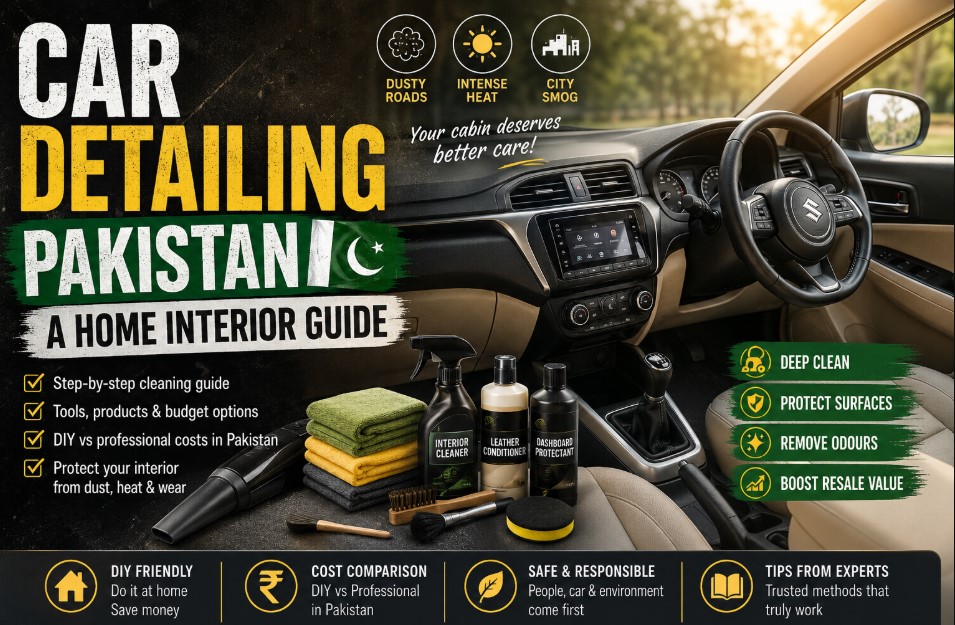
Learning car detailing Pakistan style at home can save money and transform your cabin. Moreover, our dust, heat, and smog make a clean interior harder to keep than in most countries. In this post, you will learn how to detail your car interior step by step. Furthermore, this guide covers tools, products, safe methods, costs, and protection in clear detail.
To set expectations first, detailing goes far beyond a quick wipe. Specifically, it means deep cleaning, restoring, and protecting the whole cabin. As a result, your car looks, smells, and feels fresh again. Therefore, this guide to car detailing Pakistan drivers can follow turns a dusty interior into a showroom-like space.
What Interior Detailing Means
Interior detailing is much deeper than a normal clean. Basically, a quick wipe only removes surface dust. However, detailing reaches every crevice, seam, and vent. So, it cleans, sanitises, and protects the entire cabin.
The process covers several separate tasks. Firstly, it includes decluttering and full vacuuming. Secondly, it involves cleaning hard surfaces and glass. Thirdly, it covers seats, carpets, and odours. Moreover, it finishes with protection against UV and stains. Therefore, proper car detailing Pakistan owners do restores the cabin fully.
This matters because we spend hours in our cars. Specifically, food crumbs, dust, and stains build up over time. Additionally, our climate speeds up wear and smells. Therefore, regular detailing keeps the cabin healthy and pleasant. Indeed, it is care for both your car and yourself.
Why It Matters in Pakistan
Our conditions make interior care especially important. Firstly, dust is the biggest challenge on local roads. Secondly, extreme heat cracks dashboards and dries leather. Thirdly, strong sun fades plastics and fabrics. So, cabins here age faster without proper care.
Smells and moisture add further problems. For example, food, smoke, and humidity cause musty odours. Moreover, trapped moisture can lead to mould in the seats. Additionally, poor service-station cleaning often makes things worse. Therefore, careful car detailing Pakistan drivers perform protects both health and comfort.
Resale value is another strong reason to detail. Specifically, buyers judge a used car heavily by its interior. Moreover, a fresh cabin suggests a well-kept vehicle. When inspecting a used car, a clean interior signals good overall care. Our used car inspection Pakistan guide explains what buyers check.
Tools You Will Need
Gathering the right tools makes detailing much easier. To start, collect these items before you begin.
A car vacuum cleaner with crevice and brush attachments.
Several microfiber towels for different areas.
A set of detailing brushes and an old toothbrush.
A few spray bottles for cleaners.
Applicator pads for dressings and protectants.
Additionally, use separate towels for each surface. Specifically, keep different cloths for glass, plastics, and fabric. Moreover, this prevents smearing dirt from one area to another. Therefore, a simple set of tools delivers professional-style results.
Products to Use
Choosing the right products protects your cabin surfaces. Basically, each surface needs a suitable cleaner. So, match the product to the material. Below is a helpful guide.
Area
Product to Use
Dashboard and plastics
Interior cleaner plus protectant
Fabric seats
Upholstery or fabric cleaner
Leather seats
Leather cleaner and conditioner
Interior glass
Ammonia-free glass cleaner
Carpets and mats
All-purpose cleaner and a brush
Odours
Baking soda or odour eliminator
Many trusted brands are available across Pakistan. For example, 3M, Meguiar’s, and Turtle Wax are common. Additionally, local and Korean brands offer budget options. Moreover, online stores deliver these products nationwide. Therefore, you can build a full kit without much trouble.
Budget Homemade Options
You can also clean effectively on a tight budget. Specifically, baking soda deodorises carpets and lifts stains. Moreover, white vinegar cuts through grime on many surfaces. Additionally, isopropyl alcohol cleans glass and dries fast. However, always test homemade mixes on a hidden spot first. Therefore, avoid harsh household soaps on leather or delicate parts.
Step 1: Declutter and Vacuum
Every detailing job starts with a clear cabin. Firstly, remove all trash, papers, and personal items. Secondly, take out the floor mats to clean separately. Thirdly, clear the boot and door pockets too. So, you gain full access to every surface.
Vacuuming comes next and needs care. Specifically, work from top to bottom for best results. Moreover, use the crevice tool for tight gaps and seams. Additionally, clean under the seats and between them. Therefore, a thorough vacuum removes deep-set dust and crumbs. Indeed, this step alone makes a huge difference.
Step 2: Dust and Clean Surfaces
Hard surfaces collect the most visible dust. Basically, the dashboard, console, and doors need attention. So, tackle them after vacuuming. Below is the right approach.
First, loosen dust with a soft detailing brush. Then, wipe surfaces with a slightly damp microfiber. Moreover, spray cleaner onto the cloth, not directly onto surfaces. Additionally, use a toothbrush for vents, buttons, and seams. However, avoid spraying liquid near screens or electronics. Therefore, gentle, careful cleaning protects sensitive parts.
Screens and displays need extra caution. Specifically, use a dry or barely damp microfiber on them. Moreover, avoid ammonia-based cleaners on screens. Therefore, wipe gently to prevent scratches. Consequently, your dashboard looks clean without any damage.
Step 3: Clean the Seats
Seats need different methods based on their material. Basically, fabric and leather require separate products. So, identify your seat type first. Below is how to handle each.
Fabric seats respond well to upholstery cleaner. Specifically, spray the cleaner and agitate gently with a brush. Then, blot the area with a clean towel. Moreover, treat tough stains with a baking soda paste. However, never soak the fabric heavily. Therefore, light cleaning prevents mould in our humidity.
Leather seats need a gentler, richer approach. Specifically, use a dedicated leather cleaner and microfiber. Moreover, wipe in gentle circular motions. Then, apply a leather conditioner to prevent cracking. Additionally, our heat dries leather quickly, so conditioning matters. Therefore, regular care keeps leather soft and supple.
Step 4: Wash Mats and Carpets
Mats and carpets trap the most dirt and dust. Basically, they need cleaning away from the cabin. So, remove them first for proper washing. Below is the method.
For rubber mats, washing is quick and simple. Specifically, rinse them, scrub with soapy water, and rinse again. Then, let them dry fully in the shade. Meanwhile, fabric carpets need shampoo and a brush. Moreover, scrub gently and blot out the moisture. However, dry them completely before refitting. Therefore, damp carpets never go back inside.
Full drying is the most important part here. Specifically, trapped moisture causes musty smells and mould. Moreover, our humid weather makes this risk higher. Therefore, allow plenty of drying time. Consequently, your carpets stay fresh and odour-free.
Step 5: Clean the Glass
Interior glass often looks hazy from a filmy build-up. Basically, this film comes from dust and plastic off-gassing. So, cleaning it improves both clarity and safety. Below is the right way.
Use an auto glass cleaner for streak-free results. Specifically, spray it onto a microfiber, not the glass. Then, wipe in straight lines for an even finish. Moreover, buff with a second dry cloth. Additionally, choose an ammonia-free cleaner for tinted windows. Therefore, you protect the tint while cleaning.
Timing this step well also helps. Specifically, clean the glass near the end of detailing. Moreover, this avoids overspray onto freshly cleaned surfaces. Therefore, do the windows last. Consequently, your glass stays clear and smudge-free.
Step 6: Deodorise the Cabin
Fresh air makes a detailed car feel truly clean. However, masking smells alone never works well. Specifically, you must remove the source of the odour. So, find and clean whatever causes the smell first.
Several simple methods help remove odours. For example, sprinkle baking soda on seats and carpets. Then, leave it for a while and vacuum it up. Moreover, air out the cabin with doors open. Additionally, clean the AC vents to reduce musty smells. Therefore, these steps tackle odours at their root.
Strong or stubborn smells need extra effort. Specifically, smoke and mould odours are the hardest to clear. Moreover, an odour eliminator can help a lot. However, deep smells may need professional ozone treatment. Therefore, know when a smell is beyond home methods.
Step 7: Protect and Finish
Protection is the final and most rewarding step. Basically, it shields surfaces from our harsh sun. So, it keeps the cabin looking new for longer. Below is how to finish properly.
Apply an interior protectant to plastics and vinyl. Specifically, it guards against UV fading and cracking. Moreover, use a matte finish if you dislike shine. Additionally, condition the leather for lasting softness. However, never apply glossy dressing to the steering wheel or pedals. Warning: a slippery wheel or pedal is dangerous while driving.
A few finishing touches complete the job. For example, add a subtle air freshener you enjoy. Moreover, let every surface dry fully before closing up. Then, refit the clean, dry floor mats. Therefore, your cabin now feels fresh, protected, and comfortable.
Safety and Product Tips
Safe detailing protects both you and your car. Firstly, always work with the doors open for ventilation. Secondly, many products have fumes or are flammable. Thirdly, test every product on a hidden spot first. So, these habits prevent damage and health risks.
A few more rules keep things safe. For example, never spray liquid directly onto electronics. Likewise, avoid over-wetting fabric to prevent mould. Moreover, dry everything fully before closing the car. Therefore, careful methods avoid musty smells and damage.
Chemical disposal also deserves attention. Specifically, do not pour cleaning chemicals into storm drains. Moreover, dispose of them responsibly to protect the environment. You can read Pakistan’s environmental guidance on the Ministry of Climate Change site at mocc.gov.pk. Therefore, responsible cleaning cares for both your car and nature.
DIY vs Professional Detailing
Choosing between DIY and a pro depends on your needs. Basically, home detailing suits regular upkeep well. However, some jobs are better left to experts. Below is a cost comparison for Pakistan.
Option
Approx. Cost (PKR)
Professional interior detail (hatchback)
3,000 – 6,000
Professional interior detail (sedan/SUV)
6,000 – 12,000+
DIY tools (one-time)
4,000 – 12,000
DIY products
2,000 – 6,000
As the table shows, DIY needs an upfront investment. However, each home session afterward is very cheap. Therefore, DIY saves a lot over repeated professional visits. Still, deep stains, heavy odours, and leather restoration suit a pro. Consequently, mixing home care with occasional professional help works best.
Detailing and Your Car’s Value
Interior care is one part of your car’s overall upkeep. To keep your whole vehicle healthy, follow a complete routine. For a full plan, our car maintenance Pakistan guide covers every key task. Therefore, pairing detailing with regular care protects your car best.
Simple mechanical checks matter just as much as a clean cabin. For instance, correct tyre pressure keeps every drive safe. Our tire pressure Pakistan guide shows how to check it right. Moreover, a weak battery can leave you stranded suddenly. Our replace car battery Pakistan guide walks you through the swap. Consequently, these skills together keep your car reliable and valuable.
Communities and Help
Helpful communities make detailing much easier. For example, forums like PakWheels host detailed cleaning discussions. Similarly, YouTube channels show interior detailing step by step. Moreover, Facebook groups for car owners share product tips. So, you can learn from thousands of fellow drivers.
Beyond online help, local services add real value. Specifically, auto stores stock genuine detailing products nationwide. Additionally, professional detailers handle tough jobs and deep odours. Therefore, expert help is always within reach. Indeed, a trusted detailer is worth keeping in mind.
These communities also share useful advice often. For instance, members recommend budget-friendly products and methods. Likewise, they warn about harsh chemicals and fakes. Consequently, staying connected keeps your car detailing Pakistan efforts smart and safe. Ultimately, shared knowledge builds better car owners.
Frequently Asked Questions
How do I start car detailing Pakistan drivers can do at home?
First, remove all trash and floor mats from the car. Next, vacuum every surface, seam, and crevice thoroughly. Then, clean the surfaces, seats, carpets, and glass in order. Finally, deodorise the cabin and apply protection.
How often should I detail my car interior?
Detail your interior around once every one to two months. However, dusty conditions may call for more frequent cleaning. Moreover, quick weekly vacuuming keeps dust under control. Therefore, adjust the routine to your driving and area.
Can I use household cleaners for car detailing?
Some household items work, but use them with care. Specifically, baking soda and vinegar are budget-friendly options. However, harsh soaps can damage leather and delicate surfaces. Therefore, always test any cleaner on a hidden spot first.
How much does professional car detailing cost in Pakistan?
Prices depend on your car size, condition, and city. Generally, a hatchback interior detail starts around Rs 3,000. Meanwhile, a sedan or SUV costs more. Therefore, always confirm what the package includes first.
Is DIY detailing as good as professional detailing?
DIY works very well for regular interior upkeep. Specifically, it handles dust, light stains, and surface care. However, deep odours and leather restoration suit a professional. Therefore, mixing both approaches gives the best results.
Can detailing improve my car’s resale value?
Yes, a clean interior strongly boosts resale value. Specifically, buyers judge a used car by its cabin. Moreover, a fresh interior suggests careful ownership. Therefore, detailing before selling is always worthwhile.