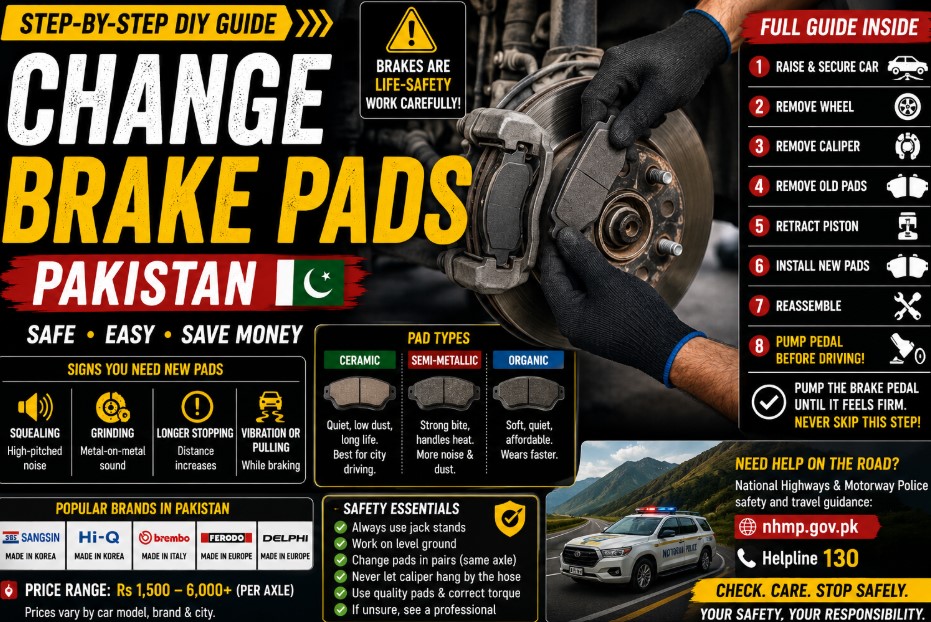
Learning to change brake pads Pakistan style at home can save money and build a useful skill. However, brakes are a safety-critical system, so care and caution matter most here. In this post, you will learn the full process along with clear safety rules. Furthermore, this guide covers the signs, tools, correct steps, costs, and when to call a mechanic in detail.
To be clear from the start, this is a more advanced job than an oil change. Specifically, a mistake here affects your ability to stop safely. As a result, only confident drivers should attempt it. Therefore, this guide to change brake pads Pakistan roads demand focuses heavily on doing it safely and correctly.
Why Brake Pads Matter
Brake pads are the heart of your stopping power. Basically, they press against the rotor to slow the wheels. Over time, this friction wears the pad material down. So, worn pads mean weaker and slower braking.
The safety stakes here are very high. Specifically, failing brakes can lead to serious accidents. Moreover, worn pads increase your stopping distance sharply. Therefore, healthy pads protect you, your passengers, and others. Above all, they are not a part to ignore or delay.
In Pakistan, brakes work harder than in many countries. For example, stop-and-go city traffic wears pads faster. Additionally, heavy traffic in Karachi and Lahore means constant braking. Therefore, regular brake care is essential here. Indeed, checking your pads is a basic safety duty.
Signs You Need New Pads
Spotting worn pads early prevents dangerous failures. Firstly, a high-pitched squeal is the clearest warning. Specifically, a small metal tab squeaks when pads get thin. Secondly, a grinding, metal-on-metal sound is far worse. Moreover, grinding means the pad is gone and the rotor is at risk.
Other signs appear while you drive. For instance, a longer stopping distance points to worn pads. Additionally, vibration in the brake pedal suggests uneven wear or warped rotors. Moreover, the car may pull to one side when braking. Therefore, treat any of these clues seriously.
A quick visual check also helps a lot. Specifically, look through the wheel spokes at the pad. Healthy pads show several millimetres of material. However, very thin pads need immediate replacement. When inspecting a used car, the brakes and pads reveal a lot about its safety. Our used car inspection Pakistan guide explains what to check.
Is DIY Right for You?
Honesty matters most before you start this job. Basically, brakes are not a task for guessing. So, judge your own skill and confidence first. Below is a simple way to decide.
You can likely handle it if a few things are true. Firstly, you have changed a wheel and used a jack safely. Secondly, you own the right tools, including jack stands. Thirdly, you can follow each step carefully and patiently. Therefore, a careful, prepared driver can do this job.
However, some situations call for a professional. Specifically, grinding noises may mean damaged rotors. Moreover, a spongy pedal or fluid leak needs expert care. Additionally, many rear brakes have electronic parking systems that need special tools. Therefore, if you feel any doubt, visit a mechanic instead. Indeed, the labour cost is small next to your safety.
Types of Brake Pads
Knowing the pad types helps you choose well. Basically, cars use a few main kinds. So, understanding them makes buying easier. Below is a clear comparison.
Type
Best For
Key Notes
Ceramic
Daily city driving
Quiet, low dust, long life
Semi-metallic
Heavy or performance use
Strong bite, more noise and dust
Organic
Small, light cars
Soft, quiet, cheap, wears faster
Ceramic pads suit most everyday drivers well. Specifically, they run quietly and produce little dust. Moreover, they last longer in stop-and-go traffic. Meanwhile, semi-metallic pads handle heat and heavy loads better. However, organic pads are the cheapest but wear out fastest. Therefore, match the pad type to your car and driving style.
Choosing the Right Pads
Picking the correct pads is a safety decision. Basically, the pads must fit your exact car model. So, always confirm the right part before buying. Below are the key points to check.
Fitment and quality both matter greatly here. Firstly, match the pads to your make, model, and year. Secondly, buy genuine or trusted-brand pads only. Specifically, fake or cheap pads fade, squeal, and wear rotors. Moreover, they can fail dangerously under heat. Therefore, never risk your brakes on low-quality parts.
Prices in Pakistan cover a wide range. Generally, car brake pads cost from around Rs 1,500 upward. Moreover, genuine or European pads can cost much more. Additionally, front pads wear faster than rear ones. So, buy from reputable sellers and check for authenticity. Consequently, quality pads give safer, quieter, longer-lasting braking.
Tools You Will Need
Gathering the right tools is essential for safety. To start, collect these items before you begin.
New brake pads that match your car exactly.
A jack with sturdy jack stands.
A wheel wrench and a socket or ratchet set.
A C-clamp or piston tool to retract the caliper.
Brake cleaner spray and brake grease.
Gloves, safety glasses, and clean rags.
A torque wrench for correct tightening.
Additionally, keep your owner’s manual close by. Specifically, it lists the correct torque for the bolts. Moreover, correct torque keeps the caliper and wheel secure. Therefore, never skip the torque wrench on brake work.
Safety First
Safety must come before any brake work at all. Firstly, park on level ground and switch the engine off. Secondly, apply the handbrake and let the brakes cool fully. Thirdly, wear gloves and safety glasses throughout. Moreover, remove any loose clothing or jewellery.
Proper lifting is absolutely critical here. Specifically, never work under a car on a jack alone. Instead, always support the car on solid jack stands. Additionally, chock the wheels that stay on the ground. Therefore, the car cannot move or fall during the job.
A few brake-specific rules also matter. For example, never let the caliper hang by its rubber hose. Otherwise, you can damage the hose and cause a leak. Moreover, always change pads in pairs on the same axle. Therefore, both wheels brake evenly and safely. So, follow these rules without exception.
Step-by-Step Brake Pad Change
The process follows a clear, careful order. Below is the full method to change brake pads Pakistan drivers can follow safely.
Loosen the wheel nuts. First, slightly loosen the lug nuts while the car is down. Then, jack up the car and set the jack stands.
Remove the wheel. Next, take off the wheel to reach the brake caliper.
Remove the caliper. After that, unbolt the caliper using the correct socket. Then, lift it off and hang it with a hook, not the hose.
Take out old pads. Now, slide the worn pads out of the bracket. Meanwhile, note their exact position and clips.
Inspect the parts. Then, check the rotor and slide pins for damage. Moreover, replace or service them if worn.
Retract the piston. Afterward, gently push the caliper piston back with a C-clamp. However, watch the brake fluid level as it rises.
Fit new pads. Next, place the new pads into the bracket with their clips. Additionally, apply a little grease to the contact points only.
Reassemble everything. Finally, refit the caliper and torque the bolts. Then, refit the wheel and torque the nuts in a star pattern.
Throughout the process, work slowly and check each step. Therefore, rushing brake work is never worth the risk. Indeed, patience here is a safety feature.
The Most Important Final Step
This single step saves lives, so never skip it. Basically, the caliper piston sits back after you retract it. So, the first pedal press would feel soft and do nothing. Therefore, you must restore firm pressure before driving.
Warning: pump the brake pedal several times before you move the car. Specifically, press it slowly until it feels firm and high. Moreover, this closes the gap between pads and rotor. Therefore, the brakes are ready to work on the first real press.
Skipping this step is extremely dangerous. For example, a driver could roll out with no braking power. Additionally, this causes many avoidable DIY accidents. Therefore, always confirm a firm pedal first. Consequently, this final check completes the job safely.
Checking the Rotors
Rotors deserve attention during any pad change. Basically, the pads press directly against these metal discs. So, damaged rotors reduce braking even with new pads. Therefore, inspect them before fitting fresh pads.
Several signs point to rotor trouble. Firstly, deep grooves or scoring show heavy wear. Secondly, a blue tint suggests overheating damage. Moreover, vibration while braking often means warped rotors. Therefore, check for these problems carefully.
Your options depend on the rotor’s condition. Specifically, lightly worn rotors may only need cleaning. However, badly scored rotors need resurfacing or replacement. Additionally, very thin rotors are unsafe and must be replaced. Therefore, do not fit new pads onto ruined rotors. Indeed, both parts must be healthy to stop safely.
Bedding In New Pads
New pads need a proper break-in to work best. Basically, this process seats the pad against the rotor. So, skipping it can cause weak braking and noise. Therefore, always bed in fresh pads gently.
The procedure itself is simple and quick. First, drive slowly in a safe, empty area. Then, brake gently from a moderate speed several times. Moreover, avoid harsh, sudden stops during this stage. Therefore, the pads transfer an even layer onto the rotor.
This step improves both safety and pad life. Specifically, well-bedded pads grip smoothly and quietly. Additionally, they resist fade under heavy use. Therefore, take a few minutes to bed them in. Consequently, your new brakes perform at their best.
Common Mistakes to Avoid
Many first-timers make a few dangerous errors. Firstly, some forget to pump the pedal before driving. Secondly, others let the caliper hang by its hose. Thirdly, a few change pads on only one wheel. So, awareness of these traps keeps you safe.
Other mistakes relate to parts and tightening. For example, using fake pads risks sudden brake failure. Likewise, ignoring worn rotors wastes new pads fast. Additionally, loose or over-tight bolts are both dangerous. Therefore, always torque bolts to the correct value. In short, careful work prevents brake failures.
The worst mistake, however, is working beyond your skill. Specifically, guessing on brakes puts lives at risk. Moreover, a small error can cause a crash. Therefore, stop and call a mechanic if unsure. Consequently, honesty about your limits is a safety must.
How Much It Costs
Cost is a fair concern for every driver. Below is a rough comparison between DIY and workshop. Prices vary by brand, car, and city, so treat these as estimates.
Item
DIY Cost
Workshop Cost
Brake pads (front set)
Rs 1,500 – 6,000+
Rs 1,500 – 6,000+
Labour charges
None
Rs 500 – 2,000
Tools (one-time)
Rs 5,000 – 12,000
Not needed
As the table shows, DIY mainly saves the labour charge. However, brake labour is usually not very expensive here. Therefore, the savings are modest for this job. Still, DIY lets you control the pad quality yourself. Consequently, many careful owners prefer doing it themselves.
Making Your Brakes Last
Good habits can extend your brake pad life. Firstly, avoid riding the brake pedal in traffic. Secondly, leave a safe gap to reduce hard braking. Thirdly, use engine braking on long downhill roads. So, gentle driving saves your pads.
Smooth driving helps in several ways. Specifically, fewer harsh stops mean slower pad wear. Moreover, it also protects the rotors from heat damage. Therefore, calm braking pays off over time. Additionally, it improves your fuel economy too.
Regular checks round out good brake care. For example, listen for squeals as an early warning. Likewise, glance at the pads through the wheel spokes. Therefore, a quick monthly check spots problems early. Indeed, small attention now prevents a bigger repair later.
Brakes and Overall Car Care
Brake care is one part of your car’s overall upkeep. To keep your whole vehicle safe, follow a complete routine. For a full plan, our car maintenance Pakistan guide covers every key task. Therefore, pairing brake care with regular checks protects you best.
Like brakes, your tyres are vital for safe stopping. Specifically, worn tyres or wrong pressure ruin braking performance. Our tire pressure Pakistan guide explains how to keep them right. Moreover, these systems work together every time you stop. Therefore, caring for both keeps every journey safer.
Communities and Help
Helpful communities make brake care much easier. For example, forums like PakWheels host detailed brake discussions. Similarly, YouTube channels show the job step by step. Moreover, Facebook groups for car owners share tips and part advice. So, you can learn from thousands of fellow drivers.
Beyond online help, expert guidance adds real value. Specifically, trusted mechanics can handle tricky brake issues. Additionally, road safety guidance is available from official sources. The National Highways and Motorway Police share travel and safety advice at nhmp.gov.pk. Moreover, their helpline 130 assists drivers stranded on highways. Therefore, help is always within reach.
These communities also share safety reminders often. For instance, members warn about fake brake parts. Likewise, they discuss reliable brands and fair prices. Consequently, staying connected keeps you informed and safe. Ultimately, shared knowledge builds smarter, safer drivers.
Frequently Asked Questions
How do I know it is time to change brake pads Pakistan drivers ask often?
Listen for a high-pitched squeal while braking first. Moreover, grinding sounds mean the pads are fully worn. Additionally, longer stopping distances signal thin pads. Therefore, check the pads through the wheel spokes regularly.
Can I change brake pads myself safely?
Yes, but only if you are confident and prepared. Specifically, you need jack stands and the right tools. Moreover, you must pump the pedal firm before driving. However, if you feel any doubt, visit a mechanic instead.
Should I replace pads on all four wheels together?
Always change pads in pairs on the same axle. Specifically, both front or both rear wheels together. However, front and rear can be done separately. Therefore, even wear keeps braking balanced and safe.
Do I need to replace the rotors too?
Not always, but you must inspect them first. Specifically, badly scored or warped rotors need service. Moreover, very thin rotors must be replaced. Therefore, healthy rotors are as important as new pads.
Why must I pump the brake pedal after changing pads?
Pumping restores firm pressure before you drive. Specifically, the piston sits back after retraction. Moreover, the first press would otherwise feel soft. Therefore, always pump until the pedal feels firm and high.
How much does a brake pad change cost in Pakistan?
Front pad sets often start around Rs 1,500 upward. Moreover, genuine or premium pads cost more. Additionally, workshop labour is usually modest. Therefore, DIY mainly saves the labour charge.