Getting tire pressure Pakistan drivers rely on right is one of the simplest safety habits you can build. Moreover, our extreme heat makes correct pressure even more important than in cooler climates. In this post, you will learn how to check, adjust, and maintain it properly. Furthermore, this guide covers the correct PSI, heat effects, nitrogen filling, and long-trip safety in clear detail.
To begin with the basics, it is the air inside a tire that carries your car’s weight. Specifically, the rubber only holds that air in place. As a result, wrong pressure affects safety, fuel, and tire life directly. Therefore, mastering tire pressure Pakistan roads demand keeps you safer and saves you money.
Why Correct Pressure Matters
Correct pressure affects far more than a smooth ride. Firstly, it keeps your car safe and stable on the road. Secondly, it improves your fuel economy noticeably. Thirdly, it helps your tires last much longer. So, this small habit brings several big benefits.
Handling and braking depend heavily on pressure too. Specifically, properly inflated tires grip and stop the car best. Moreover, they spread the car’s load evenly across the tread. Therefore, the right pressure gives you better control. Consequently, it lowers your risk during sudden turns or stops.
In Pakistan, these benefits carry extra weight. For example, fuel costs are high during inflation. Additionally, poor roads and heat punish tires hard here. Therefore, correct tire pressure Pakistan drivers maintain saves real money. Indeed, five minutes of care protects both safety and your wallet.
Dangers of Wrong Pressure
Wrong pressure creates serious risks in both directions. Basically, tires can be too low or too high. So, understanding each problem helps you avoid it. Below is a clear comparison of the two.
Issue
Under-Inflation
Over-Inflation
Handling
Sluggish and unstable
Bouncy and stiff
Tire wear
Edges wear quickly
Center wears quickly
Fuel use
Higher consumption
Slightly lower, but risky
Blowout risk
High from heat build-up
High on potholes
Ride comfort
Soft and vague
Harsh and jarring
Under-inflation is the more dangerous of the two. Specifically, a low tire flexes too much and overheats. Moreover, this heat can peel the tread from the tire. Therefore, low pressure is the leading cause of summer blowouts. So, never ignore a soft-looking tire.
Over-inflation brings its own set of problems. For instance, a hard tire grips the road less. Additionally, it wears out the center tread faster. Moreover, it can burst suddenly when hitting a pothole. Therefore, both extremes must be avoided. Ultimately, the correct middle value keeps you safest.
Finding Your Correct PSI
Finding the right number is easier than most think. Specifically, every car has a recommended cold pressure. Moreover, this value is set by the vehicle maker. So, you should always follow this exact figure.
The correct PSI sits in two common places. Firstly, check the sticker on the driver’s door frame. Secondly, look inside your owner’s manual. However, never use the number on the tire’s sidewall. Specifically, that sidewall figure is the maximum, not the recommended pressure. Therefore, using it can make your tires dangerously hard.
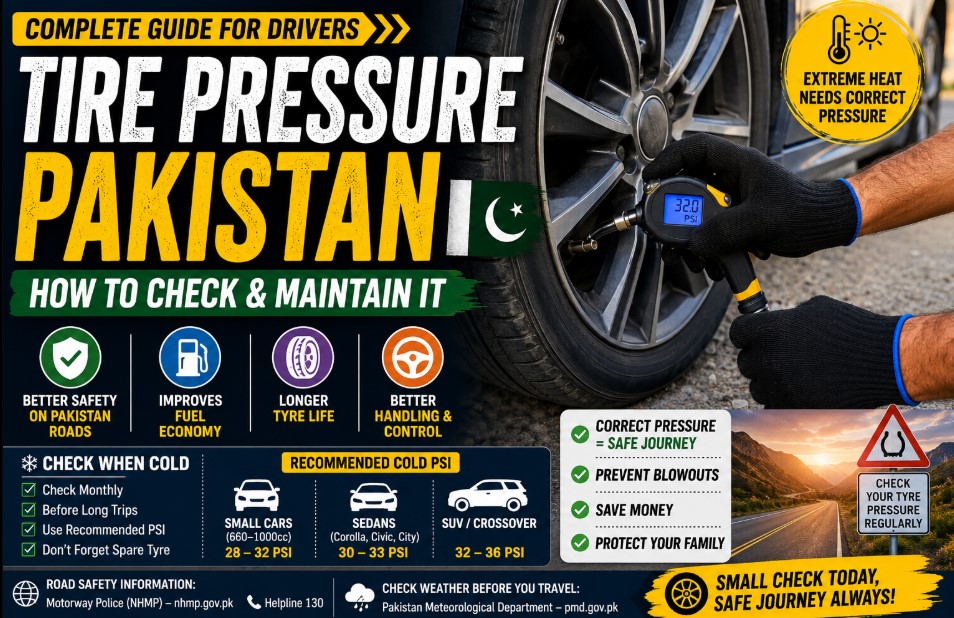
Most cars fall within a common range. Generally, small cars run around 28 to 32 PSI. Meanwhile, sedans often need about 30 to 33 PSI. Moreover, SUVs may require 32 to 36 PSI. However, front and rear tires can differ, so check both. Below is a rough guide, but your door sticker always wins.
Vehicle Type
Typical Cold PSI
Small car (660–1000cc)
28 – 32 PSI
Sedan (Corolla, Civic, City)
30 – 33 PSI
SUV or crossover
32 – 36 PSI
How Heat Affects Pressure
Heat has a powerful effect on tire pressure. Specifically, air expands as it gets hotter. In Pakistan, summer temperatures often cross 40°C. Moreover, the road surface gets far hotter than the air. So, pressure rises fast during the day.
The numbers here are worth remembering. Basically, pressure changes about 1 PSI for every 10°F shift. Additionally, driving heats the tires and adds several more PSI. Moreover, direct sun can raise pressure by around fifteen percent. Therefore, a tire reads much higher after driving in the heat.
This leads to one critical rule. Warning: never release air from hot tires that read high. Otherwise, they become dangerously low once they cool down. Instead, always check and set pressure when tires are cold. So, measure early in the morning before driving. Consequently, you get a true and safe reading.
Tools You Will Need
Checking pressure needs only two simple things. To start, gather these items before you begin.
A reliable tire pressure gauge, ideally a digital one.
An air source, such as a pump or compressor.
Additionally, a good personal gauge is a smart buy. Specifically, many petrol pump gauges are old and inaccurate. Moreover, your own gauge gives consistent, trustworthy readings. Therefore, a small digital gauge pays for itself over time. So, keep one in your glovebox at all times.
How to Check Tire Pressure
Checking pressure is quick once you learn the steps. Below is the full method every driver should follow.
Wait for cold tires. First, check when the car has rested for three hours. Alternatively, check early in the morning before driving.
Remove the valve cap. Next, unscrew the small cap on the tire valve. Then, keep it somewhere safe.
Press the gauge on. After that, push the gauge firmly onto the valve. Moreover, press until no air hisses out.
Read the pressure. Now, note the PSI shown on the gauge. Then, compare it to your recommended figure.
Repeat for all tires. Afterward, check every tire the same way. Importantly, do not forget the spare tire.
Throughout the process, work calmly and record each reading. Therefore, you can spot a tire that keeps losing air. Indeed, one weak tire often signals a slow puncture.
How to Add or Release Air
Adjusting pressure is simple after you check it. Basically, you either add air or let some out. So, match each tire to the correct PSI. Below is how to do both safely.
To add air, connect the pump to the valve. Then, add air in short bursts, checking as you go. Moreover, recheck with your gauge after each burst. Therefore, you avoid overfilling the tire.
To release air, press the small pin inside the valve. Specifically, the back of most gauges has this nub. Then, let out a little air and recheck. However, do this only on cold tires, never hot ones. Afterward, refit the valve cap securely on every tire.
How Often to Check
Regular checks keep your tires safe year-round. Generally, you should check pressure at least once a month. Moreover, tires naturally lose one to two PSI each month. Therefore, monthly checks catch this slow loss early.
Long trips call for an extra check. Specifically, always inspect all tires before any highway journey. Additionally, check the spare so it is ready if needed. So, a quick pre-trip check prevents roadside trouble. Below is a simple reminder of good timing.
When
Why
Once a month
Catches slow, natural air loss
Before long trips
Prevents highway blowouts
After a big temperature change
Heat and cold shift pressure
When the warning light shows
Signals low pressure quickly
Nitrogen vs Air Filling
Nitrogen filling has become popular across Pakistani cities. Basically, some stations now offer nitrogen instead of air. So, many drivers wonder if it is worth the cost. Below is an honest comparison of the two.
Factor
Regular Air
Nitrogen
Cost
Free or very cheap
Extra charge
Pressure stability
Normal
Slightly steadier
Leak rate
Slightly faster
Slightly slower
Availability
Almost everywhere
Cities and some stations
The truth about nitrogen is fairly simple. Specifically, it expands a little less with temperature changes. Moreover, it leaks slightly slower than normal air. However, ordinary air is already mostly nitrogen anyway. Therefore, the benefit is real but small, not magical.
So, here is the practical advice. If nitrogen top-ups are free, feel free to use them. However, if you must pay extra, a good gauge is better value. Moreover, nitrogen still needs regular pressure checks. Therefore, never treat nitrogen tires as maintenance-free.
Checking Tread and Condition
Pressure care works best alongside tread checks. Specifically, worn tires are unsafe no matter the pressure. Moreover, bald tires cannot grip wet roads or shed heat. So, always inspect the tread and overall condition.
Several checks take only a minute each. Firstly, look at the tread depth using the wear indicators. Secondly, watch for cracks, cuts, or bulges on the sidewall. Thirdly, check for uneven wear across the tread. Moreover, uneven wear often points to wrong pressure or alignment. Therefore, fix the cause, not just the symptom.
Tire age and rotation also matter a lot. Specifically, rubber ages and hardens even with good tread. Additionally, rotating tires every 10,000 km spreads wear evenly. When inspecting a used car, the tyres reveal a lot about its care and safety. Our used car inspection Pakistan guide explains what to check. Therefore, tread and condition deserve as much attention as pressure.
Seasonal Pressure Tips
Each season affects your tire pressure differently. Therefore, adjusting your checks by season is smart. You can plan around the weather using the PMD forecasts at pmd.gov.pk. Below are the key points for our climate.
Summer is the most demanding season here. Specifically, extreme heat and hot tarmac raise blowout risk. Therefore, check pressure more often in summer. Moreover, keep tires at the correct cold PSI, never overfilled.
Winter and monsoon bring different challenges. For example, cold weather lowers pressure slightly. Therefore, you may need to add a couple of PSI. Meanwhile, monsoon rain makes good tread vital for grip. So, check both pressure and tread before wet-season driving.
Common Mistakes to Avoid
Many drivers make a few avoidable errors. Firstly, some bleed air from hot tires, leaving them low. Secondly, others fill to the sidewall maximum by mistake. Thirdly, a few judge pressure just by looking. So, awareness of these traps keeps you safe.
Other mistakes relate to habits and tools. For example, many forget to check the spare tire. Likewise, some rely only on the dashboard warning light. Additionally, a cheap or old gauge gives false readings. Therefore, use a good gauge and check regularly. In short, careful habits prevent most tire failures.
The biggest mistake, however, is ignoring pressure entirely. Specifically, skipped checks lead to slow, hidden underinflation. Moreover, this raises the risk of a sudden blowout. Therefore, never set pressure once and forget it. Consequently, regular checks are the only safe approach.
Pressure and Long-Distance Travel
Long journeys demand extra tire care in Pakistan. Specifically, high speeds and heat stress tires heavily. Moreover, a blowout at speed is extremely dangerous. Therefore, always prepare your tires before a motorway trip.
A pre-trip routine keeps you safe on highways. Firstly, check all tire pressures when cold. Secondly, inspect the tread and look for damage. Thirdly, confirm the spare is ready and inflated. The National Highways and Motorway Police also share safety and travel guidance at nhmp.gov.pk. Moreover, their helpline 130 assists stranded drivers, including with tyre trouble.
This preparation matters most in extreme heat. Specifically, hot roads push tire pressure and temperature higher. Therefore, correct cold pressure gives room for safe expansion. So, never start a long drive on doubtful tires. Indeed, a short check can prevent a highway tragedy.
Pressure Care and Your Car
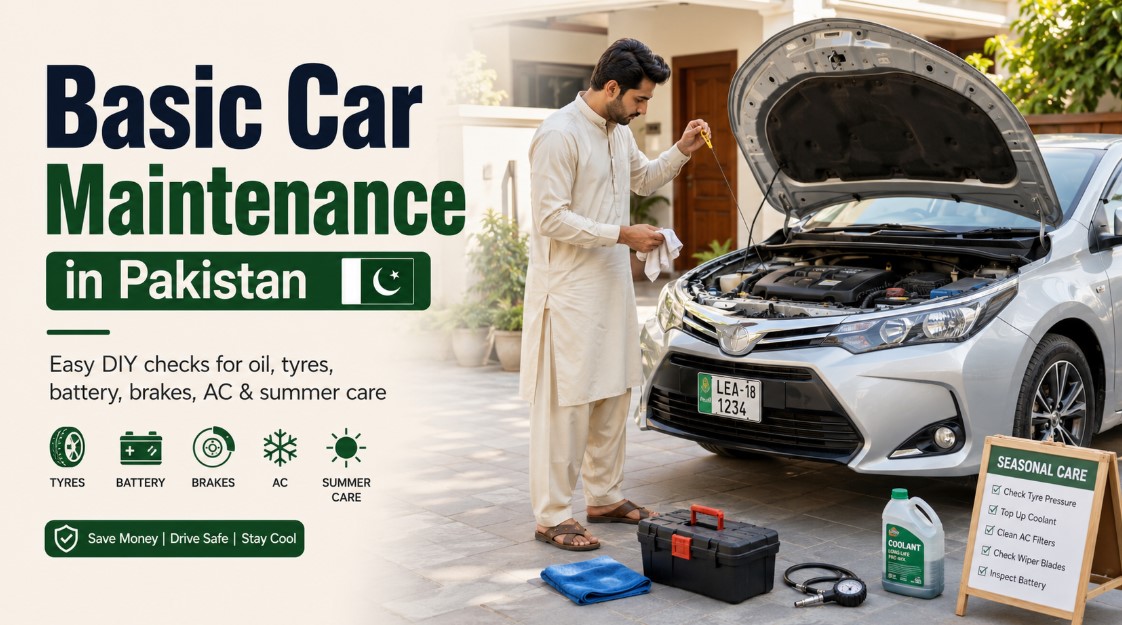
Tire pressure is one part of your car’s overall upkeep. To keep your whole vehicle healthy, follow a complete routine. For a full plan, our car maintenance Pakistan guide covers every key task. Therefore, pairing pressure checks with regular care protects your car best.
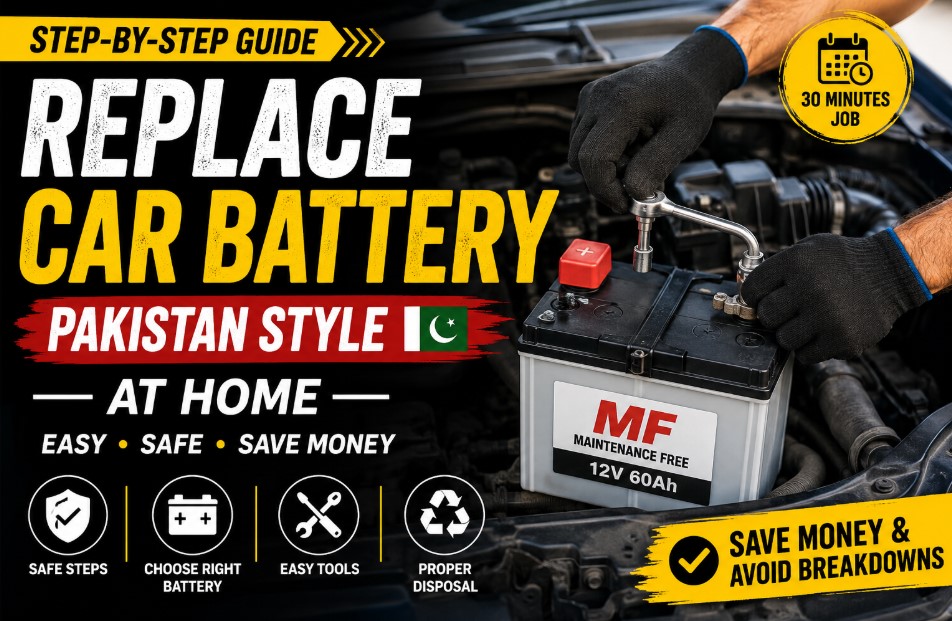
Like a pressure check, some other jobs are easy to do yourself. For instance, swapping a weak battery is simple with the right steps. Our replace car battery Pakistan guide walks you through it. Consequently, these small DIY skills together keep your car reliable. So, learning them builds real confidence and cuts costs.
Communities and Help
Helpful communities make tire care much easier. For example, forums like PakWheels host detailed tire discussions. Similarly, YouTube channels show pressure checks step by step. Moreover, Facebook groups for car owners share tips and warnings. So, you can learn from thousands of fellow drivers.
Beyond online help, local services add real value. Specifically, tire shops check pressure and tread quickly. Additionally, nitrogen filling stations are now common in cities. Therefore, expert help is always within easy reach. Indeed, a trusted tire shop is worth keeping in mind.
These communities also track useful advice well. For instance, members share seasonal reminders each year. Likewise, they discuss good gauges and reliable tire brands. Consequently, staying connected keeps you informed and safe. Ultimately, shared knowledge builds smarter, safer drivers.
Frequently Asked Questions
What is the correct tire pressure Pakistan drivers should use?
Always use the pressure listed on your car. Specifically, check the sticker on the driver’s door frame. Moreover, most cars need around 30 to 33 PSI. However, never use the maximum figure on the tire sidewall.
When is the best time to check tire pressure?
Check pressure when the tires are cold for accuracy. Specifically, early morning before driving is ideal. Moreover, avoid checking after long drives in the heat. Therefore, cold readings give the truest result.
Does heat really change tire pressure in Pakistan?
Yes, heat raises tire pressure significantly here. Specifically, pressure rises about 1 PSI per 10°F. Moreover, driving and hot roads add several more PSI. Therefore, never bleed air from hot tires.
Is nitrogen filling better than air?
Nitrogen offers slightly steadier pressure and slower leaks. However, ordinary air is already mostly nitrogen. Therefore, the benefit is small, not major. So, use nitrogen if free, but still check regularly.
How often should I check my tire pressure?
Check pressure at least once every month. Moreover, always check before any long highway trip. Additionally, do not forget to check the spare tire. Therefore, regular checks prevent slow, hidden underinflation.
Can wrong tire pressure cause a blowout?
Yes, wrong pressure is a leading blowout cause. Specifically, low pressure overheats the tire and peels the tread. Meanwhile, high pressure can burst on a pothole. Therefore, correct pressure greatly lowers blowout risk.