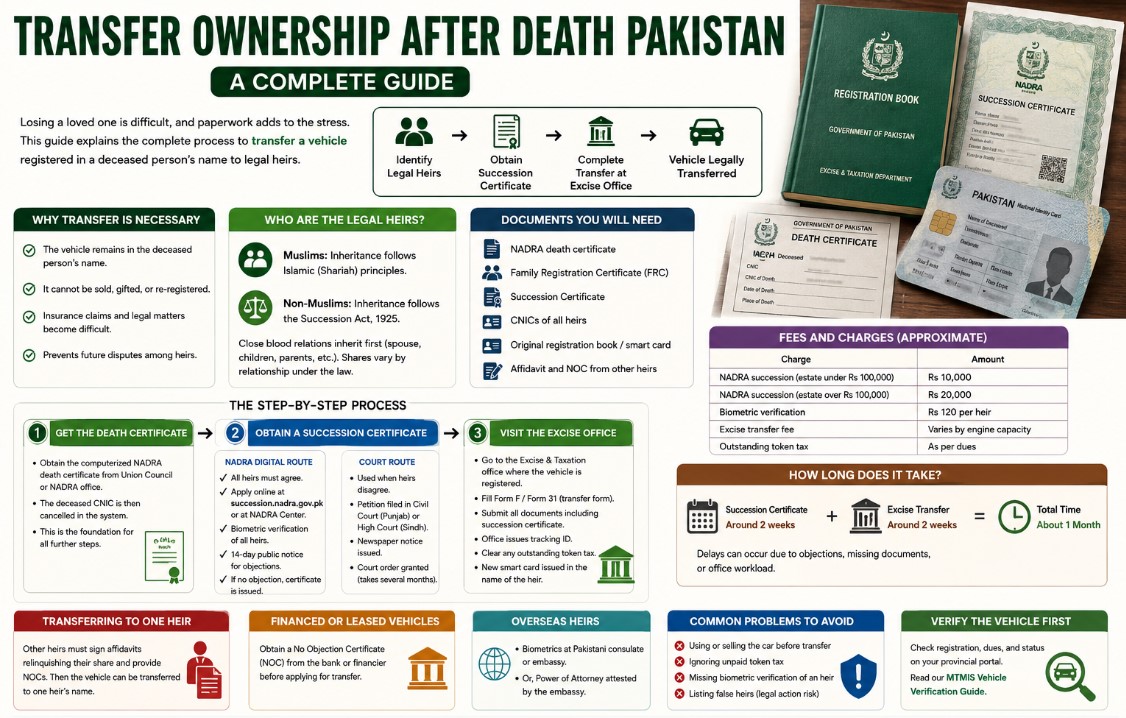
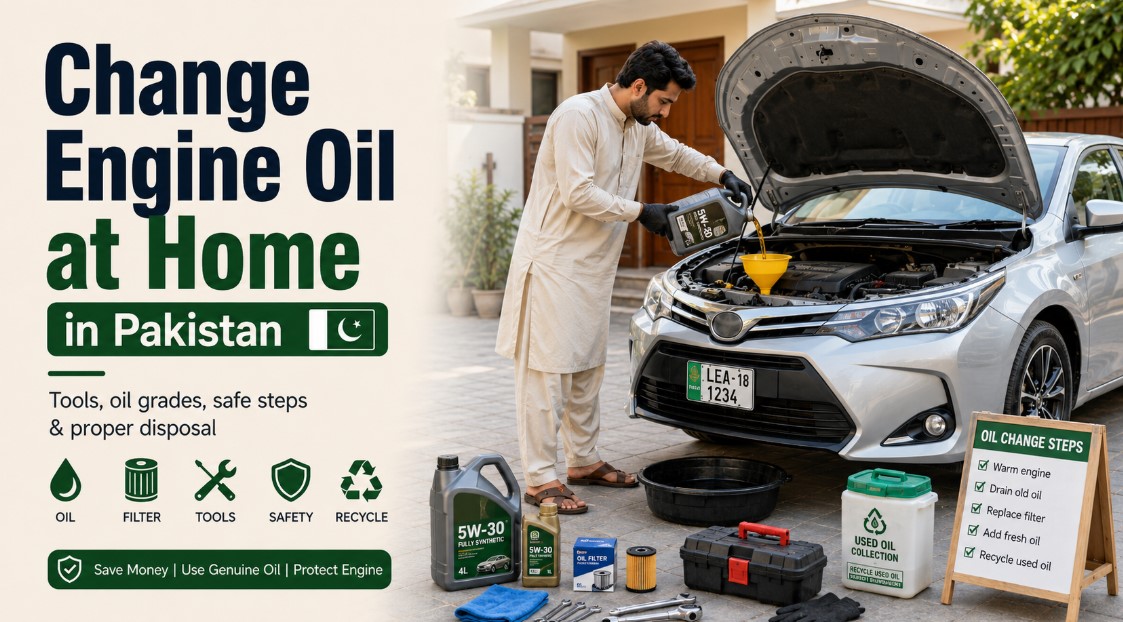
Learning to change engine oil Pakistan style at home can save you real money over time. Moreover, it lets you control the oil quality and avoid counterfeit products. In this post, you will learn the full process from start to finish. Furthermore, this guide covers tools, oil grades, safe steps, and proper disposal in clear detail.
To begin with the basics, an oil change is the simplest major service you can do yourself. Specifically, it needs only a few tools and about an hour. As a result, many drivers now do it in their own driveway. Therefore, this step-by-step approach to change engine oil Pakistan drivers can follow makes the job easy and safe.
Why Change Your Oil at Home
Doing your own oil change brings several clear benefits. Firstly, it saves you the labour charges of a workshop. Secondly, it gives you full control over the oil and filter used. Thirdly, it helps you understand your car better. So, a little effort pays you back in savings and skill.
Quality control is a big reason in Pakistan. Specifically, counterfeit oil is sold at some roadside shops. Moreover, fake oil can quietly damage your engine over time. Therefore, buying genuine oil yourself removes that risk entirely. Consequently, you know exactly what goes into your engine.
Beyond savings, there is real satisfaction in the task. For example, you learn where key parts sit under the hood. Additionally, you can spot small leaks or issues early. Therefore, a home oil change doubles as a quick health check. Indeed, this hands-on habit makes you a more confident driver.
How Often to Change Oil
Oil change timing depends on your oil type and driving. Generally, mineral oil needs changing sooner than synthetic oil. Specifically, mineral oil often lasts around 3,000 to 5,000 km. Meanwhile, fully synthetic oil can run closer to 7,500 to 10,000 km.
Pakistan’s conditions push these intervals shorter, though. For instance, extreme heat breaks oil down faster. Moreover, stop-and-go city traffic adds extra engine strain. Additionally, dust puts more load on the whole system. Therefore, many local drivers change oil around every 5,000 km. So, harsh use always means more frequent changes.
Your owner’s manual remains the final word here. Specifically, it lists the exact interval for your model. Moreover, it also names the correct oil grade and amount. Therefore, always check it before deciding your schedule. Ultimately, following the manual protects both engine and warranty.
Choosing the Right Oil
Picking the correct oil is the most important choice. Basically, the wrong grade can harm performance and protection. So, you must match the oil to your engine and climate. Below, the two key factors are explained simply.
Understanding Oil Grades
Oil grades use two numbers, such as 5W-40. Specifically, the first number shows cold-weather flow. A lower first number means better cold starts. Meanwhile, the second number shows high-temperature stability. So, a higher second number handles summer heat better.
For Pakistan, a balanced grade works very well. For example, 5W-40 performs strongly in both winter and summer. Similarly, 10W-40 suits many common cars here. Moreover, older or high-mileage engines often use 20W-50. However, newer efficient engines may need 0W-20 or 5W-30. Therefore, always confirm the right grade in your manual.
Popular Oil Brands in Pakistan
Several trusted brands are widely available in Pakistan. For instance, Shell, Total Quartz, and ZIC are common choices. Additionally, Caltex Havoline, Kixx, Mobil, and Castrol sell well too. Moreover, premium options like Liqui Moly suit turbo or luxury engines. So, you have plenty of quality choices.
Buying genuine oil matters more than the brand alone. Specifically, counterfeit lubricants are a real problem in local markets. Therefore, buy only from reputable sellers or official stores. Moreover, check for holograms, seals, or scratch-off codes. Additionally, genuine oil looks clear and clean, not cloudy. Consequently, a careful purchase protects your engine from fake products.
Tools and Materials Needed
Gathering everything first makes the job smooth. To start, collect these tools and materials before you begin.
The correct engine oil and amount, as per your manual.
A new, matching oil filter and drain plug washer.
A drain pan to catch the old oil.
A wrench or socket set and an oil filter wrench.
A funnel, clean rags, and disposable gloves.
A jack with jack stands, or a set of ramps, plus wheel blocks.
Additionally, keep a sealed container ready for the used oil. Specifically, an empty oil bottle or jerry can works well. Moreover, this makes safe disposal much easier later. Therefore, prepare it before you drain a single drop.
Safety First
Safety must come before any mechanical work. Firstly, never work under a car held up by a jack alone. Instead, always support the car on proper jack stands. Moreover, ramps are a safe and simple option for beginners.
Heat is another important safety concern. Specifically, a hot engine and hot oil can cause serious burns. Therefore, let the engine cool for at least ten to fifteen minutes. However, slightly warm oil still drains better than cold oil. So, aim for warm, not hot, before you start.
A few more precautions keep you protected. For example, wear gloves to guard your skin from used oil. Additionally, work in a well-ventilated space away from open flames. Furthermore, keep children and pets away from the work area. Therefore, these simple habits prevent most home accidents.
Step-by-Step Oil Change
The process itself is straightforward once you begin. Below is the full method to change engine oil Pakistan drivers can follow safely.
Prepare the car. First, park on level ground and apply the parking brake. Then, remove the keys and let the engine cool.
Lift the car safely. Next, raise the front with a jack and set jack stands. Alternatively, drive the front wheels onto ramps and block the rear wheels.
Open the fill cap. After that, open the hood and remove the oil fill cap on top.
Drain the old oil. Then, place the drain pan under the drain plug. Next, unscrew the plug and let the oil drain fully for a few minutes.
Refit the drain plug. Afterward, fit a new washer and screw the plug back. However, tighten it snugly, not too hard.
Replace the oil filter. Meanwhile, remove the old filter with a filter wrench. Then, oil the new filter’s gasket and hand-tighten it.
Add fresh oil. Now, pour the new oil through a funnel into the fill hole. Moreover, add the exact amount listed in your manual.
Check for leaks. Finally, replace the fill cap and start the engine. Then, look under the car for any drips.
Throughout the process, take your time with each step. Therefore, rushing only leads to spills or loose fittings. Indeed, a calm, careful pace gives the best results.
Changing the Oil Filter
The oil filter deserves special attention during a change. Basically, it traps dirt and metal particles from the oil. So, a fresh filter keeps the new oil clean. Therefore, always replace it with every oil change.
Removing the old filter is simple with the right tool. Specifically, an oil filter wrench grips it firmly for turning. Moreover, some oil will spill, so keep the drain pan close. After removal, wipe the mounting surface clean with a rag. Consequently, the new filter will seal properly.
Fitting the new filter needs one key trick. First, dab a little fresh oil on the new rubber gasket. This helps it seal and prevents sticking later. Then, screw the filter on by hand until snug. However, avoid using a wrench to overtighten it. Therefore, hand-tight is the correct and safe amount.
Checking the Oil Level
Checking the level confirms you added the right amount. To start, let the engine run for a minute, then switch off. Next, wait a short while for the oil to settle. After that, pull out the dipstick and wipe it clean.
Then, reinsert the dipstick fully and remove it again. Now, read where the oil sits on the marks. Ideally, it should rest between the low and high lines. Moreover, healthy new oil looks clear and amber. So, top up in small amounts if the level is low.
However, avoid the mistake of overfilling. Specifically, too much oil can foam and harm the engine. Therefore, add slowly and recheck as you go. Ultimately, the correct level keeps everything running smoothly.
Disposing of Used Oil Safely
Used oil disposal is a serious responsibility, not an afterthought. Specifically, used engine oil is toxic and harmful to nature. In fact, a small amount can pollute a huge volume of water. Therefore, you must never pour it down a drain or on the ground.
The safe path is always recycling. For example, many workshops and mechanics collect used oil freely. Moreover, used-oil recyclers re-refine it for future use. So, store your old oil in a sealed container until then. Then, hand it over to a workshop or collection point.
Pakistan treats such waste under clear environmental rules. Because used oil is classed as hazardous, proper handling is required. You can read the national policy on the Ministry of Climate Change site at mocc.gov.pk. Therefore, responsible disposal protects both your community and the environment. Indeed, this final step matters as much as the change itself.
Common Mistakes to Avoid
Many first-timers make a few avoidable errors. Firstly, some overfill the engine with too much oil. Secondly, others overtighten the drain plug and strip the thread. Thirdly, a few forget to fit the new washer. So, awareness of these traps saves you trouble.
Other mistakes relate to parts and quality. For example, using the wrong oil grade harms protection. Likewise, skipping the filter change dirties the fresh oil fast. Additionally, buying fake oil damages the engine quietly. Therefore, always use the correct, genuine parts. In short, careful choices prevent costly repairs.
The biggest mistake, however, is unsafe disposal. Specifically, dumping oil pollutes soil and water badly. Moreover, it can even bring legal and health problems. Therefore, never take shortcuts with used oil. Consequently, recycling is the only right choice.
How Much It Costs
Cost is a major reason drivers switch to DIY. Below is a rough comparison between home and workshop changes. Prices vary by brand, city, and car, so treat these as estimates.
Item
DIY Cost
Workshop Cost
Engine oil (3–4 litres)
Rs 3,000 – 9,000
Rs 3,000 – 9,000
Oil filter
Rs 500 – 1,500
Usually included
Labour charges
None
Rs 500 – 1,500
Tools (one-time)
Rs 3,000 – 6,000
Not needed
As the table shows, DIY needs a one-time tool investment. However, you then save the labour charge on every future change. Therefore, the tools pay for themselves within a few changes. Consequently, home oil changes become cheaper over the long run.
Oil Change and Your Car’s Value
Regular oil changes protect your car’s long-term value. Specifically, a well-maintained engine runs longer and stronger. Moreover, buyers in Pakistan value a clean service record highly. Therefore, every documented change helps at resale time.
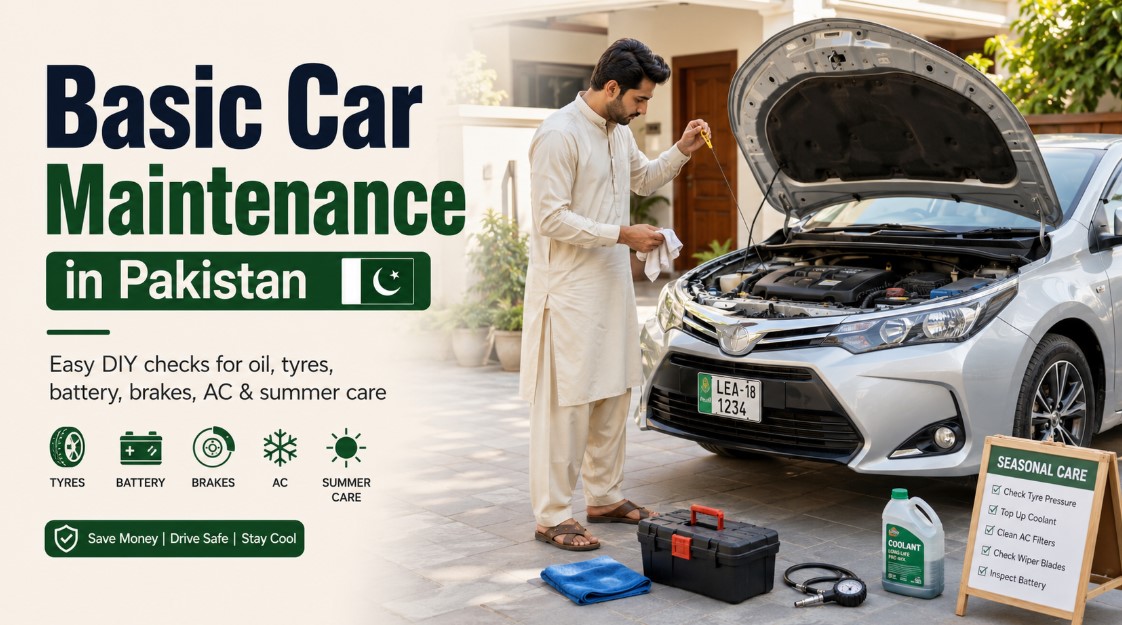
An oil change is only one part of full car care. To keep your whole vehicle healthy, follow a complete routine. For a broader plan, our car maintenance Pakistan guide covers every key task. Moreover, good upkeep also matters when buying a used car. When inspecting any used vehicle, the oil condition reveals a lot about its history. Our used car inspection Pakistan guide explains exactly what to check. Therefore, these steps together protect both safety and money.
Communities and Help
Helpful communities make DIY car care much easier. For example, forums like PakWheels host detailed oil-change discussions. Similarly, YouTube channels show the process step by step. Moreover, Facebook groups for car owners share tips and product advice. So, you can learn from thousands of fellow drivers.
Beyond online help, local support is valuable too. Specifically, trusted mechanics can guide beginners on their first change. Additionally, spare-parts shops advise on the right filter and oil. Therefore, building a good relationship with one helps a lot. Indeed, honest local advice saves both time and money.
These communities also track useful product updates. For instance, members share prices and genuine-oil checks often. Likewise, they warn each other about counterfeit batches. Consequently, staying connected keeps you informed and safe. Ultimately, shared knowledge builds real confidence.
Frequently Asked Questions
How often should I change engine oil in Pakistan?
Most drivers change oil around every 5,000 km. Specifically, heat and city traffic break oil down faster here. Moreover, mineral oil needs changing sooner than synthetic. Therefore, always follow the interval in your owner’s manual.
Which engine oil grade is best for Pakistan’s climate?
A balanced grade like 5W-40 suits Pakistan well. Specifically, it performs in both winter and summer heat. Moreover, older engines often use thicker 20W-50. However, always confirm the right grade in your manual.
Is it hard to change engine oil Pakistan drivers can do at home?
No, the task is fairly simple with basic tools. Specifically, it takes about an hour once you learn it. Moreover, safety steps like jack stands make it safe. Therefore, most drivers manage it easily after one try.
Do I need to change the oil filter every time?
Yes, always replace the filter with each oil change. Specifically, the filter traps dirt and metal particles. Moreover, an old filter dirties the fresh oil quickly. Therefore, a new filter keeps the new oil clean.
How do I dispose of used engine oil safely?
Never pour used oil down a drain or on the ground. Instead, store it in a sealed container after draining. Then, give it to a workshop or used-oil recycler. Therefore, recycling protects the environment and your community.
Can changing oil myself save money?
Yes, DIY oil changes save you the labour charge each time. Specifically, tools are a one-time cost that soon pays off. Moreover, buying your own oil avoids counterfeit risk. Therefore, home changes become cheaper over time.