
Islam
Taraweeh Prayer Explained: The Beautiful Night Prayers of Ramadan

Published
1 month agoon
By
Hamza Tahir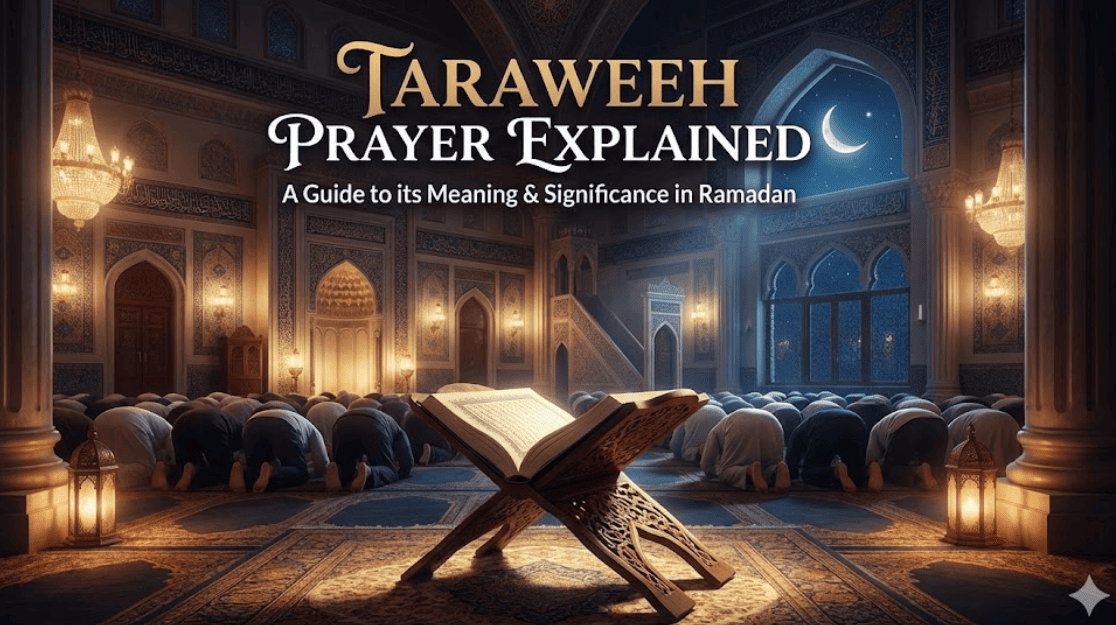
Every single year, the holy month of Ramadan completely transforms the daily lives of Muslims worldwide. During the bright daylight hours, the streets often grow quiet as believers fast. However, when the sun finally sets, a beautiful shift occurs. Mosques rapidly fill with millions of devoted worshippers. They stand shoulder to shoulder, listening to the deeply soothing recitation of the Holy Quran. This magnificent, deeply spiritual nightly gathering revolves entirely around the Taraweeh prayer.
Are you currently seeking to understand the true essence of this beautiful night prayer? Perhaps you are a new Muslim learning how to pray. Alternatively, you might simply want to improve your spiritual focus this Ramadan. If so, you will quickly discover that the Taraweeh prayer is an absolute cornerstone of the holy month.
Ultimately, it provides a perfect, peaceful end to a long day of fasting. In this highly detailed guide, we will explore exactly what this prayer means. Furthermore, we will dive deep into its historical origins, the correct method to perform it, and the massive spiritual rewards it offers. By the end of this guide, you will confidently step into the mosque ready to maximize your nightly worship.
What Exactly is the Taraweeh Prayer?
First, we must clearly define our terms. The word “Taraweeh” comes directly from an Arabic root word meaning “to rest” or “to relax.” This specific name holds a very beautiful meaning. Historically, early Muslims would pray four units (Rak’ahs) of this night prayer. Afterward, they would actively take a short, peaceful break to rest their legs and deeply praise Allah. Therefore, the Taraweeh prayer literally translates to the “prayer of rest and relaxation.”
Specifically, this prayer is a voluntary (Sunnah) act of worship. It is exclusively performed during the holy month of Ramadan. You cannot pray Taraweeh during any other month of the Islamic calendar. Furthermore, believers always perform this specific prayer immediately after the obligatory Isha (night) prayer. While it is highly recommended to pray it in a large congregation at the local mosque, you can also validly perform it alone in your own home.
The Beautiful History and Origins
To truly appreciate the Taraweeh prayer, you must thoroughly understand its rich history. The practice began directly with Prophet Muhammad (peace be upon him).
During one specific Ramadan, the Prophet went to the mosque late at night. He began to pray voluntary night prayers. A few companions saw him and quickly joined behind him. The very next night, news spread rapidly, and a much larger crowd gathered. By the third night, the mosque was completely packed with eager worshippers.
However, on the fourth night, the Prophet deliberately stayed inside his house. He did not come out to lead the congregation. The next morning, he beautifully explained his exact reasoning. He told his devoted companions that he saw their immense eagerness. However, he feared that if he continued leading them every single night, Allah might make this prayer strictly obligatory. He deeply wanted to prevent placing a heavy, permanent burden on his followers.
Therefore, during the Prophet’s life, people mostly prayed these night prayers individually or in very small groups. Years later, during the leadership of Caliph Umar ibn Al-Khattab, the Muslim community grew massively. Umar noticed people praying in scattered, noisy groups across the mosque. Consequently, he made a brilliant decision. He officially gathered everyone behind one single, beautiful reciter named Ubayy ibn Ka’b. This wise decision firmly established the unified, congregational Taraweeh prayer that Muslims beautifully observe today.
How to Perform the Taraweeh Prayer Correctly
Many people feel slightly intimidated when they attend the mosque for the first time. However, the exact method is actually quite simple. You must simply follow a clear, structured routine.
1. Start with the Isha Prayer
You can never pray Taraweeh before Isha. Therefore, the night always begins with the congregation performing the four obligatory Rak’ahs of the Isha prayer. Afterward, you should definitely pray the two Sunnah (voluntary) Rak’ahs associated with Isha.
2. Pray in Sets of Two
The Taraweeh prayer is always performed in consecutive sets of two Rak’ahs. You start by making a clear intention in your heart to pray Taraweeh. You follow the Imam (prayer leader) as he recites the Quran out loud. After every two units, you sit down, recite the Tashahhud, and say the final Salam (greetings) to complete that specific set.
3. Take Brief, Peaceful Breaks
Traditionally, the congregation takes a short break after every four Rak’ahs (which equals two sets of two). During this brief pause, worshippers sit quietly. They actively praise Allah, silently repent for their daily sins, or simply rest their tired feet.
4. Conclude with the Witr Prayer
Finally, after the congregation completes all the planned Taraweeh units, the night officially ends with the Witr prayer. The Witr is a special, odd-numbered prayer (usually three Rak’ahs). The Imam leads this final prayer aloud. Often, he includes a highly emotional, collective supplication (Dua) known as Qunut during the final unit.
The Debate: 8 or 20 Rak’ahs?
When discussing the Taraweeh prayer, a very common question quickly arises. Exactly how many Rak’ahs should you pray? Historically, this specific topic has caused unnecessary arguments among Muslims.
Some mosques proudly pray 8 Rak’ahs, followed immediately by 3 Witr. They base this practice firmly on a reliable narration from Aisha (may Allah be pleased with her). She stated that the Prophet never exceeded 11 Rak’ahs in his night prayers.
Conversely, many other major mosques prominently pray 20 Rak’ahs, followed by 3 Witr. This specific practice traces back directly to the time of Caliph Umar. He instituted 20 Rak’ahs in the Prophet’s Mosque in Medina, and the vast majority of early scholars enthusiastically accepted it.
Ultimately, both practices are completely valid and highly rewarding. The Taraweeh prayer is strictly a voluntary worship. Therefore, the exact number matters much less than your personal sincerity, your deep focus, and your pure devotion. You should simply follow the established practice of your local mosque to maintain beautiful community unity.
The Massive Spiritual Rewards
Why do millions of tired, fasting people happily stand for hours every single night? They do it because the spiritual rewards are absolutely astronomical.
Prophet Muhammad (peace be upon him) explicitly guaranteed a massive reward for this specific action. He clearly stated: “Whoever stands in prayer during Ramadan with sincere faith and hoping for a reward from Allah, all of his previous sins will be completely forgiven.” This incredible promise motivates believers globally. Furthermore, the night prayer perfectly complements your daytime worship. For instance, when you actively secure the benefits of fasting in Islam during the bright day, your body detoxifies and your ego shrinks. Consequently, when you stand in prayer at night, your purified heart feels a much deeper, profound connection to the Quranic recitation. The daytime fast and the nighttime prayer work flawlessly together to completely elevate your soul.
Taraweeh and the Comprehensive Rules of Ramadan
To truly succeed during this holy month, you must view your worship as a complete, 24-hour package. You cannot simply pray heavily at night while constantly breaking rules during the day.
For example, your evening Taraweeh feels incredibly spiritually heavy when you have actively guarded your tongue against gossiping and lying all day long. Therefore, understanding the complete ramadan rules in Islam is highly critical. If you successfully protect your eyes, your ears, and your stomach from unlawful things during the daylight hours, Allah rewards you by making your evening prayers feel sweet, easy, and deeply moving.
Praying Taraweeh at Home: Rules for Men and Women
Sometimes, attending the local mosque becomes completely impossible. You might have a demanding night shift at work. You might be physically sick. Alternatively, you might have small, crying children at home. Fortunately, Islam is a highly practical religion.
1. Can Women Pray at the Mosque?
Yes, absolutely. Women are fully permitted to attend the mosque for the Taraweeh prayer. Prophet Muhammad (peace be upon him) strictly forbade men from stopping women from attending the mosques of Allah. However, Islamic scholars consistently note that a woman receives the exact same (or even greater) spiritual reward if she chooses to pray quietly in the privacy of her own home.
2. How to Pray at Home
If you pray at home, you simply follow the exact same format. You pray in basic sets of two Rak’ahs. Since you are not a professional Imam, you do not need to recite long, difficult chapters of the Quran. You can simply recite the short Surahs that you already have memorized.
Furthermore, some Islamic schools of thought (like the Hanbali school) actually permit you to hold a physical copy of the Quran (Mus’haf) or a smartphone while praying voluntary night prayers. This excellent allowance lets you slowly read and deeply ponder over longer chapters even if you haven’t memorized them.
Transitioning to the Last 10 Nights
The first twenty days of Ramadan are truly beautiful. However, the final ten days represent the absolute spiritual climax of the entire year. During this highly critical period, the Taraweeh prayer often becomes significantly more intense.
In the last ten nights, Muslims aggressively seek Laylatul Qadr (The Night of Power). Sincere worship on this single night is better than a thousand months. Because of this massive prize, many major mosques actively extend their Taraweeh prayers. Furthermore, they often add an additional late-night prayer known as Tahajjud or Qiyam al-Layl in the very deep hours before dawn.
To successfully handle this intense physical and mental fatigue, you must be highly organized. You should actively create and follow a structured worship plan for the last 10 nights of Ramadan. A solid, realistic plan ensures that you get enough sleep, maintain your daily responsibilities, and still successfully catch the immense blessings of the final, magnificent nights.
Common Taraweeh Mistakes to Avoid
Because millions of people crowd into mosques, human errors frequently occur. To successfully protect your spiritual rewards, you should actively avoid these very common mistakes during the Taraweeh prayer.
1. The “Bullet Train” Recitation
Sadly, some Imams rush through the Quran at a dangerously fast speed. They try to finish all 20 Rak’ahs in record time. This completely destroys the entire purpose of the prayer. The word Taraweeh means to rest and reflect. Therefore, you should actively seek out a mosque where the Imam recites calmly, clearly, and beautifully, even if they only pray 8 Rak’ahs.
2. Skipping the Isha Congregation
Sometimes, people arrive at the mosque very late. They completely miss the obligatory Isha congregation. Then, they simply join the voluntary Taraweeh. This is a massive theological mistake. The obligatory Isha prayer holds infinitely more weight than the voluntary Taraweeh. You must always prioritize the required duties first.
3. Socializing Instead of Praying
Ramadan creates a wonderful, festive community atmosphere. Naturally, you will see many old friends at the mosque. However, you must remember why you are there. Many people unfortunately spend the short breaks chatting loudly, checking their phones, or laughing in the back rows. You should actively use this precious time to quietly remember Allah, read the Quran, or simply rest your mind.
Conclusion
The Taraweeh prayer is undeniably one of the greatest, most beautiful gifts of Ramadan. It provides a stunning, daily opportunity to stand directly before your Creator. You get to listen to His divine, perfect words being recited aloud. Furthermore, it firmly unites the global Muslim community. Rich and poor, young and old, all stand perfectly equal in long, disciplined rows every single night.
Yes, standing for hours can definitely make your feet ache and your back tired. However, this temporary physical fatigue rapidly vanishes the moment you say the final Salam. What permanently remains is a deeply purified soul, a mountain of wiped-away sins, and a perfectly clean slate.
Therefore, make a strong, unshakeable intention this year. Commit to attending the Taraweeh prayer as often as you possibly can. Ignore the fatigue, push through the sleepiness, and actively let the beautiful words of the Quran wash over your tired heart. May Allah accept our nightly standing, forgive our daily shortcomings, and allow us to experience the ultimate sweetness of faith this Ramadan.
Frequently Asked Questions (FAQs)
1. Is the Taraweeh prayer strictly mandatory (Fard)?
No, it is not mandatory. It is a highly emphasized Sunnah (voluntary tradition) of the Prophet Muhammad (peace be upon him). If you miss it, you do not commit a sin, but you do miss out on massive spiritual rewards.
2. Can I pray Taraweeh alone at home?
Yes, absolutely. While praying in a large congregation at the mosque holds a greater reward, praying alone at home is completely valid. It is an excellent option for those who are sick, working late, or caring for small children.
3. Do I have to complete the entire Quran during Taraweeh?
No. It is a beautiful tradition for mosques to complete the entire Quran over the 30 nights of Ramadan. However, if you are praying at home, you can simply recite any short Surahs that you already know. The prayer is fully valid regardless of the length of the recitation.
4. Can I hold a copy of the Quran while praying Taraweeh?
According to many major Islamic scholars, holding and reading directly from a Mus’haf (Quran book) or a smartphone is completely permissible during voluntary night prayers like Taraweeh. However, you should avoid excessive physical movement while turning pages.
5. What should I do if I arrive late and the Imam is already praying Taraweeh?
You must always pray your obligatory Isha prayer first. You can pray Isha individually in the back of the mosque. Once you have fully completed your Isha prayer, you can then immediately join the Imam and the congregation for the remainder of the Taraweeh prayer.
You may like

- How to Apply for Family Registration Certificate (FRC) — NADRA Complete Guide 2026

- How to Register a Complaint on Pakistan Citizen Portal — Complete 2026 Guide

- Toyota Corolla Pakistan review: 2025 Model Specs & Price

- Fuel Efficient Cars Pakistan: Top Choices for 2026

- Land Record Online Pakistan – How to Check Property Records Online (2026 Guide)