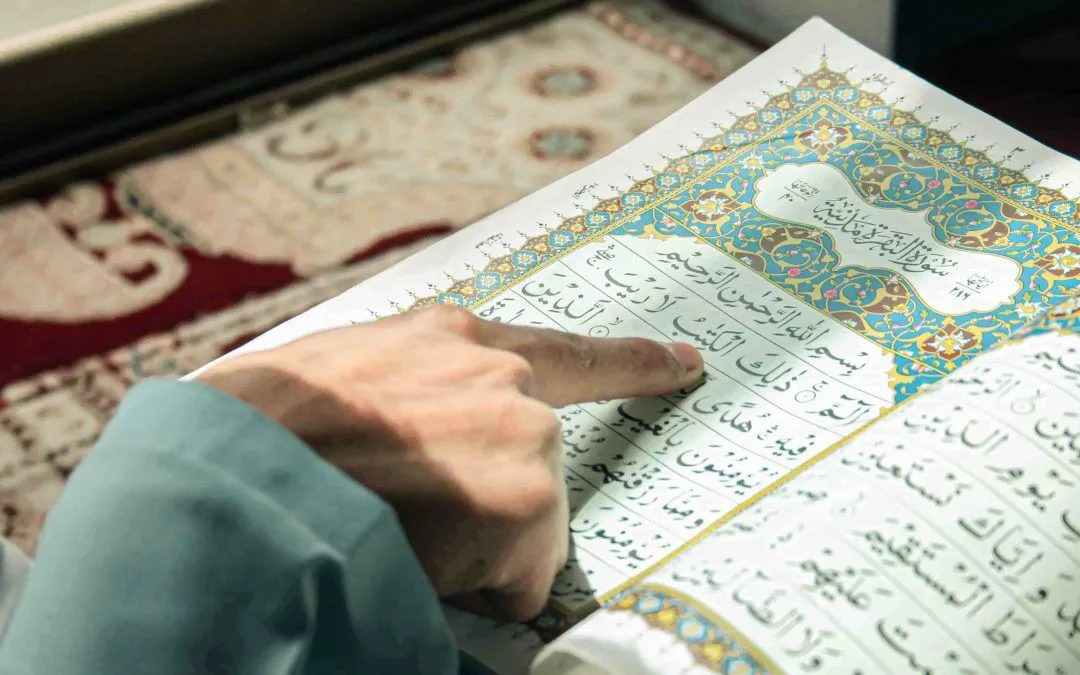
Learning Holy Quran with Tajweed is essential for every Muslim who wishes to recite the Holy Quran as it was revealed. Tajweed ensures correct pronunciation, articulation, and rhythm of Quranic words, preserving their meaning and beauty. Without Tajweed, letters may be mispronounced, which can change meanings and reduce the spiritual impact of recitation.
This guide explains what Tajweed is, why it is important, and how beginners can gradually learn and apply it correctly.
What Is Tajweed?
Tajweed comes from the Arabic root word “j-w-d”, meaning to improve or make better. In Quranic terms, Tajweed refers to pronouncing each letter from its proper point of articulation (Makharij) while observing its characteristics (Sifaat).
The rules of Tajweed are derived from:
The transmission of Quranic recitation through qualified scholars
The way Prophet Muhammad ﷺ recited the Quran
Why Reading Quran with Tajweed Is Important
Reciting the Quran correctly is not only recommended but highly emphasized in Islam. Allah says in the Quran:
“And recite the Quran with measured recitation.” (Surah Al-Muzzammil 73:4)
Reading Quran with Tajweed helps:
- Protect the original meaning of verses
- Beautify recitation
- Increase concentration and humility
- Avoid major pronunciation errors (Lahn)
Essential Foundations Before Learning Tajweed
Before applying detailed Tajweed rules, learners must build strong basics:
1. Learn Arabic Letters Properly
Each Arabic letter has a unique articulation point. Confusing letters like س، ص or ذ، ز can alter meanings if pronounced incorrectly.
2. Understand Makharij (Points of Articulation)
Arabic letters originate from five main areas:
- Throat
- Tongue
- Lips
- Nasal passage
- Oral cavity
Mastering Makharij is the backbone of reading Quran with Tajweed correctly.
Core Tajweed Rules Every Beginner Should Know
1. Noon Saakin and Tanween Rules
These include:
Each rule determines how نْ or Tanween sounds are pronounced when followed by specific letters.
2. Meem Saakin Rules
Includes:
- Ikhfa Shafawi
- Idgham Shafawi
- Izhar Shafawi
These rules ensure proper nasalization and clarity.
3. Qalqalah Letters
The five Qalqalah letters (ق ط ب ج د) produce an echoing sound when they appear with sukoon.
4. Madd (Prolongation)
Madd rules define how long certain letters should be stretched, ranging from 2 to 6 counts, depending on the type.
Applying these rules gradually improves accuracy in Quran with Tajweed recitation.
Step-by-Step Method to Learn Tajweed
Step 1: Start with Listening
Listening to qualified Qaris helps train the ear. Repeated listening builds natural recognition of correct pronunciation.
Step 2: Learn from a Qualified Teacher
Tajweed is best learned directly from a teacher who can correct mistakes in real time.
Step 3: Practice Slowly and Consistently
Slow recitation is encouraged. Speed comes naturally once accuracy improves.
Step 4: Recite Daily
Even 15–20 minutes daily strengthens pronunciation and retention of rules.
Consistent practice is the key to mastering Quran with Tajweed effectively.
Common Mistakes to Avoid
- Rushing through verses
- Ignoring letter characteristics
- Incorrect nasalization (Ghunnah)
- Confusing similar letters
- Learning rules without practical application
Avoiding these mistakes ensures steady progress and prevents ingraining errors.
Best Resources for Learning Tajweed
Authentic learning sources include:
- Local Quran teachers and Madrasas
- Reputable Islamic institutes
- Verified online Quran academies
- Mushaf with Tajweed color coding
Always ensure the source follows recognized Quranic recitation traditions.
How Long Does It Take to Learn Tajweed?
The learning timeline varies:
- Basic Tajweed: 3–6 months
- Intermediate level: 6–12 months
- Advanced mastery: Continuous improvement
The goal is not speed but accuracy and sincerity in reciting Holy Quran with Tajweed.
Frequently Asked Questions (FAQs)
1. Is Tajweed mandatory when reading the Quran?
Correct pronunciation is obligatory to avoid changing meanings, while mastering detailed rules is highly recommended.
2. Can I learn Tajweed without a teacher?
Basic concepts can be learned independently, but proper correction requires a qualified teacher.
3. Is Tajweed only for children?
No, Tajweed is for all ages, and many adults successfully learn it later in life.
4. Do non-Arabic speakers need Tajweed?
Yes, Tajweed is especially important for non-Arabic speakers to avoid pronunciation errors.
5. Can Tajweed be learned online?
Yes, provided the teacher is qualified and offers live correction.
Final Thought
Learning Tajweed is a lifelong journey of improving one’s relationship with the Quran. With patience, sincerity, and consistent practice, anyone can learn to recite the Quran beautifully and correctly. As your understanding deepens, exploring related topics—such as how many Madani Surahs are in the Quran—can further enrich your Quranic knowledge and strengthen your overall connection with the message of Islam.