Introduction
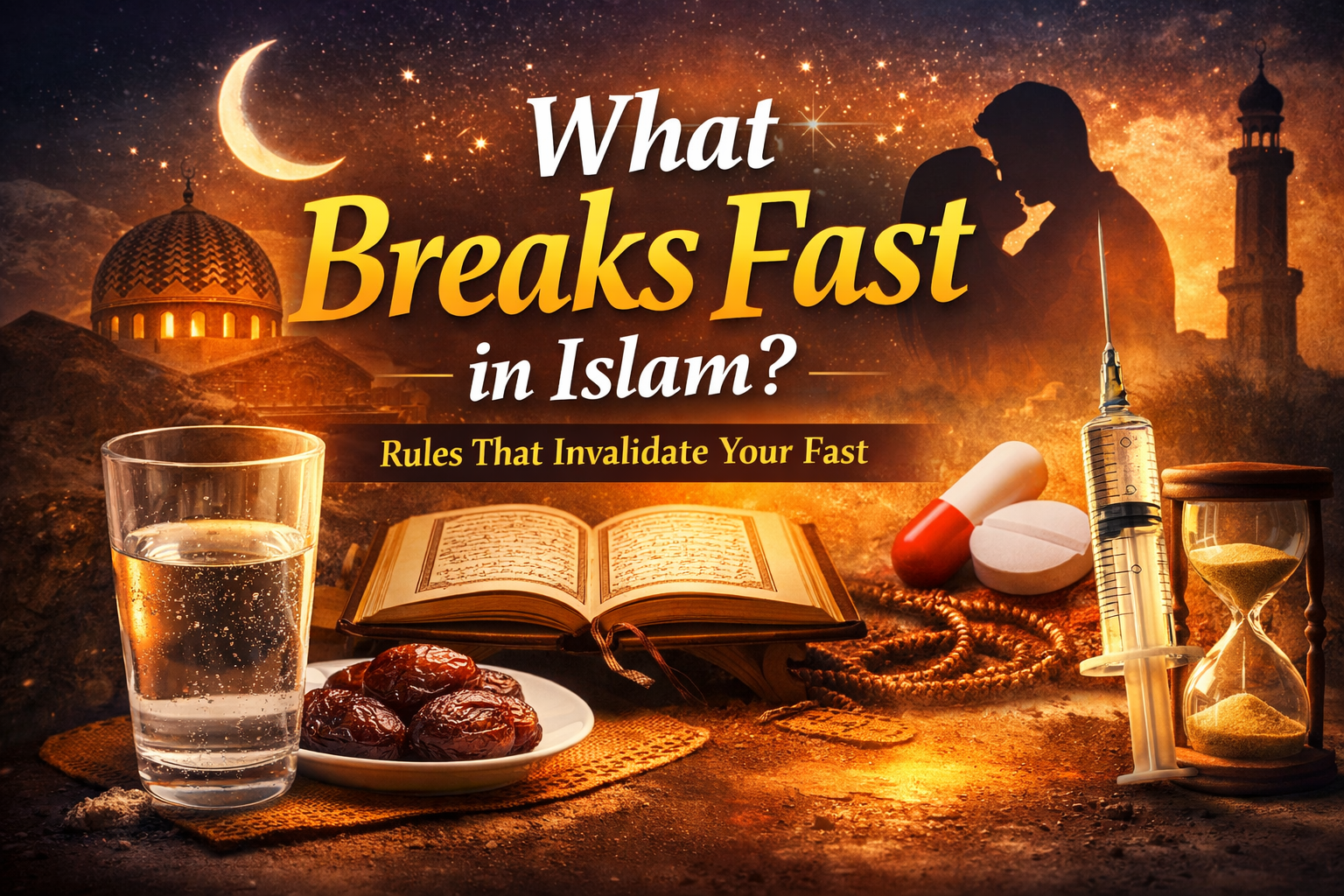
Understanding what breaks fast in Islam is essential for every believer who observes fasting, whether during Ramadan or on other voluntary or obligatory days. Fasting (Sawm) is a deeply spiritual act of worship that involves refraining from food, drink, and other actions from dawn (Fajr) until sunset (Maghrib). Knowing which activities invalidate one’s fast helps Muslims guard their worship properly and sincerely, ensuring that this sacred act is carried out in full accordance with Islamic teachings.
What Fasting Means in Islam
In Islam, fasting is a comprehensive act of obedience that includes physical restraint and inner discipline. From Fajr to Maghrib, Muslims abstain from food and drink, intimate relations, and other actions that would disrupt the state of fasting. The purpose of fasting extends beyond physical abstention to include increased mindfulness, spiritual growth, and compassion for the less fortunate.
Muslims also make daily supplications during fasting, and many refer to duas specifically for Ramadan, such as the Roza Kholne ki Dua with Urdu translations and the Roza Rakhne ki Dua, to seek blessings at the start and end of their fast each day.
Primary Things That Break Fast in Islam
Scholars agree that the following major actions invalidate a person’s fast when done intentionally during fasting hours:
1. Eating and Drinking
The most obvious action that breaks fast is the intentional consumption of food or drink. If nourishment enters the body through the mouth or nose during fasting hours, the fast becomes invalid and must be made up (Qada) later. Even a small amount of intentional eating or drinking nullifies the fast.
2. Sexual Intercourse
Intentionally engaging in sexual intercourse during the daylight hours of Ramadan or another obligatory fast breaks the fast. Beyond needing to make up the day later, additional expiation (Kaffarah) may also be required for Ramadan fasts, depending on the circumstances.
3. Deliberate Masturbation with Ejaculation
Deliberately causing oneself to reach ejaculation through masturbation invalidates the fast because it contradicts the physical and spiritual discipline that fasting demands.
4. Injections That Provide Nourishment
Anything that provides nutrition directly into the body, such as certain intravenous fluids or blood transfusions, is treated similarly to eating or drinking and therefore invalidates the fast if it reaches the bloodstream in a nutritive manner.
Other Actions That Break the Fast
5. Intentional Vomiting
If a person deliberately induces vomiting, their fast is broken and must be made up later. Involuntary vomiting does not break the fast.
6. Significant Blood Withdrawal (Cupping or Blood Donation)
Some scholars hold that bloodletting through cupping or donating significant amounts of blood might invalidate the fast, especially if it weakens the body similarly to food loss or discharge. However, opinions vary among jurists.
7. Menstruation and Post-Partum Bleeding
For women, the onset of menstruation or post-childbirth bleeding automatically nullifies the fast for that day. Women are expected to make up the missed days later.
Intention and Forgetfulness
A key principle in Islamic jurisprudence is that unintentional actions do not break the fast. If a fasting person eats or drinks by mistake—thinking they were not fasting—the fast remains valid. They should simply continue fasting the remainder of the day without worry.
Actions That Do Not Break the Fast
It’s also important to note what does not break the fast:
- Rinsing the mouth or nose (as long as water does not reach the throat)
- Applying toothpaste or brushing (if nothing is swallowed intentionally)
- Eye or ear drops
- Swallowing one’s own saliva
- Non-nutritive medical injections (medicine that does not provide nutrition)
- Using inhalers when necessary
These actions are permissible as long as they do not involve intentional intake of food or drink.
What to Do If a Fast Is Broken
If someone’s fast is broken due to one of the invalidating actions described, then that day is considered void and must be compensated. For Ramadan, intentionally breaking the fast typically requires that the person make up the missed day after Ramadan. In certain cases, such as intentional sexual intercourse, an additional expiation (Kaffarah) may be required according to Islamic law.
Understanding Why These Rules Exist
Guarding the fast is about more than physical abstention—it is a form of deep spiritual training. Fasting teaches self-control, empathy, and reliance on Allah. Knowing clearly what breaks fast helps believers preserve the sanctity of the fast and helps them focus on its spiritual purposes.
Common Misunderstandings About Breaking Fast
Here are a few common misconceptions about fasting:
- Accidental swallowing: If food or drink is swallowed by accident, the fast remains valid.
- Medical treatments: Not all medical injections break the fast; only those that provide nutrition may do so according to many scholars.
- Blood tests: Routine blood tests do not invalidate the fast.
It’s always best to follow the guidance of qualified scholars for specific cases or uncertainties.
Final Thoughts
Fasting in Islam is a profound act of worship that demands mindfulness and sincerity. Knowing what breaks fast ensures that believers carry out their vows correctly and maintain the spiritual integrity of their worship. Whether fasting during Ramadan, on Mondays and Thursdays, or on other recommended days, understanding these rules empowers Muslims to observe fasts with confidence and devotion.
FAQs – What Breaks Fast in Islam
1. Does accidental eating break the fast?
No—if you eat or drink by mistake, the fast remains valid and continues without invalidation.
2. Does menstruation break the fast?
Yes, menstruation or post-childbirth bleeding automatically invalidates the fast for that day.
3. Do injections break the fast?
Injections that provide nourishment may break the fast; non-nutritive injections typically do not.
4. Does vomiting break the fast?
Deliberate vomiting breaks the fast, but involuntary vomiting does not.
5. Does donating blood break the fast?
Opinions vary among scholars, but significant blood loss that weakens the body may invalidate the fast according to some schools of thought.